


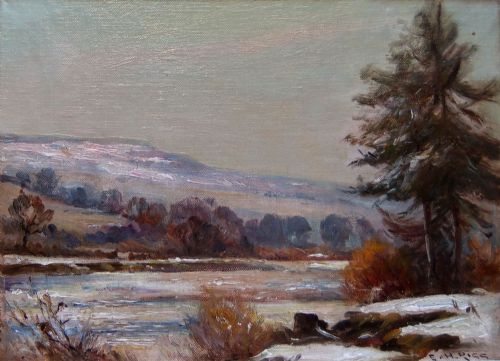


Muted Winter Landscape
These muted winter landscape works capture cold seasons in oil, watercolour and pastel, offering subtle hues that bring quiet atmosphere into a room.
Muted Winter Landscape
A muted winter landscape presents quiet seasonal scenes through restrained palettes, focusing on snow, bare trees and grey skies across various British and European locations. These fine art paintings and original artworks typically emerge from periods spanning the nineteenth century through the mid twentieth century.
Buyers frequently encounter works executed in oil paint, watercolour and pastel, often signed by named artists or attributed to specific regions such as Yorkshire and Normandy. These pieces reflect movements like British Impressionism, Realism and Post-Impressionism.
The compositions range from pastoral views to harbour scenes and rooftops in winter, capturing the stillness of colder months through subdued tones. Each piece preserves a distinct moment of early twentieth century or nineteenth century observation.
How they were made
Artists painted these winter scenes using oil on canvas, traditional watercolours on paper, and pastels, applying mediums to capture the pale light and atmospheric chill of the season. Oil paint allowed for textured brushwork on canvas or panel, while watercolours and pastels utilised paper supports for lighter, immediate effects.
The application of paint or pigment varies between the fluid washes seen in watercolours and the heavier impasto of twentieth century oil paintings. These traditional techniques define the surface texture and tonal subtlety inherent in each period style.
Several artists captured the quiet chill of Yorkshire snowfalls while others wandered as far as Rouen to paint winter harbours.
What varies in quality
Quality rests upon the artist's handling of tone and light, where restrained palettes demand precise tonal control to convey depth without vibrant colour. The strength of composition and the confidence of brushwork separate accomplished examples from simpler decorative studies.
The preservation of the paper, canvas or paint layer dictates the integrity of the work, alongside the fidelity of the original medium to the artist's intent. Works demonstrating a clear stylistic alignment with Impressionism or Early twentieth century British movements hold distinct visual weight.
A. McDonald·Fred Lawson·Arthur Winter Shaw·George Graham·William Greaves·Matthew Hale·Ernest Higgins Rigg·Angus Rands
The Muted Winter Landscape Glossary
- Watercolour
- A painting method where fine pigment is suspended in water soluble binder, applied to paper to create translucent washes of colour.
- Pastel
- A dry drawing medium consisting of powdered pigment and a binder, used to produce velvety surfaces with soft tonal transitions.
- Impressionism
- An art movement focusing on accurate depiction of light in its changing qualities, often featuring visible brush strokes and ordinary subject matter.
- Post-Impressionism
- A stylistic development extending Impressionism while rejecting its limitations, emphasising symbolic content, formal order and heavier structure.
- Realism
- The precise, detailed and accurate representation in art of contemporary life and natural scenes without idealisation.
Muted Winter Landscape: Frequently Asked Questions
What periods do these pieces date from?
The selection spans from the nineteenth century through the mid twentieth century, encompassing works from the nineteen tens to the nineteen sixties.
These dates reflect the eras of British Impressionism, Realism and Post-Impressionism represented in the current selection.
What materials were used?
Artists utilised oil paint on canvas, watercolour paint on paper, and pastels to create these seasonal works.
Each medium contributes a distinct surface texture, from the heavy opacity of oils to the delicate transparency of watercolours.
Where do the scenes depict?
The geographical subjects include Yorkshire locations such as Wensleydale and Farndale, alongside scenes from Normandy and general pastoral settings.
These diverse locales capture both British rural life and European regional landscapes during winter.
How should I frame a watercolour or pastel?
Works on paper require mounting behind glass with a protective card slip to prevent the surface from touching the glazing.
Framing should utilise conservation materials to protect delicate watercolours and pastels from environmental degradation.