


Framed Winter Artwork
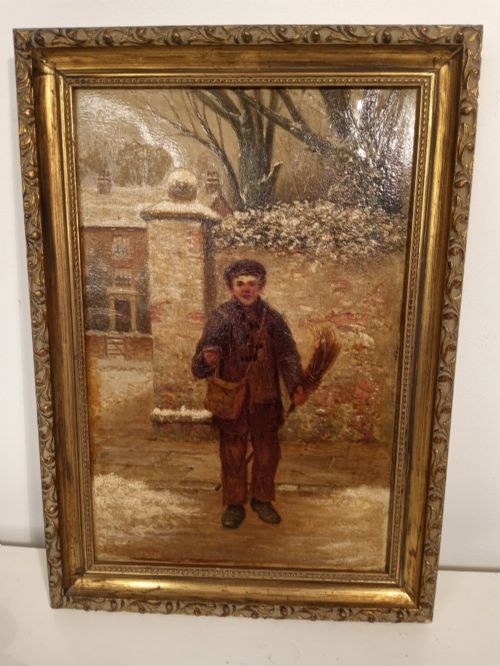
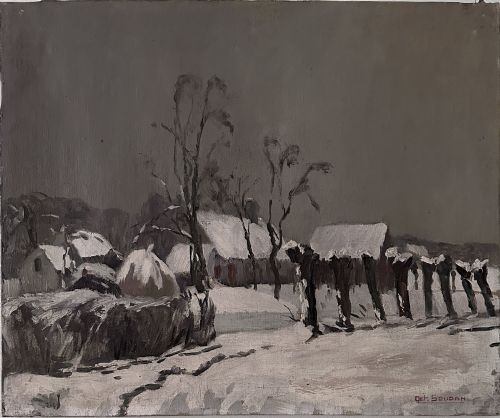
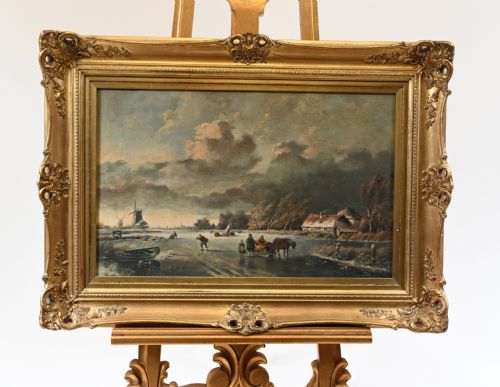
These framed winter artwork selections capture snowscapes, frozen lakes and cold seasons across oil and watercolour.
Framed Winter Artwork
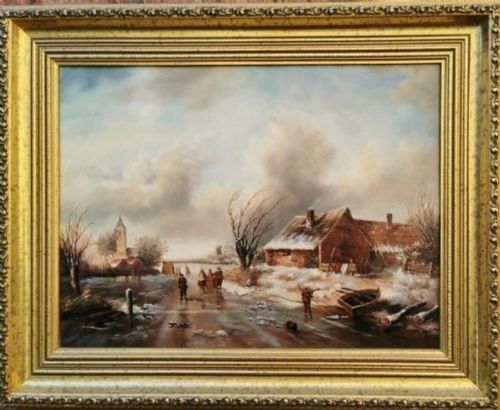
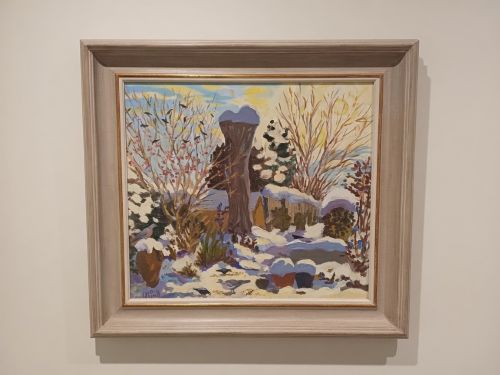
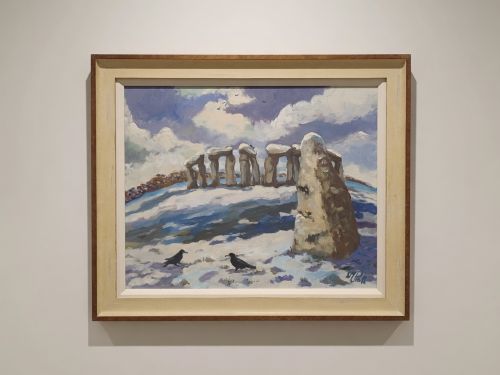
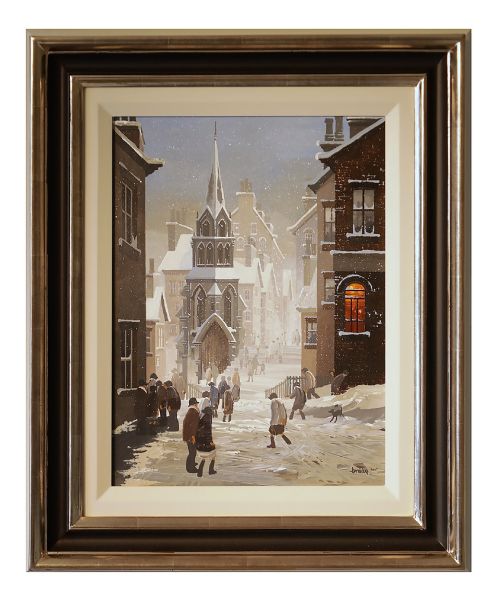
Framed winter artwork encompasses paintings and watercolours depicting snowy landscapes, frozen rivers, and cold weather scenes from various periods. These works capture seasonal light and rural or urban winter activities across centuries of artistic interpretation.
The most common examples on this page are oil paintings and watercolours on canvas, paper, or board, often retained in period wooden and gilt frames. They span from nineteenth-century coaching scenes and Dutch landscapes to twentieth-century British and European views.
Materials and construction
Artists painted these winter scenes using oil paint or watercolour applied to canvas, prepared board, or paper. Canvases and boards are typically mounted in timber frames, frequently enhanced with gilt moulding or glass protection.
Support materials range from traditional woven canvas stretched over wooden frames to heavy art paper and watermarked board. Reverse glass prints utilise painted glass panels housed within wooden surrounds.
Several winter scenes feature stagecoaches caught mid-blizzard.
Distinctions in quality
Quality rests upon the artist's ability to render the specific light and chill of a winter atmosphere through brushwork and colour harmony. Finer examples demonstrate confident handling of snow shadow and atmospheric perspective.
The integrity and age of the frame contribute significantly to the piece, with original gilt or carved wooden surrounds holding greater merit than later replacements.
Lucy Pratt·Brian Shields Braaq·Gaston Cornil·Fred Lawson·John Hobson Nicholson·Ernest Uden·Harry Bright·Fannie Moody·John Smith Atherton·Herbert Royle·Charles Jones·John Charles Maggs·William Tatton Winter·A. Winter Shaw·Sydney Kendrick·Pieter Cornelis Steenhouwer·Alexis De Leeuw·George Graham·Ernest Higgins Rigg
The Framed Winter Artwork Glossary
- Oil Paint
- Pigment mixed with drying oil, such as linseed, allowing for rich texture and blending. This medium forms the surface of many traditional landscape paintings.
- Watercolour
- A paint consisting of colour pigment suspended in a water-soluble vehicle. It is typically applied to paper to achieve translucent washes of tone.
- Gilt
- A thin layer of gold leaf or gold paint applied to wooden frames and decorative surfaces. It provides a reflective border that complements the artwork.
- Gouache
- An opaque watercolour paint containing pigment and a binding agent, creating solid areas of colour. Artists use it alongside watercolour for highlights and density.
- Reverse Glass Print
- An image painted or printed on the reverse side of a glass sheet and viewed from the front. This technique protects the pigment and produces a glossy finish.
Framed Winter Artwork: Frequently Asked Questions
How should I hang framed winter artwork?
Hang these pieces away from direct sunlight and moisture to protect the canvas, paper, and gilt frames.
Ensure secure wall fixings support the weight of the wooden frame and glass where fitted.
What periods do these paintings cover?
The selections span the nineteenth century through to the mid-twentieth century and later periods.
Victorian, Edwardian, and mid-century modern movements are all represented across the available works.
Are these works signed by artists?
Many examples feature artist signatures, inscriptions, or attribution to specific European and British schools.
Documented signatures help connect individual pieces to listed painters and regional traditions.
What subjects appear in winter artwork?
Common subjects include snow-covered villages, frozen lakes with figures, coaching scenes during snowstorms, and rural livestock in winter.
Urban streetscapes and pastoral valleys also feature prominently in the seasonal depictions.