





Small Tribal Wall Hanging
When you search for a small tribal wall hanging, you are looking at portable woven containers, bags and fragments created by nomadic and village weavers across Persia, Central Asia and Anatolia.
Small Tribal Wall Hanging
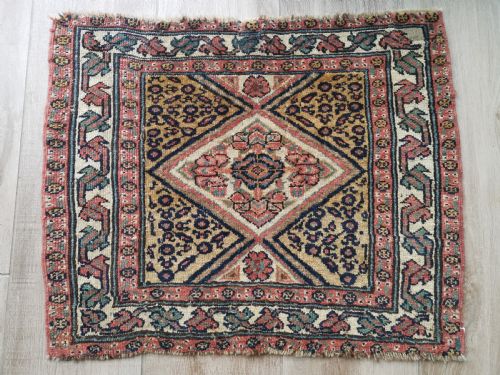
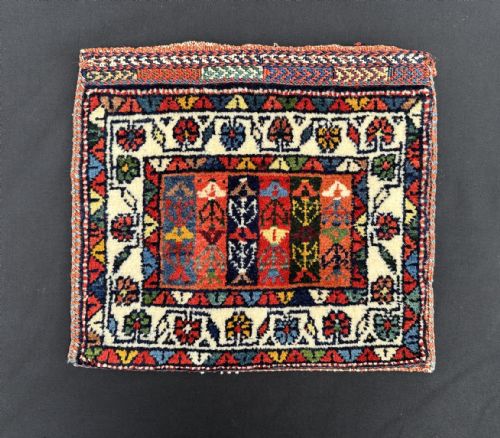
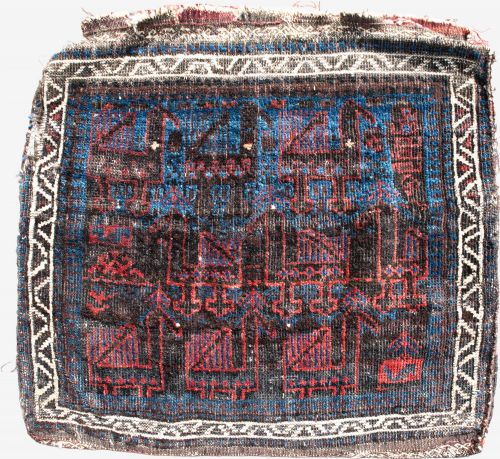
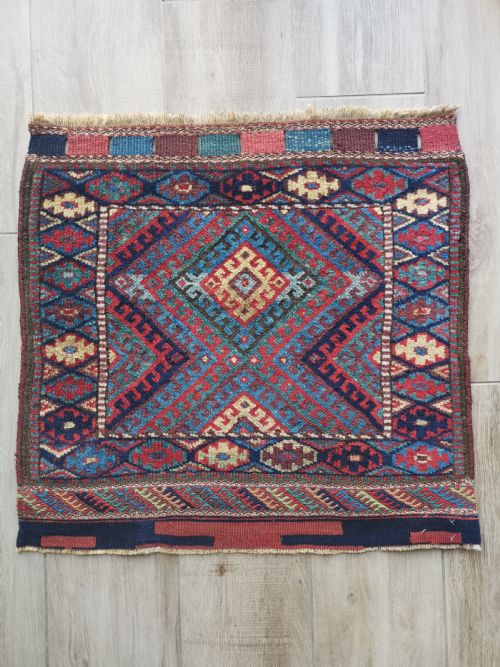
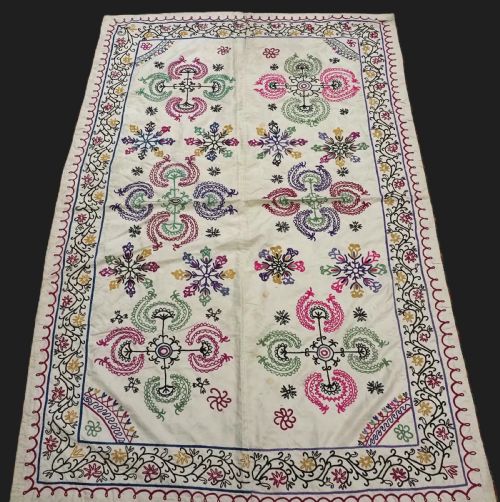
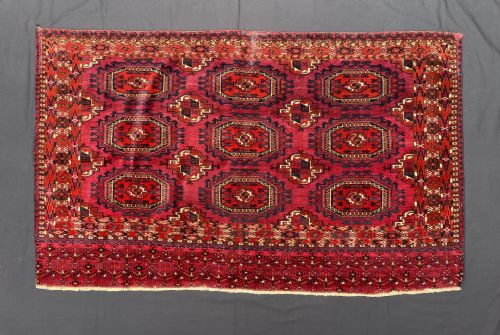
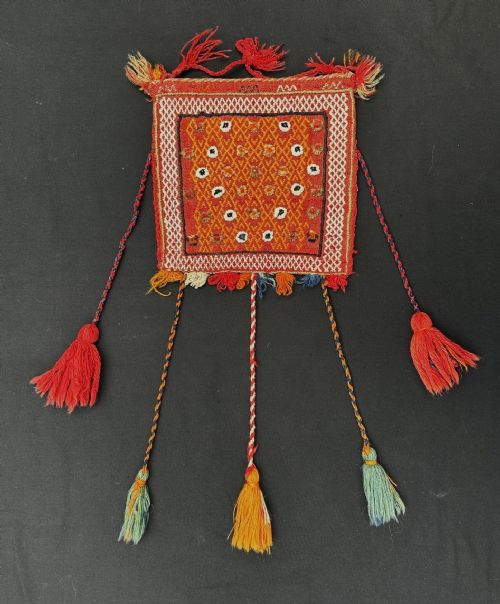
A small tribal wall hanging typically originates as a utilitarian object such as a saddlebag face, torba, chanteh, or small suzani rather than a floor carpet. These items were produced by nomadic confederacies and village groups including the Afshar, Yomut, Tekke, Baluch, and Shahsevan during the nineteenth and early twentieth centuries. Because these smaller pieces were portable and personal, they often display dense tribal iconography and concentrated bursts of traditional pattern.
The format on this page leans heavily toward bagfaces, torba faces, and small personal containers like chantehs or vanity bags. Surviving examples date from the mid-nineteenth century through to the early decades of the twentieth century, bridging late Victorian periods and the early 1900s. Buyers frequently select these formats for vertical display because their compact dimensions suit domestic wall spaces without overwhelming a room.
Materials and construction
The foundation of these pieces relies predominantly on wool, cotton, and occasionally silk, paired with hand-spun wool yarns that give the pile a characteristic tactile variance. Artisans utilised natural dyes to achieve rich palettes of reds, blues, and earthy tones that age gracefully over time. Embroidery also appears, notably in silk-on-silk or silk-on-cotton suzani fragments and small pictorial panels.
Weave density varies significantly depending on the tribal origin, with certain Turkmen and Afshar pieces exhibiting extremely fine knots and precise structural control. Utility bags and storage faces were constructed to endure heavy nomadic use, resulting in sturdy foundations that hold their shape when mounted for display.
Current listings feature pieces spanning the nineteenth century up to nineteen-twenty, incorporating wool, cotton, silk, and natural dyes.
Assessing quality and condition
Quality in these textiles rests upon the integrity of the weave, the clarity of the tribal motifs such as guls or boteh patterns, and the vibrancy of the natural dyes. A finer knot count and careful alignment of geometric fields distinguish superior tribal weavings from more utilitarian or hurried productions.
Preservation of the original borders, completeness of design panels, and the stability of the wool or silk foundation heavily influence desirability. Patina and honest wear show the age of a nineteenth-century textile, whereas structural integrity ensures the piece can be safely hung and displayed.
The Small Tribal Wall Hanging Glossary
- Chanteh
- A small personal bag or container woven by nomads for carrying small possessions. These pieces are frequently encountered as surviving face panels.
- Torba
- A small storage bag produced by Turkmen tribes, usually wider than it is tall. They were hung inside nomadic tents for storage.
- Suzani
- An embroidered textile panel originating from Central Asia, typically worked in silk on a cotton or silk foundation. They feature bold floral and medallion motifs.
- Gul
- A medallion or repeated octagonal motif used extensively in Turkmen and Central Asian tribal weaving. Each tribal group utilised distinct variations of these primary emblems.
- Sofreh
- A flatwoven spread or cloth used during meals or for bread-making among nomadic groups. They often feature minimalist geometric fields.
Small Tribal Wall Hanging: Frequently Asked Questions
What is a tribal bagface?
A bagface is the decorative front panel of a utilitarian nomadic storage bag that has been separated from its plain-weave back. These panels were preserved because their intricate geometric patterns and tribal designs held strong visual appeal.
Historically, nomadic families used these bags inside tents for storing household goods, clothing, or provisions. Today, their manageable size makes them ideal candidates for mounting and displaying on interior walls.
How old are these textiles?
The pieces listed span from the early nineteenth century through to the early decades of the twentieth century. Most examples date from the Victorian era up to around nineteen-twenty.
Determining age involves examining the wool quality, the chemical composition of the natural dyes, and the structural characteristics of the weave. Earlier pieces often display softer wool textures and specific regional colour palettes unique to their nomadic origin.
How do I hang a textile on the wall?
Hanging a textile safely requires distributing the weight evenly across the entire upper edge to prevent stress on the antique foundation fibres. Methods often involve conservation-grade Velcro stitching or mounting the piece over a fabric-covered board.
Avoid using direct pins or nails through the textile itself, as this can puncture the wool, cotton, or silk. Professional framing with UV-filtering glass is also common for delicate embroidered pieces like suzanis.
What does Turkmen gul mean?
A gul is a repeating primary medallion motif characteristic of Turkmen tribal weaving. These octagonal or stepped designs often served as tribal identifiers for specific groups like the Tekke, Yomut, or Saryk.
In weaving terminology, the exact drawing and arrangement of these guls help authorities attribute a piece to a specific region or sub-tribe. They form the core decorative structure of torbas and chuvals.