
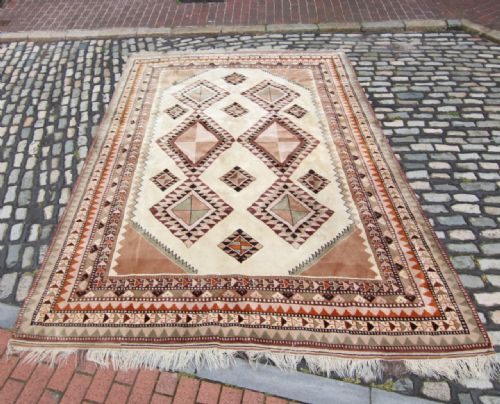


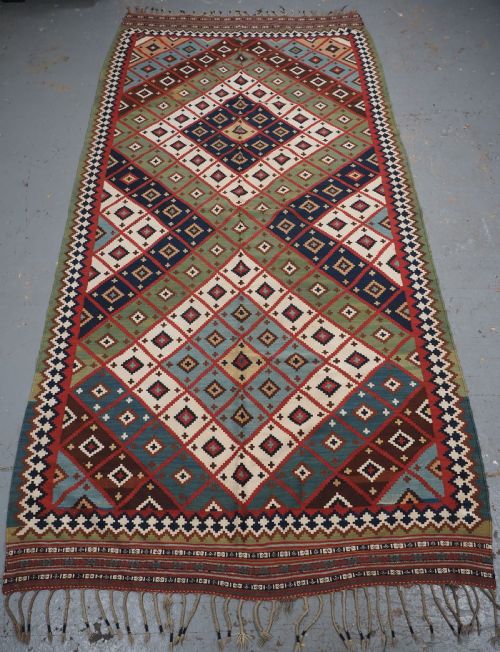


Geometric Diamond Pattern Rug
These geometric diamond pattern rug examples are tribal and traditional floor coverings woven from wool using natural dyes, prized for their bold, repeating motifs and rich history.
Geometric Diamond Pattern Rug
A geometric diamond pattern rug brings striking tribal designs into a room, drawing on traditions from Persian, Central Asian, and Balkan makers. Buyers search for these pieces to add texture and authentic folk artistry to their floors.
The selections available here range from small kilim rugs and saddle bag faces to large main carpets and heavy hand woven floor coverings. These textiles originate across the nineteenth and twentieth centuries, spanning periods from eighteen seventy to nineteen forty.
How these rugs were made
Weavers constructed these pieces predominantly from wool, utilising traditional hand-weaving techniques such as flatweave kilim and soumak constructions. These methods produced durable, resilient textiles designed for daily use.
Makers dyed the wool using natural dyes, achieving deep and enduring shades that age gracefully over time. The structural weave creates the sharp lines and repeating diamond motifs characteristic of tribal carpets.
The inventory includes flatwoven kilims, soumak weaves, saddle bag faces, and large heavy carpets constructed with natural dyes.
What varies in quality
The standard of a piece rests on the precision of the weave and the clarity of the tribal motifs. Tighter, finer structures command attention through their durability and intricate detail.
The depth and preservation of the natural dyes significantly influence the visual impact of the textile. Pieces with rich, stable colouring and intact edges demonstrate superior craftsmanship.
The Geometric Diamond Pattern Rug Glossary
- Kilim
- A flatwoven carpet or rug produced without a pile. These textiles are lighter than knotted carpets and feature sharp geometric patterns.
- Soumak
- A flatweaving technique that wraps the weft threads over the warp to create a textured, durable surface. This method often appears in Turkmen and Caucasian pieces.
- Natural Dyes
- Colourants derived from plants, insects, and minerals rather than synthetic chemicals. These materials yield rich, harmonious tones that develop a soft patina.
- Tribal Rug
- A textile woven by nomadic or village populations for practical domestic use rather than commercial export. They display traditional regional symbols and motifs.
- Warp
- The strong stationary vertical threads stretched across a loom that form the structural foundation of the rug. The weft threads are interwoven through them.
Geometric Diamond Pattern Rug: Frequently Asked Questions
How do I care for a kilim rug?
Vacuum gently without a rotating brush to remove surface dirt and dust. Professional cleaning by a specialist familiar with antique wool is essential.
Keep the textile out of direct sunlight to protect the natural dyes from fading. Rotating the rug periodically ensures even wear across the surface.
Where were these tribal rugs woven?
These carpets originate from nomadic and village communities across Persia, Central Asia, and the Balkans. Specific groups such as the Qashqai, Yomut Turkmen, and Luri tribes produced distinct regional designs.
Weavers used local materials and passed specific geometric patterns down through generations. This geographic heritage defines the character of each piece.
Are these rugs suitable for high traffic areas?
Wool flatweaves and carpets possess a natural resilience that withstands regular foot traffic. Placing an appropriate underlay beneath the textile prevents slipping and cushions the weave.
Heavy furniture can leave impressions on flatweaves, so shifting placement occasionally helps. With mindful placement, these sturdy rugs endure for generations.