
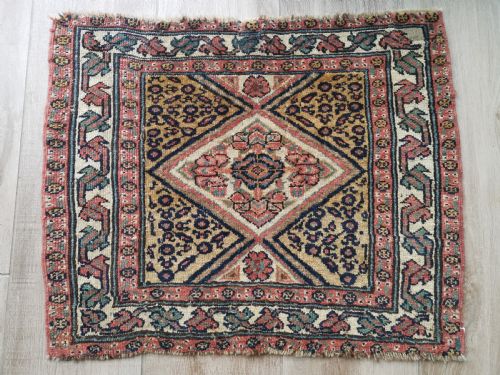
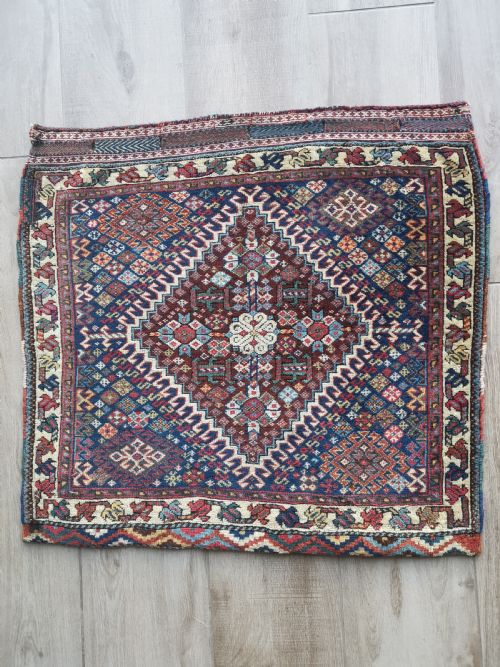
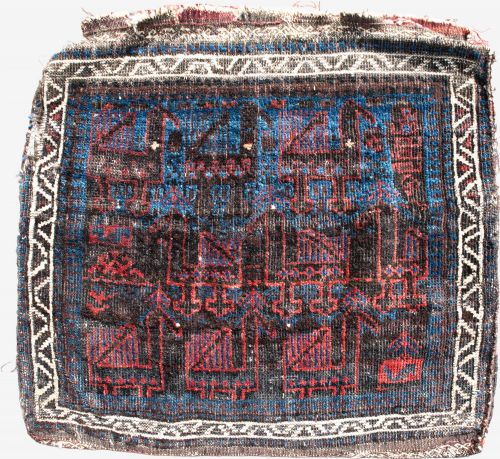
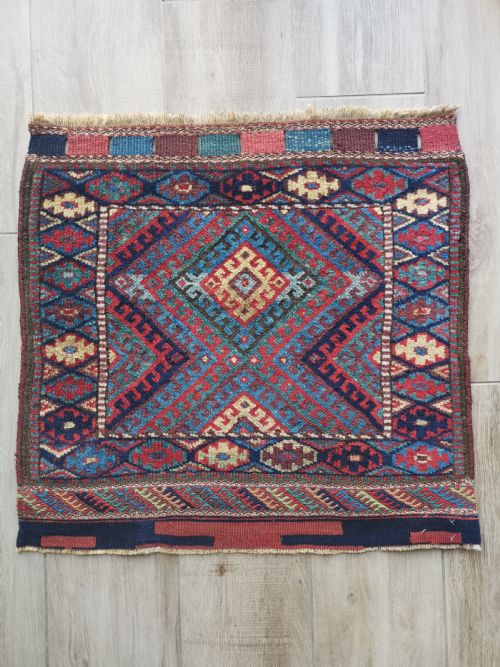
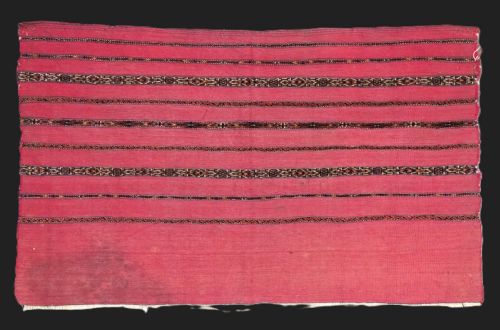


Antique Tribal Bagface
These antique tribal bagface textiles are nomadic masterpieces of wool and natural dyes, offering centuries of woven history to anchor a modern room.
Antique Tribal Bagface
The selections available here range from small torba and chuval faces to larger storage bag fronts and half-saddlebags. Turkmen groups dominate the visual landscape with their repetitive gul motifs and rich red grounds, while Persian and Caucasian tribal groups contribute animal designs, bird motifs, and complex geometric lattices. Each piece represents a specific clan's iconography, woven on portable vertical or horizontal looms set up in camps or settlements.
How they were made
These textiles rely on hand-spun wool for the pile, combined with wool, cotton, or goat hair foundations that provide structural durability. The weavers prepared their own materials, shearing sheep and goats before spinning the fleece by hand into sturdy yarns. This variable hand-spinning creates subtle irregularities in texture and thickness across the surface of the weaving.
Colour comes from natural dyes derived from plants, roots, and insects, producing rich madder reds, indigos, and earth tones that mellow gracefully over decades. The dyepots yielded deep saturations that interact with the lanolin-rich wool to create a luminous quality impossible to replicate with synthetic alternatives. Knotting techniques and weave densities vary by tribe, ranging from coarse utility weaves to exceptionally fine dowry pieces.
The listings here concentrate on nineteenth and early twentieth-century examples, spanning Turkmen, Baluch, Qashqai, and Kurdish tribal traditions.
What varies in quality
Quality in these tribal bagfaces rests upon the density of the weave and the precision of the knotting. Finer examples, particularly those associated with dowry weaving from Turkmen sub-tribes, display microscopic knot counts and meticulous execution of complex geometric medallions known as guls. Coarser pieces prioritise rugged structural utility, utilising thicker yarns and simpler tribal layouts.
The purity and vibrancy of the natural dyes dictate aesthetic success, with superior pieces retaining deep, complex colour saturation across every motif. The handling of secondary elements, such as geometric borders, kilim skirts, and the integrity of the remaining wool pile, separates standard utilitarian fragments from masterworks of nomadic textile art.
The Antique Tribal Bagface Glossary
- Bagface
- The decorated front panel of a nomadic storage bag or saddlebag, preserved after the plain back panel wore away or was removed. These sections contain the primary tribal motifs and design fields.
- Torba
- A small horizontal Turkmen storage bag used within a tent for domestic possessions and bedding. They frequently feature multiple guls arranged in a distinct row across the face.
- Chuval
- A large Turkmen tent-storage bag traditionally used for blankets and bulky household goods. Their surviving faces offer expansive fields of repeated geometric medallions.
- Gul
- A primary medallion or repeating gabled design element used by Turkmen and other Central Asian tribes. Each pattern often identifies a specific clan or sub-tribe.
- Ikat
- A dyeing technique where yarn bundles are tightly wrapped and resist-dyed before mounting on the loom to create blurred, painterly pattern outlines. This technique appears on specific Beshir region torbas.
- Killed
- The flat-woven end sections of a tribal bag or rug executed without pile, often featuring geometric stripes or subsidiary patterns that frame the main knotted field.
Antique Tribal Bagface: Frequently Asked Questions
What is an antique tribal bagface?
An antique tribal bagface is the decorated front panel of a nomadic storage sack or saddlebag, woven by pastoral groups in regions such as Persia and Central Asia.
These panels survived because their dense wool knotting and striking geometric designs caused owners to preserve them long after the plain utility backs wore out.
How were these bags used?
Nomadic tribes utilised these containers inside tents and on pack animals for storing grain, bedding, clothing, and domestic possessions.
Larger sacks held bulky items, while smaller torbas and saddlebags served personal or ceremonial storage functions within the tribal encampment.
How do I live with a bagface?
These textiles adapt easily to modern interiors as wall hangings, small floor mats, or unique cushion covers.
Displaying them away from direct sunlight protects the natural dyes, while gentle vacuuming without a beater bar keeps the hand-spun wool clean.
How do I tell different tribes apart?
Tribal identity reveals itself through characteristic colour palettes, wool qualities, and structural motifs.
Turkmen groups favour deep madder reds and repeating guls, whereas Persian tribes such as the Qashqai and Baluch often incorporate asymmetrical animal figures, birds, and midnight blue fields.