


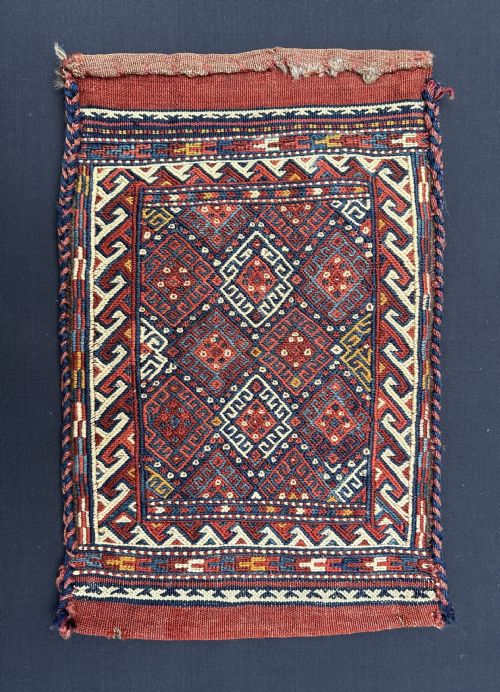
Red Wool Bagface
These red wool bagface examples are nomadic and tribal weavings carrying deep saturated hues and intricate traditional motifs.
Red Wool Bagface
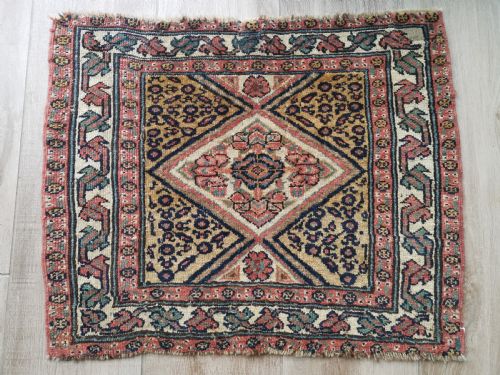
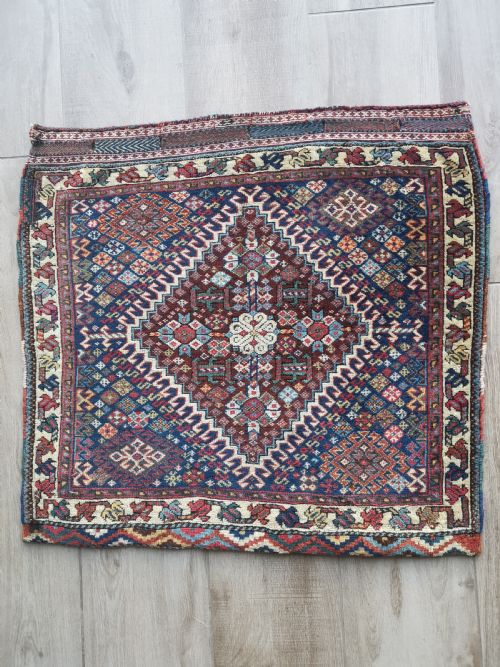
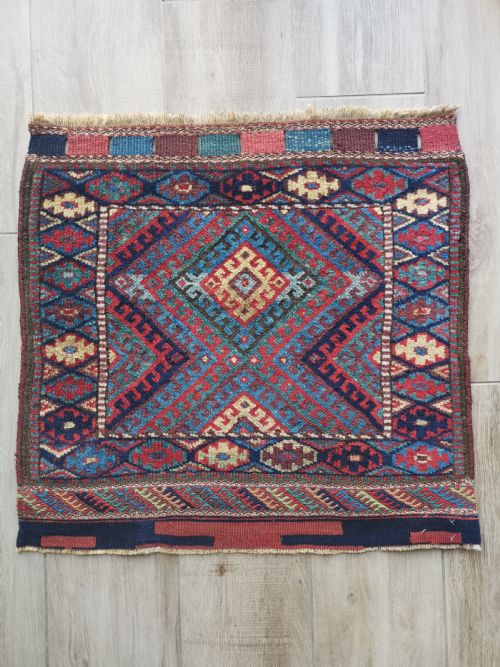
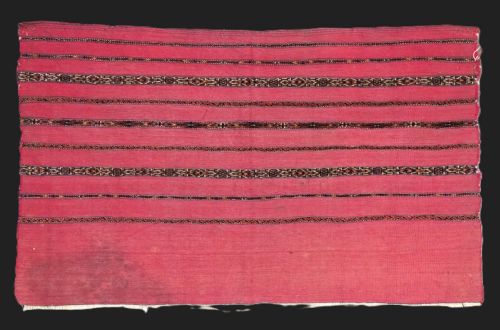
When you examine a red wool bagface, you are looking at the surviving front panel or complete face of a utilitarian nomadic container, originating from regions such as Persia, Central Asia, and the Caucasus. These textile fragments include saddlebags, storage sacks, and torbas woven by tribal groups like the Turkmen, Qashqai, Jaf, and Shahsevan during the nineteenth and early twentieth centuries.
The pieces you meet most often on this page take the form of individual bag faces or torba fragments dominated by rich madder red grounds, often structured around traditional guls, hooked polygons, or tribal geometric layouts. They represent the practical art of pastoral peoples who wove their possessions for daily camp life and dowry purposes.
How they were made
The weavers utilised hand-spun wool for the foundational pile and structural warps, occasionally incorporating goat hair for durability along the edges and sides. These materials were combined with natural dyes derived from plants and insects, producing the characteristic deep red tones that anchor the palette.
The construction relies on tight, dense knotting on wool foundations, frequently paired with flatweave plain-weave backs or sides. Artisans integrated supplementary weft-float techniques and intricate geometric patterning to give each tribal weaving its distinctive structural rigidity and surface texture.
The current selection spans regional tribal traditions from the nineteenth and early twentieth centuries, featuring wool, cotton, and natural dyes.
What varies in quality
The distinction between ordinary and exceptional examples rests primarily in the fineness of the weave and the saturation of the natural dyes. Tightly packed knots and crisp, precise drawing of motifs indicate a master weaver taking time over a dowry piece rather than producing standard utilitarian gear.
Depth and variation in the red wool ground signal superior dyeing technique, where subtle abrash and varied madder tones create visual movement across the surface. The integrity of the remaining structure, the complexity of the tribal guls, and the crisp preservation of the wool pile elevate certain panels far above others.
The Red Wool Bagface Glossary
- Bagface
- The decorative front panel of a nomadic storage bag or saddlebag, preserved after the plain back has worn away or been removed. It displays the primary tribal motifs and design work.
- Torba
- A wide, horizontal Turkmen storage bag traditionally used inside the yurt for bedding or household goods. These pieces typically feature rows of guls.
- Chuval
- A large Turkmen tent bag used for storage, measuring larger than a torba. They often display multiple rows of major guls on a red wool ground.
- Gul
- A repeated medallion or floral-derived stamp motif used by Central Asian and Turkmen tribes. Each pattern often identifies the specific tribal lineage of the weaver.
- Madder
- A natural red dye extracted from the roots of the Rubia tinctorum plant. It provides the enduring, deep red hues foundational to these tribal textiles.
Red Wool Bagface: Frequently Asked Questions
What is a red wool bagface used for?
These textiles originated as functional storage containers and saddlebags used by nomadic tribes to transport and keep household goods in tents and during migrations. Today, collectors preserve and display them as wall hangings, small rugs, or decorative textile art.
Because they were built to withstand rigorous nomadic life, the sturdy wool pile handles light placement on floors or acts as a striking focal point mounted on a wall.
How do I tell different tribal designs apart?
Tribal attribution relies on examining the specific repeating motifs, border arrangements, and structural coloration unique to each group. Turkmen weavers often utilise repeating octagonal guls, while Persian groups like the Qashqai and Jaf favour dynamic geometric fields and hooked polygons.
Reference guides and detailed examination of the knotting structure help clarify whether a piece originates from the Caucasus, Persia, or Central Asia.
How do I care for antique wool textiles?
Preserving these pieces requires gentle vacuuming without a beater bar and keeping them out of direct, harsh sunlight to protect the natural dyes. Rotating the textile periodically ensures even exposure to ambient light and wear.
Professional cleaning by a specialist in antique oriental rugs is recommended if deep maintenance becomes necessary, avoiding standard household detergents.
Are these pieces complete bags or fragments?
Many listings feature bag faces that have been separated from their original plain-weave backs, which naturally wore out faster during daily use. Some examples retain portions of their plain weave or complete backing structures, but single panels remain common.
This format allows the dense pile and intricate iconography of the front design to be appreciated directly without the bulk of the full container.