




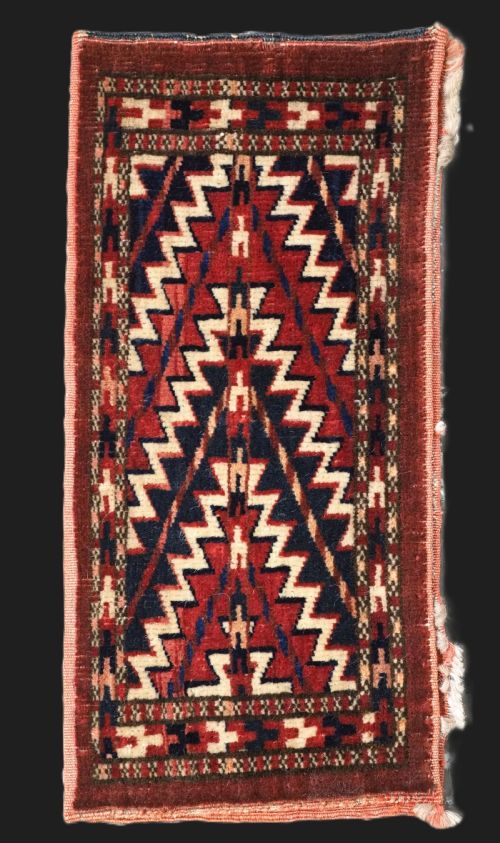


Woven Storage Bag Face
When searching for a woven storage bag face, one finds tribal textile panels originating from nomadic and village communities across Central Asia and Persia.
Woven Storage Bag Face
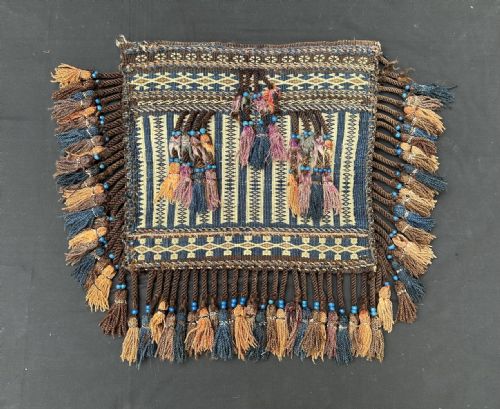
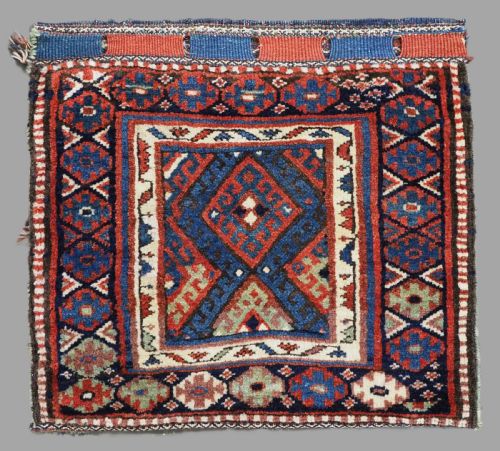
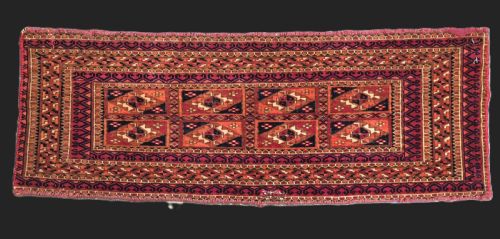
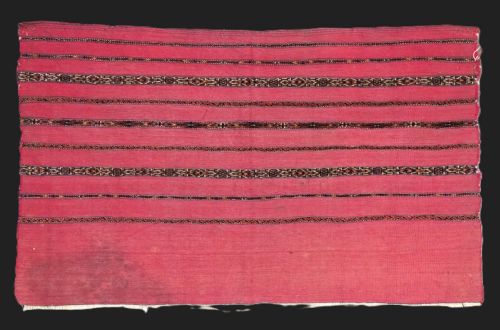
A woven storage bag face represents the decorative front panel of a utilitarian nomadic container, detached from its plain weave back or preserved as a complete storage pouch. These textiles encompass tribal formats such as chuvals, torbas, mafrahes, and smaller balisht or spindle bags created by Turkmen, Kurdish, Baluch, Afshar, and Lori-Bakhtiari groups.
The pieces available here emerge from periods spanning the latter half of the nineteenth century into the early decades of the twentieth century. Examples range from large tent storage bag faces featuring dense guls to smaller saddle bags and wheat sacks.
Makers utilised traditional formats specific to their tribes, embedding distinctive geometric motifs and structural layouts that indicate their regional origins in Turkmenistan, Persia, and Afghanistan.
Materials and Construction
Weavers constructed these textiles primarily using hand-spun wool for the pile and foundation, often incorporating cotton for structural contrast and silk highlights for specific decorative details.
Natural dyes provide the palette for the wool yarns, supplemented occasionally by glass beads sewn onto the textile surface. Individual makers tied dense knots for the face panels while employing simpler plain weave or banded flatweave techniques for the backs and structural borders.
Listings feature wool, cotton, and silk materials across pieces dated between eighteen-sixty and nineteen-twenty.
Assessing Quality and Execution
Quality in a woven storage bag face is determined by the density of the weave, the precision of the tribal motifs, and the clarity of the natural dye colours. Finer knotting counts and intricate repeating guls distinguish exceptional pieces from standard examples.
The condition of the wool, the presence of original hanging loops or complete backs, and the careful placement of silk highlights or glass beads further differentiate the standard of craftsmanship within tribal weaving traditions.
The Woven Storage Bag Face Glossary
- Gul
- A primary medallion or repeating octagonal motif characteristic of Turkmen and Central Asian tribal weaving. These designs often indicate the specific tribe or sub-group that produced the textile.
- Chuval
- A large nomadic storage bag used inside tents for bedding and household possessions. The face of the bag typically displays multiple guls arranged in strict rows.
- Torba
- A smaller horizontal storage bag traditionally hung on the lattice walls of a nomad tent. They share similar decorative programmes with larger chuvals but in a more compact format.
- Mafrash
- A rectangular storage bag or trapan face used for transporting household goods during seasonal migrations. They frequently feature banded flatweave designs or piled panels.
- Kezil
- A specific type of Turkmen bag face characterised by a dominant red ground colour and traditional banded layouts. These panels demonstrate distinctive tribal colour palettes.
Woven Storage Bag Face: Frequently Asked Questions
What is a woven storage bag face?
A woven storage bag face is the decorative front panel of a nomadic container used for household storage inside tents. These textiles were separated from their utility backs over time and preserved as decorative wall hangings.
The pieces originate from tribal groups in Central Asia and Persia, showcasing traditional wool knotting and natural dyes.
How were these bags used originally?
Nomadic families utilised these bags within tents to store bedding, clothing, grain, and personal belongings. Their structured designs protected contents during seasonal migrations across steppes and mountains.
Larger formats held bulky items like wool blankets, while smaller pouches served as grain or spindle bags for daily tasks.
How do I hang a bag face on the wall?
Many bag faces retain original hanging loops or sturdy wool borders that facilitate mounting on a wall. Professional framers or textile conservators can also attach custom sleeves or support backings.
Displaying them flat preserves the structural integrity of the hand-spun wool and showcases the detailed tribal iconography.
How do I tell different tribal designs apart?
Tribal attribution relies on specific motifs, such as the repeating guls of Yomut and Tekke Turkmen weavers or the banded patterns of Baluch and Kurdish makers. Colour palettes and wool preparation also vary distinctly between regions.
Consulting reference literature helps correlate specific border arrangements and medallion structures with particular nomadic groups.