
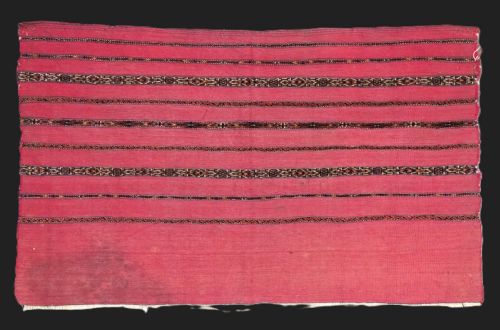


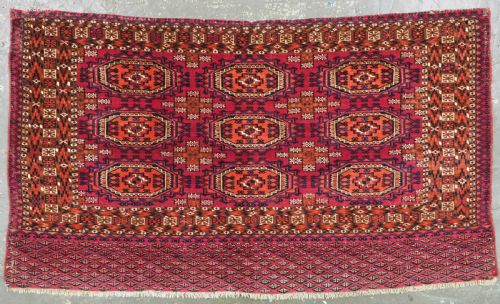


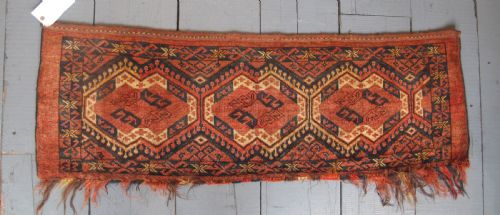
Antique Turkmen Bagface
These antique turkmen bagface textiles are tribal weavings rich in wool and traditional guls, prized for their bold central Asian patterns.
Antique Turkmen Bagface
An antique turkmen bagface is a tribal textile woven in Central Asia during the nineteenth century by groups such as the Tekke, Ersari, Saryk, and Yomut tribes. These pieces served as functional storage bags, torbas, chuvals, or spindle bags before being separated from their original backs.
You will most frequently meet Tekke and Ersari examples on this page, often dating from the late nineteenth century around eighteen eighty. They display regional motifs including guls, curled leaf designs, and ikat patterns executed in wool.
How they were made
Every antique turkmen bagface is constructed from wool, utilising traditional tribal weaving techniques passed down through generations. The finest examples display a very fine weave that allows intricate geometric layouts and crisp secondary ornaments to emerge clearly across the surface.
Dyes and structural yarns are entirely wool, creating a dense textile designed to withstand daily use inside a nomadic dwelling. Artisans knotted the pile firmly onto foundation warps and wefts, finishing the edges with sturdy selvedges.
Antique Turkmen Bagface Retail Price Guide 2026
Typical asking prices for turkmen bagface among the pieces listed under this phrase on Sellingantiques today, from the lower quarter to the upper quarter. They describe what is for sale here now, not the wider market.
Listings feature wool Turkmen textiles spanning from eighteen sixty to the end of the nineteenth century, including specific Tekke, Ersari, Saryk, and Yomut attributions.
What varies in quality
Quality in an antique turkmen bagface rests primarily on the density of the knotting and the precision of the tribal drawing. A finer weave permits sharper rendering of complex gul structures and secondary motifs.
The choice of palette and the clarity of the wool also dictate the standing of a piece. Stronger structural integrity and surviving original backs elevate certain dowry pieces above standard utilitarian examples.
The Antique Turkmen Bagface Glossary
- Gul
- A primary octagonal medallion used repeatedly as a principal design motif in Turkmen tribal rugs and bag faces. Each tribe traditionally utilised distinct gul variations to signal its specific lineage.
- Torba
- A small horizontal storage bag traditionally used for domestic items within a nomad tent. These pieces often feature carefully balanced repeating patterns across the face.
- Chuval
- A large tent bag utilised for household storage by tribal families. They typically display multiple rows of major guls.
- Beshir
- A regional style associated with Ersari weavers residing near the Amu Darya basin. These textiles frequently incorporate non-standard motifs such as ikat patterns.
- Igsalyk
- A specific Yomut tribal term designating a spindle bag. These narrow utilitarian containers held spinning tools and fibres.
Antique Turkmen Bagface: Frequently Asked Questions
What is a turkmen bagface?
A turkmen bagface is the decorative front panel of a nomad storage bag woven by Central Asian tribes during the nineteenth century. These textiles were originally part of larger utilitarian sacks used inside felt tents.
Over time, many of these faces have been separated from their original plain weave backs. Collectors now value them as flat wall hangings or decorative small rugs that display traditional tribal artistry.
How do I care for wool textiles?
Keep these wool weavings out of direct sunlight to prevent natural dyes from fading over time. Gentle vacuuming with suction only, without a rotating brush roll, helps remove trapped dust.
Allow air circulation beneath the textile if displayed on a wall. Professional cleaning by a specialist in antique rugs is recommended when necessary.
How do I date a piece?
Dating relies on examining the structure, wool quality, and dye palette used in the weaving. Nineteenth-century examples generally feature hand-spun wool and natural dyes with characteristic soft patination.
Comparing the drawing style of the guls and structural fineness against documented tribal pieces helps narrow the decade of production. Most examples on this page date from the mid-nineteenth century to eighteen ninety.