


Vintage Tekke Turkmen
Vintage tekke turkmen textiles bring the rich nomadic heritage of Central Asia into modern interiors through finely knotted rugs, bags, and ceremonial hangings.
Vintage Tekke Turkmen
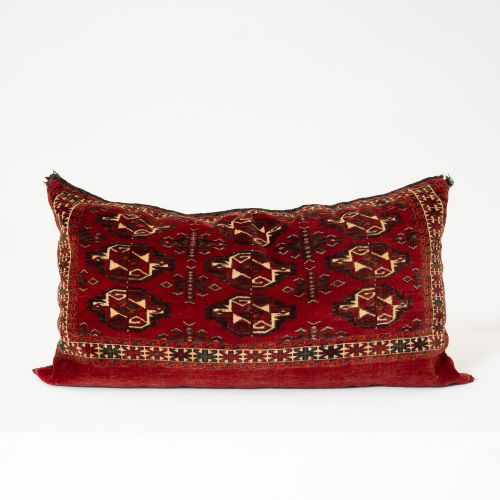
Buyers exploring vintage tekke turkmen items encounter a specialised range of nomadic weaving, from large floor carpets to smaller utilitarian bags and wall hangings. The most frequent pieces on this page are chuval storage bag faces and torba fragments, alongside ceremonial wedding rugs and dowry trappings created across the nineteenth and early twentieth centuries.
These textiles originate from Central Asian tribal traditions, primarily associated with the Tekke tribes of Turkmenistan. Production spans domestic furnishings like cushions and tent bands, as well as distinct ceremonial garments such as silk-embroidered chyrpy coats.
Examples on this page date from the mid-nineteenth century up through the 1920s, demonstrating the evolution of tribal designs executed in wool, cotton, and silk. Collectors seek them for their traditional geometric motifs, notably the characteristic gul primary ornament.
How they were made
Nomadic weavers constructed these textiles using locally sourced wool, cotton foundations, and occasional silk highlights. The materials were spun by hand and dyed to achieve deep red, ivory, and burgundy grounds that define the aesthetic.
Construction relied on tight knotting techniques producing dense, hard-wearing piles for carpets and storage bags. Plain weave backs, hanging loops, and intricate silk embroidery completed functional items meant for daily nomadic life and dowry displays.
Listings feature wool, cotton, and silk materials spanning periods from the 1850s to the 1920s.
What varies in quality
Quality in these textiles rests upon the density of the weave and the precision of the gul arrangement. Finer knots and crisp geometry signal superior craftsmanship across chuval faces and main carpets.
The choice of materials also dictates standing, with select pieces incorporating silk highlights or retaining original plain weave backs and hanging loops. Colour saturation and condition further separate standard utilitarian items from exceptional dowry pieces.
The Vintage Tekke Turkmen Glossary
- Gul
- The primary octagonal medallion motif repeated across Turkmen carpets and bag faces. This geometric emblem often identifies the specific tribal subgroup responsible for the weaving.
- Chuval
- A large tent storage bag used by nomadic families for household goods and bedding. Surviving examples are frequently displayed as decorative wall hangings after the backs have separated.
- Torba
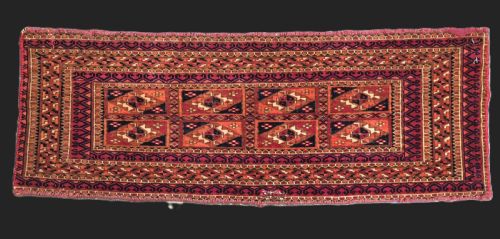
- A smaller storage bag narrower than a chuval, traditionally hung inside the yurt. These items display intricate field designs comparable to larger rugs.
- Mafrash
- A rectangular storage bag or trapper face produced in pairs for transporting belongings on pack animals. They showcase compact tribal patterns suited to smaller formats.
Vintage Tekke Turkmen: Frequently Asked Questions
What is a vintage tekke turkmen rug?
A vintage tekke turkmen rug is a hand-knotted Central Asian textile produced by nomadic tribal weavers, typically distinguished by red or burgundy wool grounds and repeated geometric gul motifs.
These pieces range from utilitarian floor carpets to ceremonial dowry rugs created during the nineteenth and early twentieth centuries.
How were chuval bag faces used?
Chuval bag faces were originally the decorative fronts of large storage sacks used inside nomadic yurts to hold blankets and clothing. Over time, many have been separated from their plain weave backs to be used as decorative wall hangings.
Collectors prize them for retaining the original density of knotting and structural integrity of the tribal weave.
What does a torba look like?
A torba is a smaller storage bag face, generally wider than it is tall, featuring structured horizontal borders and repeated central medallions. They were hung inside nomadic dwellings for smaller personal possessions.
On this page, they appear as antique fragments complete with symmetrical designs and traditional colour palettes.
How do you date an antique turkmen weaving?
Dating these textiles relies on analyzing the natural dye palette, the fineness of the wool, and structural characteristics like knot density. Mid-nineteenth-century examples often display deeply saturated reds and precise tribal iconography.
Later pieces from the early twentieth century reflect shifts in production scale and the introduction of different export standards.