
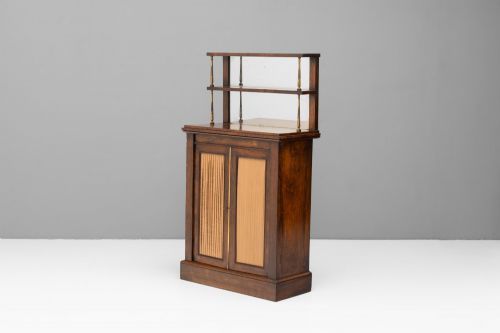
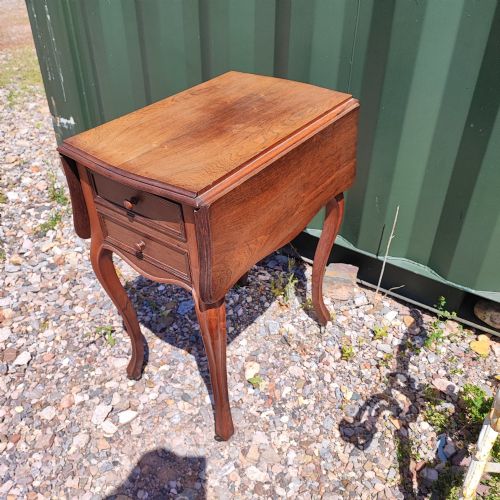
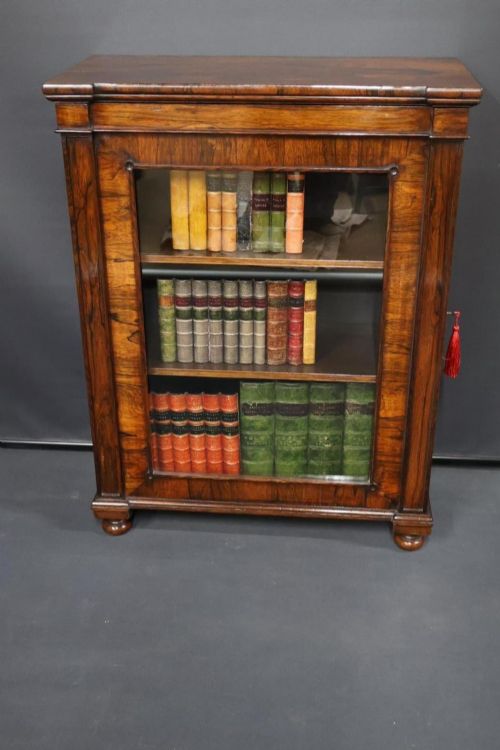


Small Rosewood Side Cabinet
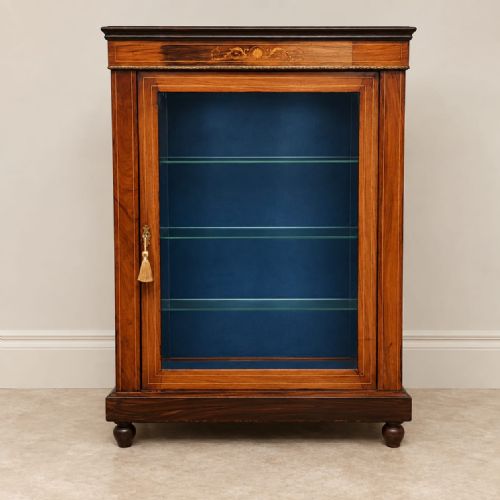
These small rosewood side cabinet examples are compact timber storage pieces offering rich grain and brass details for period interiors.
Small Rosewood Side Cabinet
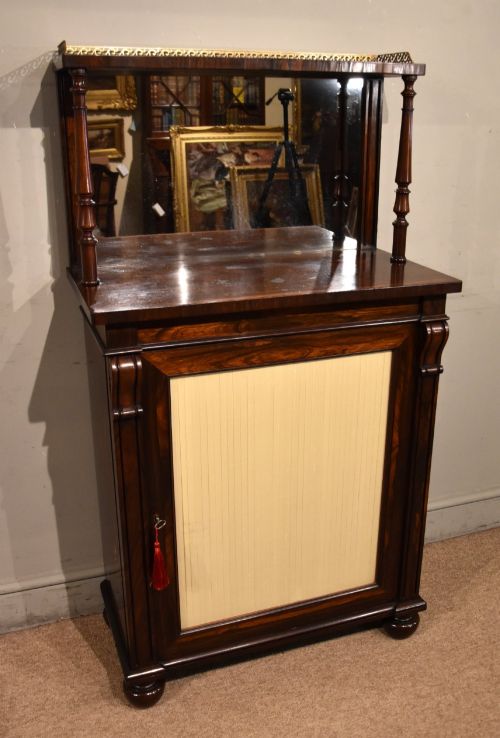
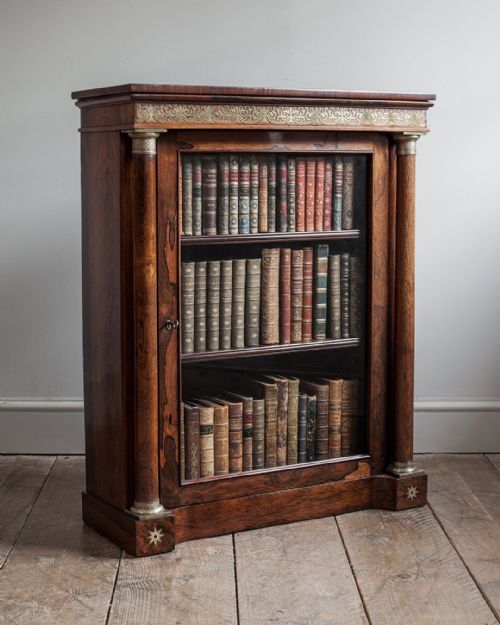
A small rosewood side cabinet search brings up low timber storage furniture spanning Regency, Victorian, and Georgian periods. These pieces include chiffoniers, pier cabinets, bedside tables, and compact bookcases designed for domestic settings.
You will most frequently meet Regency and Victorian examples on this page, often featuring single doors, low profiles, and refined proportions suited to smaller spaces. The wood displays deep reddish-brown tones with characteristic dark grain markings.
Materials and construction methods
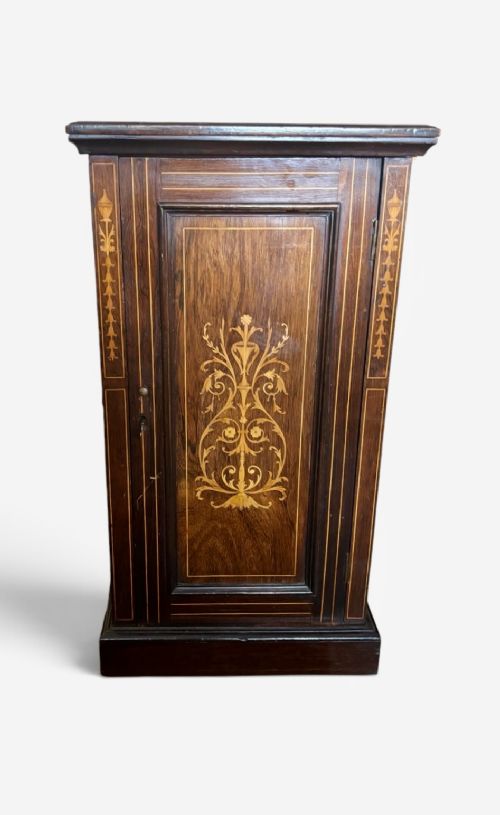
Cabinet makers utilised dense rosewood timber, frequently applied as veneers over secondary woods, complemented by contrasting wood inlays like satinwood and boxwood. Brass handles, grilles, and mounts provide structural accents alongside inset glass panels.
Surface treatments range from polished wood finishes to marble tops on commodes and detailed marquetry or stringing. Structural joinery employs traditional cabinet-making techniques appropriate for the nineteenth century.
Several cabinets manage to look exceptionally important despite occupying roughly the same floor space as a modern bedside stool.
Assessing cabinet craftsmanship
Quality rests in the selection of the timber grain, the precision of boxwood or satinwood inlay work, and the integrity of the brass mounts and handles. Finer examples display meticulous attention to interior fittings and well-matched veneer patterns across the doors and sides.
The sophistication of the period styling, whether restrained Regency lines or ornate Victorian carving, dictates the visual weight of the piece. Subtlety in proportion and original glass or marble components elevate the standing of a cabinet.
Gillows
The Small Rosewood Side Cabinet Glossary
- Rosewood
- A dense, heavily grained timber prized for its dark purple-brown hues and oily lustre. It forms the primary surface material for these cabinets.
- Chiffonier
- A low sideboard or cabinet featuring shelves or enclosed cupboards below, popular during the Regency and Victorian eras.
- Pier Cabinet
- A narrow display or storage cabinet designed specifically to fit against the wall space between windows.
- Davenport
- A compact form of small desk featuring a sloping writing surface above a pedestal of drawers.
- Inlay
- A decorative technique where contrasting woods like satinwood or boxwood are embedded flush into the rosewood surface.
Small Rosewood Side Cabinet: Frequently Asked Questions
What rooms suit a small rosewood side cabinet?
These compact cabinets fit neatly into hallways, studies, or drawing rooms where floor space is limited. Their low profiles allow them to sit beneath windows or alongside seating without dominating the room.
The rich timber tones and brass details complement traditional and eclectic interior schemes alike, providing practical surface and storage space.
How do I date a rosewood cabinet?
Dating relies on observing stylistic markers such as Regency curved lines or Victorian architectural mouldings, alongside construction clues. Examining the secondary woods and hinge types helps narrow the decade of production.
Cabinet forms shifted from classical Regency restraint towards more heavily decorated Victorian designs over the course of the nineteenth century.
Are rosewood cabinets difficult to maintain?
Maintenance requires keeping the timber away from direct sunlight and extreme temperature fluctuations to prevent veneer splitting. Regular dusting with a soft, dry cloth preserves the polished surface.
Avoid using silicone-based polishes, as traditional wax is better suited for maintaining nineteenth-century rosewood finishes.
What is the difference between a chiffonier and a side cabinet?
A chiffonier typically includes a raised shelf or mirrored back above a low enclosed cupboard, originating in the Regency period. A side cabinet offers a simpler top surface without the superstructure.
Both forms served similar functions in dining and living rooms for storing tableware and books.