
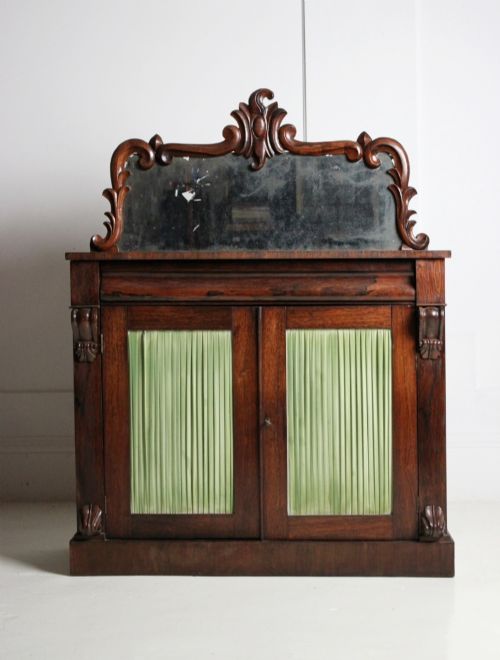
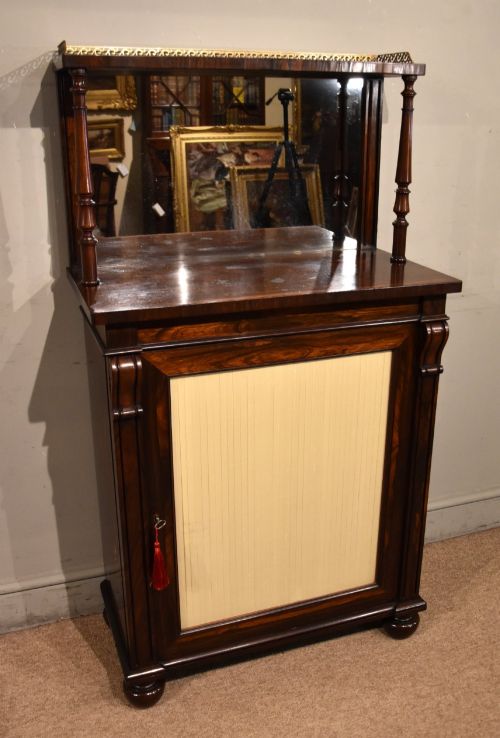
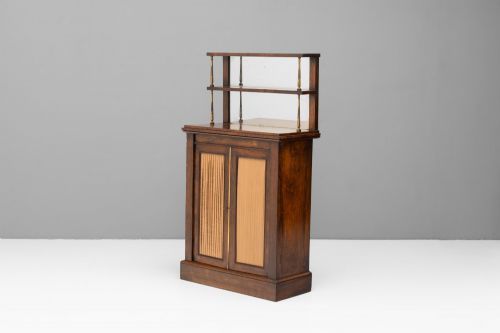


Regency Mirror Back Chiffonier
A regency mirror back chiffonier brings architectural grace to a room, offering low storage and a reflective glass panel to bounce the daylight.
Regency Mirror Back Chiffonier
A regency mirror back chiffonier is a low cabinet designed for the principal rooms of the house, combining enclosed shelving with display surfaces. The form evolved during the early nineteenth century to meet changing domestic needs for flexible storage alongside seating areas.
You are most likely to meet examples in rich rosewood and figured mahogany, often featuring marble tops or brass inlay. Many pieces reflect the broader stylistic crossover of the period, spanning George IV and William IV periods alongside classic Regency lines.
The defining mirror back element lifts the heavy timber mass, turning a functional sideboard into a lighter architectural feature. Cabinet makers of the era paired these glasses with open shelves, brass galleries, and panelled doors to create balanced proportions.
Materials and construction methods
Cabinet makers relied heavily on rosewood and mahogany for the primary carcases, selecting timber with strong natural figuring to anchor the front elevation. Mahogany linings provide internal structure, whilst delicate brass inlay and giltwood details accent the main timber surfaces.
Mirror glass is integrated into the back superstructure, secured by wooden framing that often incorporates shelving or small upstands. Marble tops appear on specific variants, adding a durable cold surface above the lower cabinet doors.
Some cabinet makers included hidden brass candle arms so the mirror back would double the evening candlelight.
What separates the finest examples
The selection of timber grain on the main doors and drawer fronts dictates much of the visual weight. Superior pieces display carefully matched veneers that flow symmetrically across the facade rather than random timber cuts.
The crispness of brass inlay and the finesse of the turned or carved supports mark the difference between standard production and top-tier cabinet work. Integration of the mirror frame with the lower chiffonier body requires precise joinery to ensure the superstructure feels balanced rather than added later.
Gillows
The Regency Mirror Back Chiffonier Glossary
- Chiffonier
- A low cabinet or sideboard featuring cupboards below, occasionally topped with shelving or a mirror back. This form became a staple of nineteenth-century interiors for storing books and plate.
- Rosewood
- A dense, heavily figured exotic timber prized for its dark grain and reddish-brown tones. It served as the primary exterior wood for elite Regency and George IV furniture.
- Giltwood
- Timber carved and coated with gold leaf or metallic paint to highlight architectural mouldings and decorative mounts. It adds brightness to dark cabinet frames.
- Breakfront
- A piece of furniture where the central section projects forward from the flanking wings. This creates depth and shadow across the front elevation.
Regency Mirror Back Chiffonier: Frequently Asked Questions
What is a regency mirror back chiffonier used for?
These cabinets served as sophisticated sideboards in dining rooms and parlours, holding linens, books, or dining china behind panelled doors.
The upper surface and shelves provided space for decorative objects, while the mirror back added light and a sense of depth to the room.
Where should I place one in my home?
A chiffonier works well against a principal wall in a sitting room, dining room, or wide hallway where its low profile keeps sightlines open.
Keep the piece away from direct sunlight and strong heat sources to protect the polished rosewood or mahogany finishes and the silvering on the mirror plate.
How do I distinguish Regency from William IV pieces?
Regency items generally display lighter, more restrained classical proportions with fine brass inlay and slender supports reflecting late Georgian taste.
William IV examples tend towards heavier architectural forms, bolder timber grain, and more robust turned columns or scrollwork.
Are marble tops original to these cabinets?
Certain chiffoniers and side cabinets incorporated marble tops from the workshop to provide a durable, heat-resistant surface for serving food or displaying heavy items.
These tops were set flush into the timber framing above the cabinet doors, matching the formal requirements of grander interiors.