

Small Four Drawer Chests
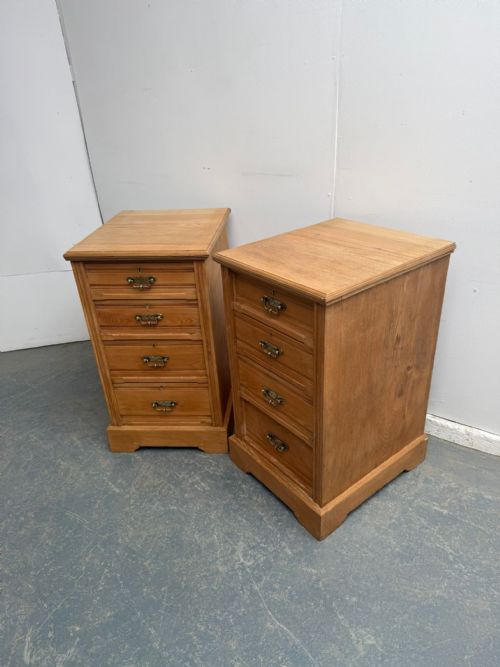
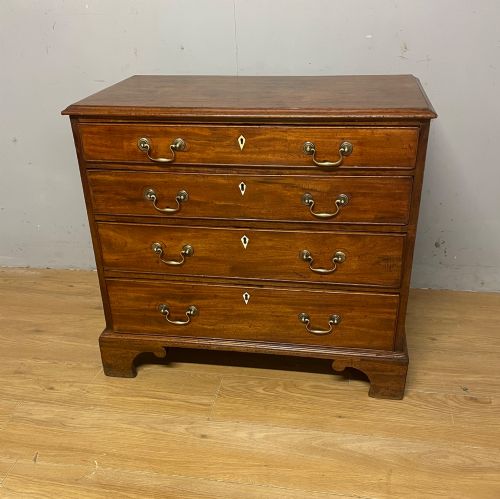
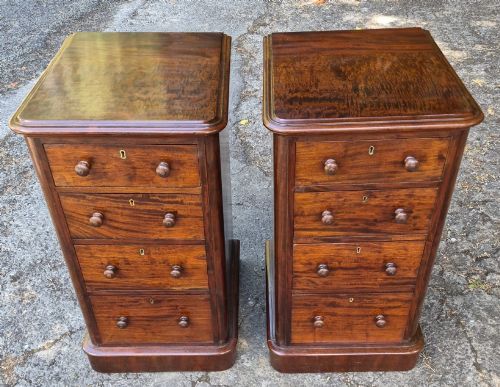
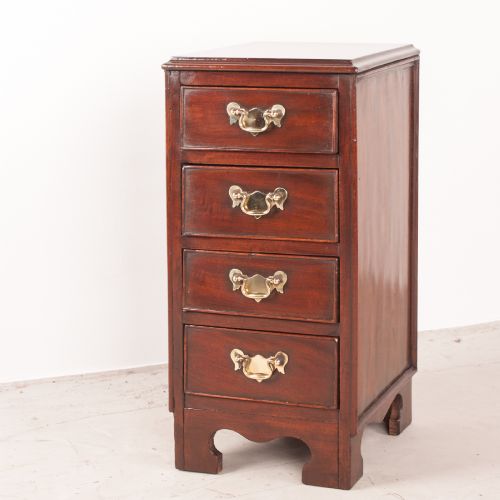
Small four drawer chests offer compact storage in mahogany, walnut, and oak across Georgian, Victorian, and Edwardian periods.
Small Four Drawer Chests
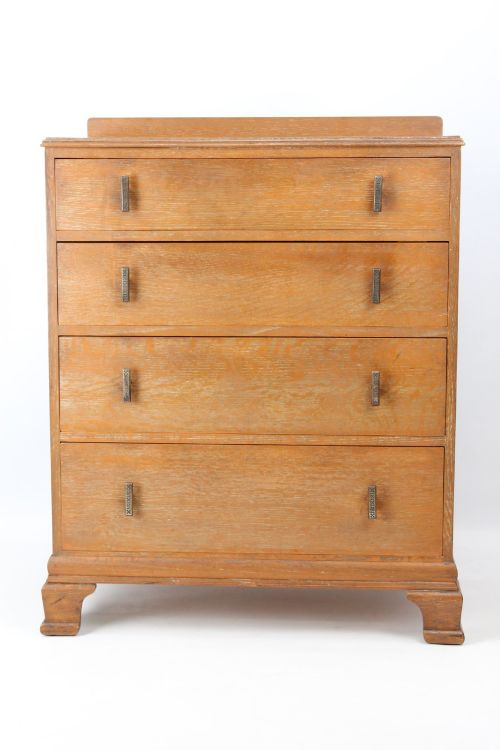
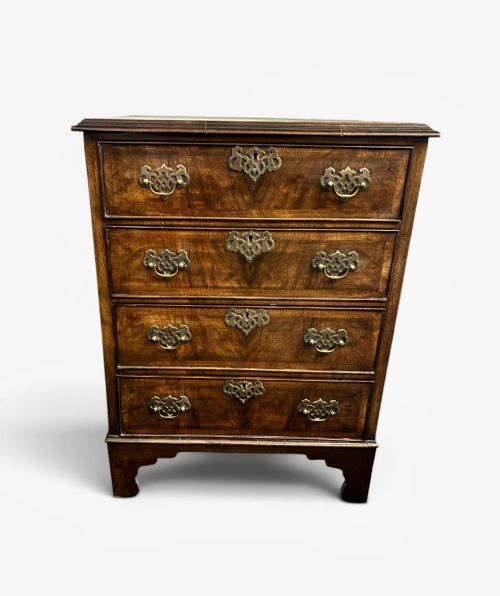
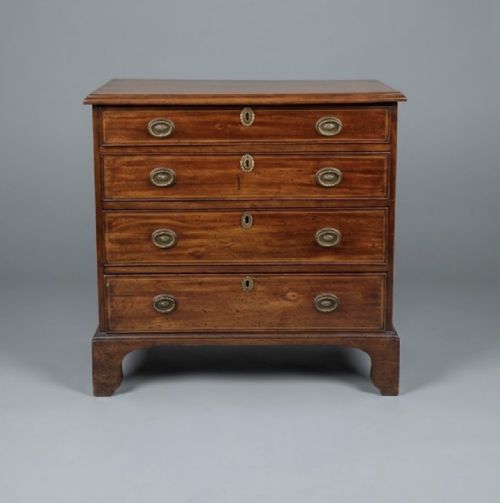
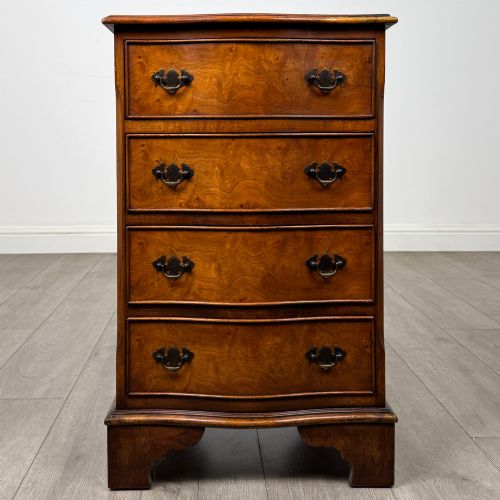
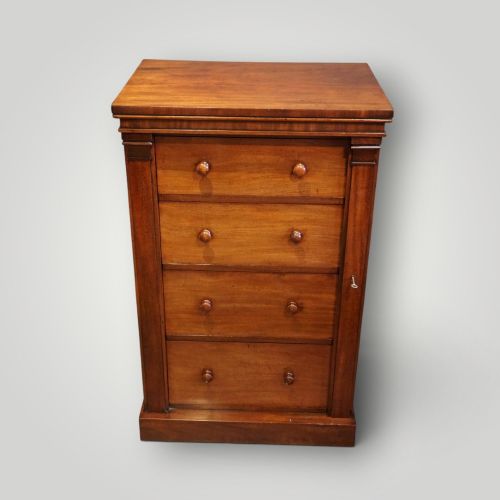
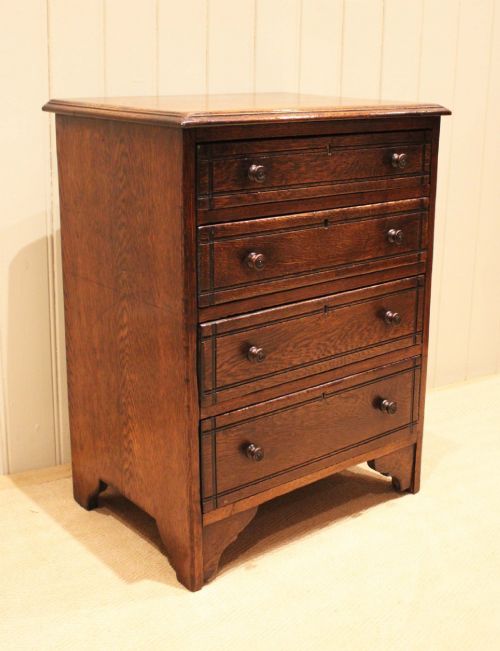
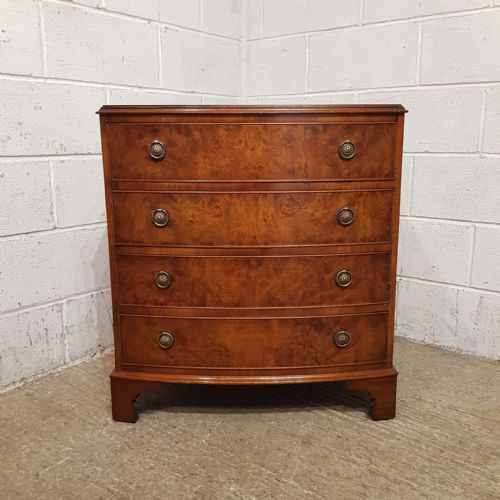
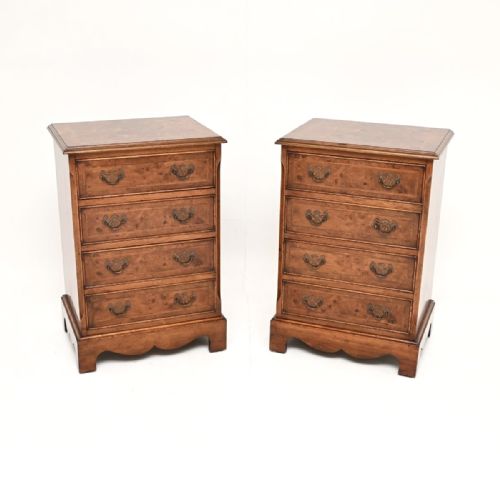
Small four drawer chests span multiple centuries of domestic furniture, appearing in formats ranging from full-sized bedroom pieces to bedside chests, cabinets, and miniature furniture. Buyers seeking these items encounter compact proportions designed for functional storage in restricted spaces, often taking the form of bachelor chests with brushing slides or tall narrow Wellington chests.
The selection on this page draws heavily from Georgian and Victorian eras, alongside Edwardian interpretations and later twentieth-century revivals. Materials vary from dense timbers like mahogany and walnut to lighter ash, elm, and pine, reflecting the changing interior fashions of each decade.
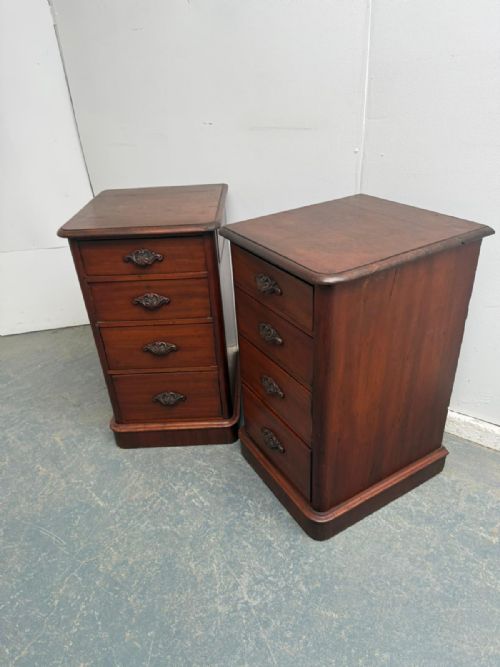
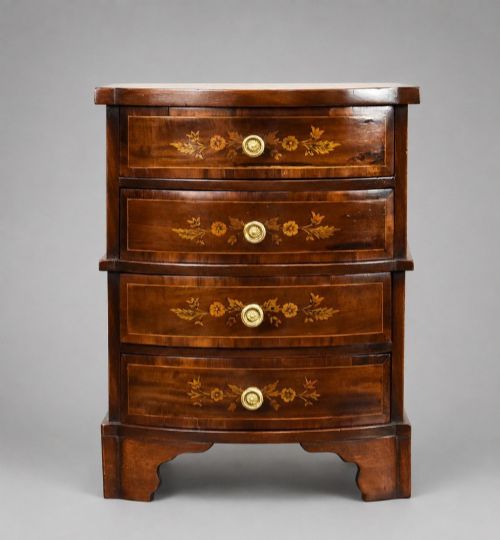
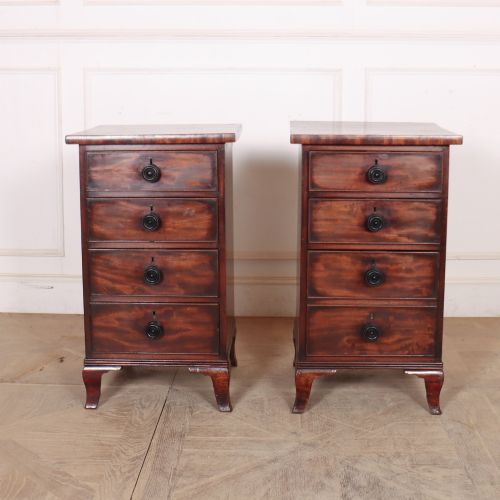
Form and scale dictate the primary uses of these pieces, serving either as primary bedroom storage for smaller chambers or as matched pairs of bedside cabinets flanking a bed. Miniature versions and spice cabinets provide specialised desktop storage while maintaining the characteristic four-drawer configuration.
Materials and Construction
Cabinet makers relied predominantly on solid hardwoods and decorative veneers, constructing carcases and drawer linings in mahogany, walnut, burr walnut, and oak. Secondary timbers such as pine and ash appear in internal framing and drawer construction, while brass provides handles, escutcheons, and occasional structural mounts.
Surface finishing involves traditional waxing and polishing techniques that highlight the natural grain patterns of figured walnut and mahogany. Marquetry and painted finishes appear on specific Edwardian and apprentice pieces, demonstrating varied surface decoration alongside plain timber construction.
Materials recorded across current items include brass, mahogany, walnut, burr walnut, oak, metal, pine, and ash.
Quality and Distinction
Distinction across these pieces rests on the choice of timber and the precision of the cabinet work, particularly in figured veneers and the matching of grain across drawer fronts. Finer examples exhibit crisp mouldings, dovetailed drawer construction, and original brass hardware that integrate harmoniously with the primary timber.
Proportion and scale separate standard utility pieces from exceptional examples, such as miniature furniture or bachelor chests fitted with functional brushing slides. The integrity of the surface finish and the retention of period characteristics elevate certain items above standard regional production.
The Small Four Drawer Chests Glossary
- Brushing slide
- A pull-out shelf inset into the upper section of a chest, historically used for folding clothes or writing. It sits directly above the top drawer and operates on wooden runners.
- Bachelor chest
- A compact chest of drawers, often featuring a fold-over top or a sliding board. These versatile pieces date predominantly from the Georgian period.
- Wellington chest
- A tall, narrow chest of drawers secured by a hinged locking side-bar that fastens with a key. This design originated in the nineteenth century for secure storage.
- Marquetry
- The art of applying pieces of veneer to a structure to form decorative patterns and pictures. It appears on select Edwardian and miniature chests.
- Burr walnut
- Timber taken from a walnut tree growth, yielding intricate, swirling grain patterns. Cabinet makers utilised these highly figured veneers on drawer fronts and top surfaces.
Small Four Drawer Chests: Frequently Asked Questions
What is a brushing slide used for?
A brushing slide provides a temporary horizontal surface positioned just beneath the top surface of a chest. Historically, it served as a station for brushing garments or writing brief notes.
In modern rooms, it adds functional utility to small chests without increasing the footprint of the furniture.
How do I date a small chest?
Dating relies on timber selection, construction methods such as hand-cut dovetails, and stylistic markers like bracket feet or plinth bases. Georgian pieces often display different proportions compared to Victorian or Edwardian interpretations.
Examining secondary timbers inside the drawers also helps establish the era of manufacture.
Are these chests suitable for modern bedrooms?
Their compact proportions make these chests ideal for modern spaces requiring storage without overwhelming the room. They function effectively as bedside tables or standalone drawer units in smaller chambers.
The variety of woods allows them to blend with both contemporary and traditional interior schemes.
What distinguishes a bachelor chest?
A bachelor chest is defined by its smaller scale and the inclusion of a slide or fold-over top designed for dual utility. They originated as versatile furniture for compact living quarters.
Examples often date from the eighteenth and nineteenth centuries in mahogany or walnut.