
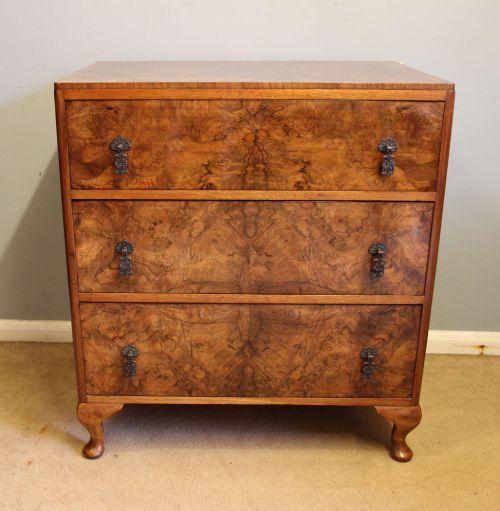
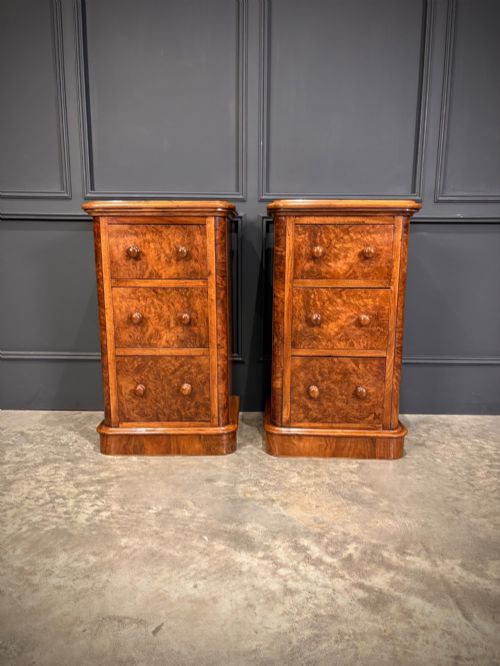
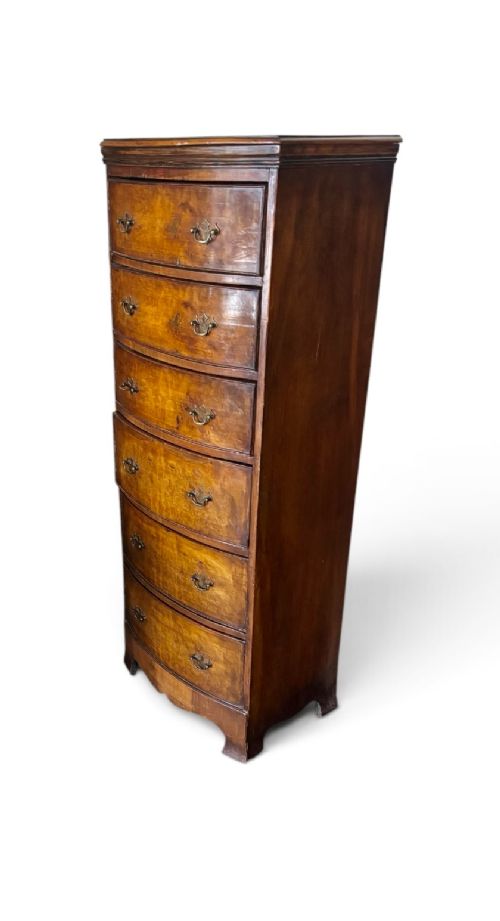

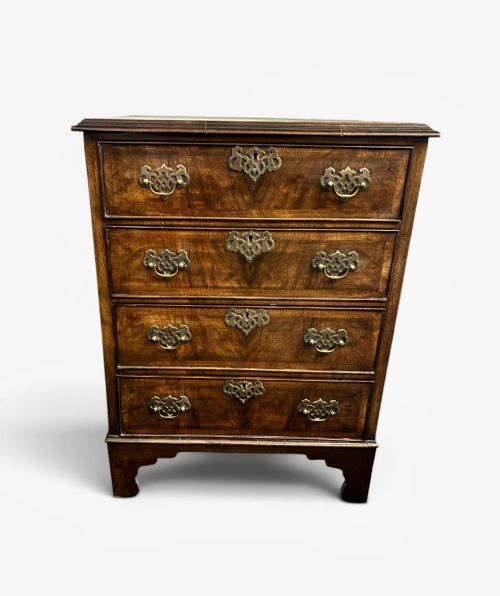
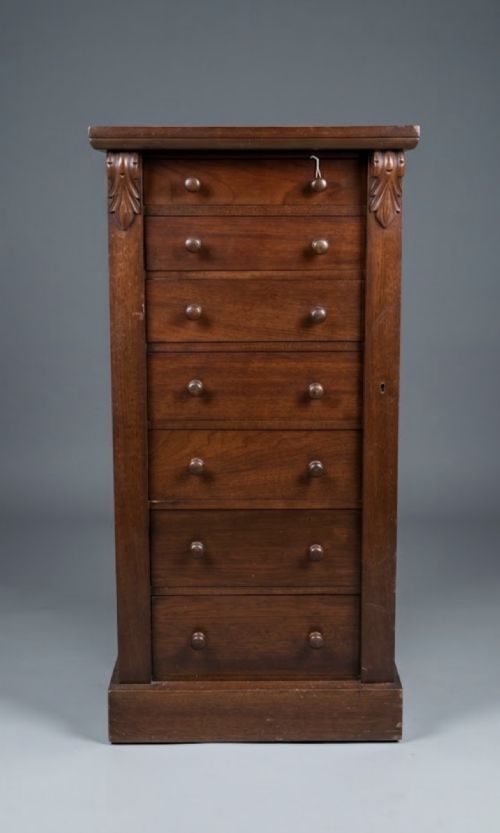
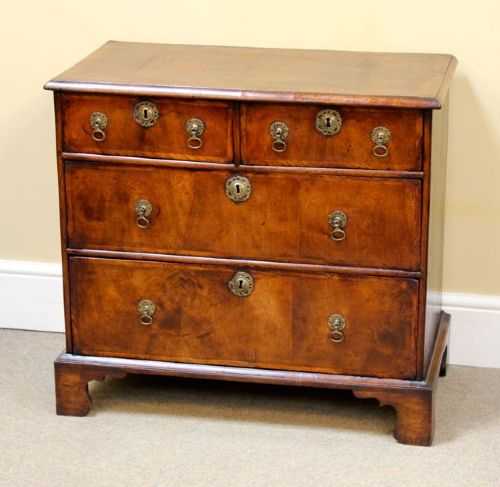
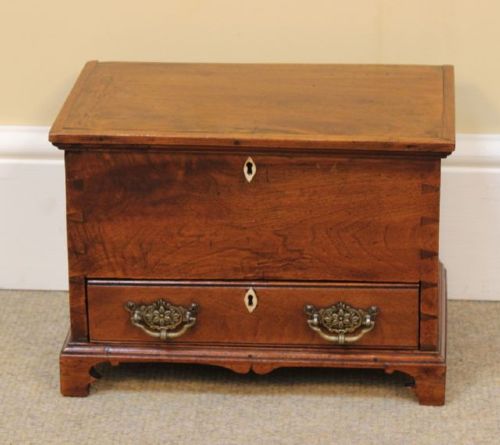
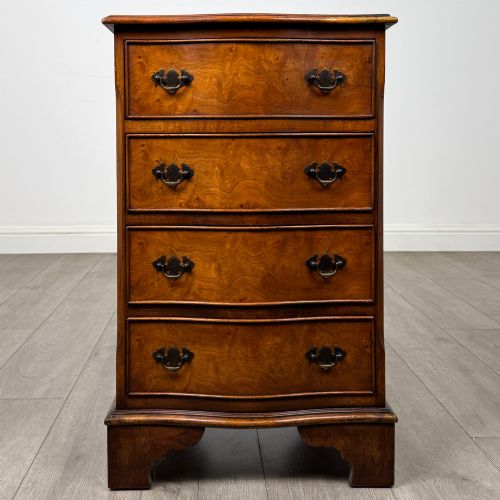
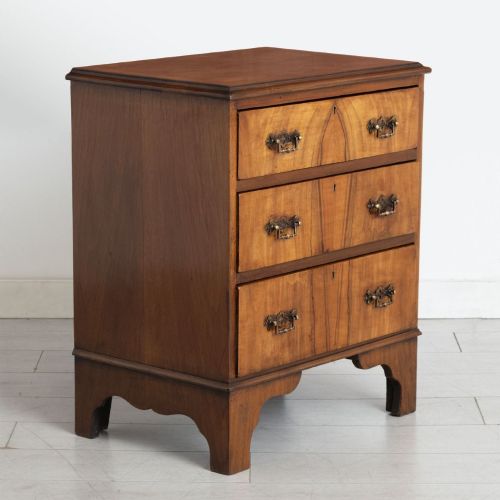
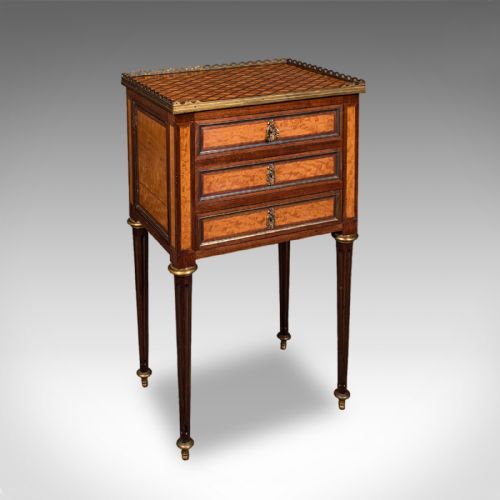
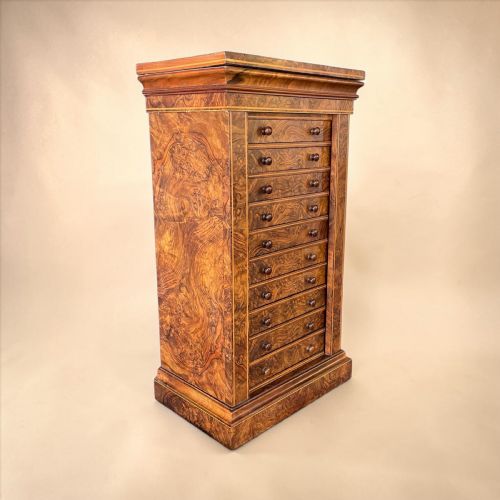
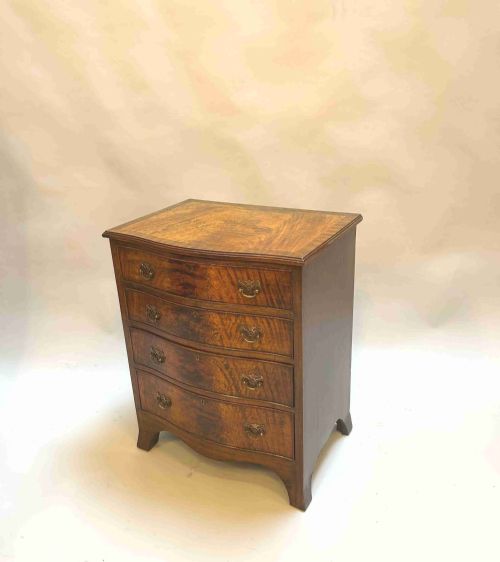
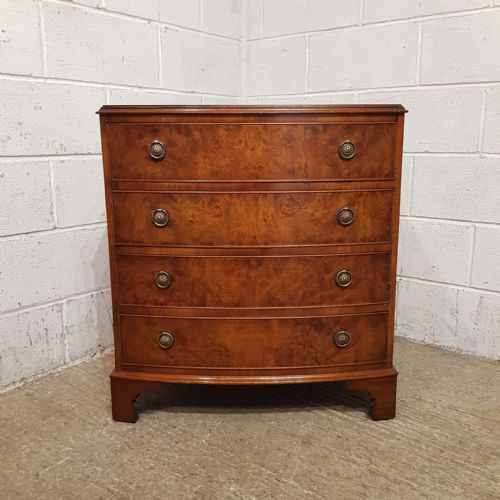
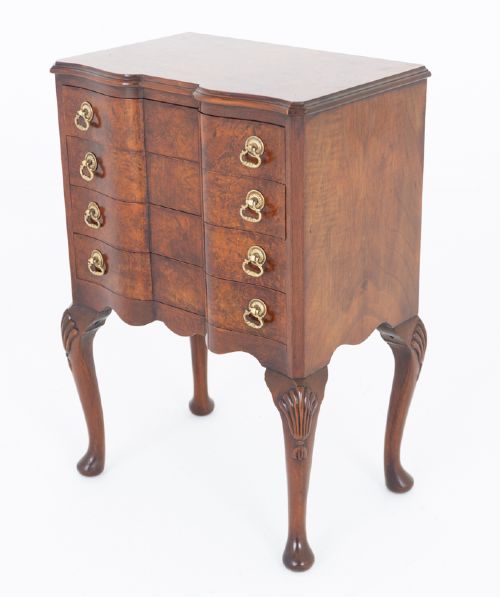
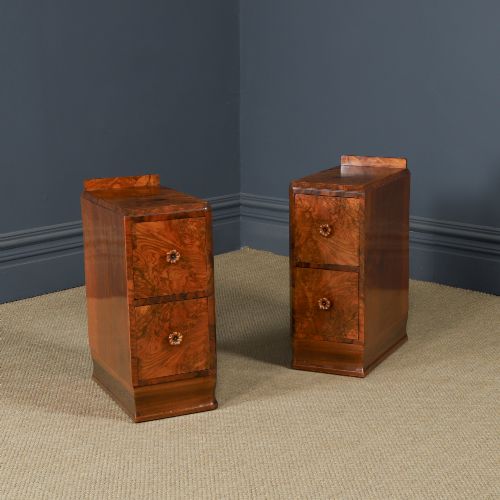
Walnut Small Chest of Drawers
When you search for a walnut small chest of drawers, you seek compact timber storage uniting rich grain with practical proportions.
Walnut Small Chest of Drawers
A walnut small chest of drawers is a compact storage piece designed for domestic rooms where floor space is limited, appearing in forms ranging from bedside cabinets and tallboys to miniature collector items.
The selection encompasses antique and revival pieces spanning the 18th century through to the art deco era of the 1930s, reflecting shifts in taste from Queen Anne and Georgian styles to later Edwardian interpretations.
How they were made
Cabinetmakers utilised timber and veneer, particularly burr walnut and figured walnut, laid over secondary woods such as oak to create patterned surfaces on drawer fronts and tops.
Construction techniques involved traditional joinery paired with brass hardware, drawer pulls, and occasionally marble inserts, depending on the period of manufacture.
Listings feature walnut small chest of drawers examples spanning the 18th century, Victorian era, and 1930s art deco period.
What varies in quality
Quality rests on the selection and matching of the walnut veneer figures across the drawer fronts, alongside the crispness of the secondary timber framing and the integrity of the original brass handles.
Proportions and execution separate standard production from finer cabinet work, where subtle serpentine or bow front curves demand precise woodworking skill.
The Walnut Small Chest of Drawers Glossary
- Burr walnut
- A figured wood grain taken from the warted growths of walnut trees, prized for its swirling patterns on drawer fronts and table tops.
- Bow front
- A convex curved cabinet front that projects outward at the centre, offering a softer silhouette than a flat facade.
- Serpentine
- A shaped furniture front featuring a concave centre flanked by convex outer curves, requiring advanced woodworking skill.
- Wellington chest
- A tall, narrow bedside or bedroom chest secured by a hinged vertical locking bar that fastens over the drawer edges.
Walnut Small Chest of Drawers: Frequently Asked Questions
How were small walnut chests used?
These compact pieces served primarily in bedrooms and parlours for storing personal items, linens, or valuables.
Over later periods, many were adapted as bedside tables or nightstands to hold lamps and books alongside the bed.
How do I spot an 18th-century piece?
Early pieces from the Georgian and Queen Anne eras display solid timber construction, hand-cut dovetails, and understated proportions.
Later revival examples often rely on applied burr veneers and machine-cut internal elements characteristic of the 19th and 20th centuries.
Are these chests suitable for modern homes?
Their modest footprints make them exceptionally versatile for contemporary bedrooms, hallways, or living spaces needing surface area and concealed storage.
They pair easily with diverse interior styles while providing functional drawers without dominating a room.
What is a miniature chest?
Miniature chests and apprentice pieces are scaled-down versions of larger furniture forms, often created to demonstrate a cabinetmaker's skill.
Collectors prize these diminutive items for their precise replication of full-sized joinery and detailing in miniature proportions.