



Victorian Walnut Bedside Lockers
These Victorian walnut bedside lockers are practical bedroom storage pieces that bring rich timber grain and classic nineteenth-century design to the bedside.
Victorian Walnut Bedside Lockers
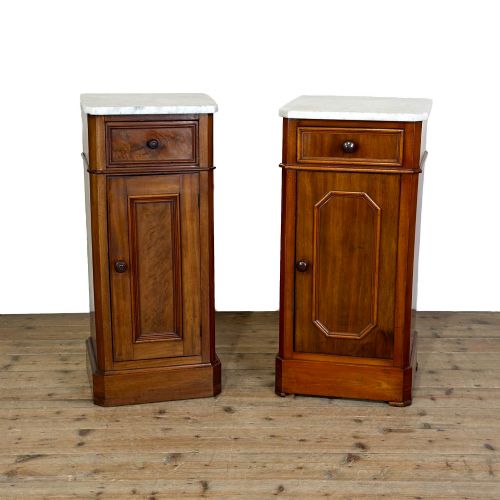
These Victorian walnut bedside lockers span several decades of production from the mid to late nineteenth century, appearing alongside occasional Edwardian and later pieces. You will frequently find them offered in pairs, designed as small cabinets, pot cupboards, or miniature chests of drawers.
The forms vary from simple single-door cupboards to multi-drawer chests and bowfront shapes, occasionally featuring military-style brass binding or marquetry inlay. They serve equally well as lamp stands or small side cabinets within a traditional room.
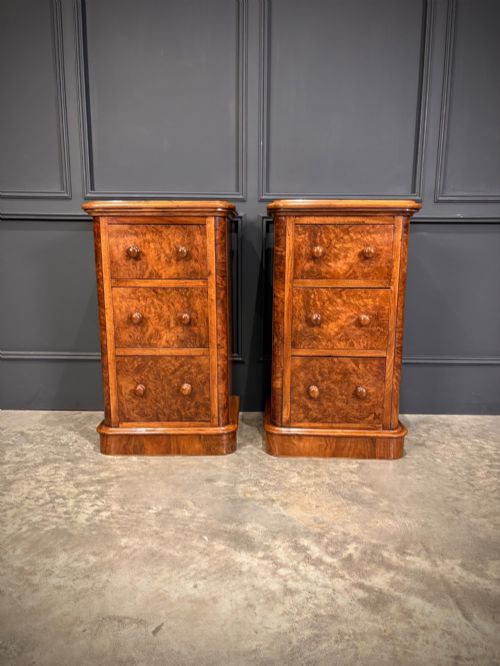
Origins stretch from standard Victorian workshops to specific regional variations including Italian walnut and blonde walnut examples. The selection regularly includes burr walnut surfaces that show highly figured grain patterns.
Materials and construction
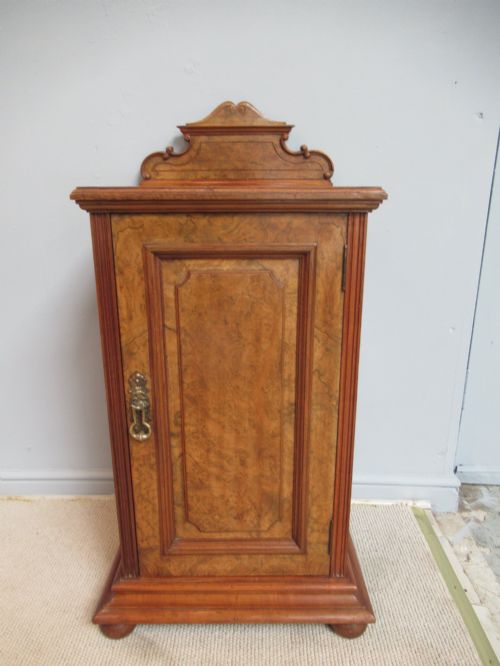
Cabinetmakers utilised solid timber frames alongside finely figured veneers, notably burr walnut, laid over secondary woods such as pine. Boxwood stringing and marquetry inlay appear on selected surfaces for decorative contrast.
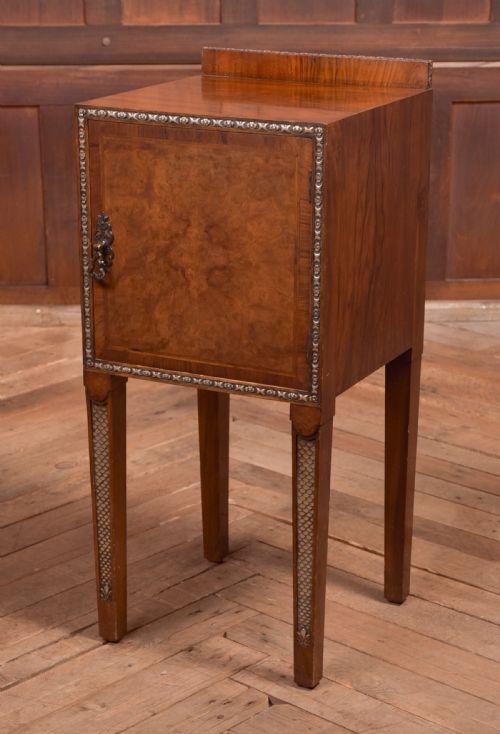
Metal hardware plays a structural and decorative role, with brass handles, hinges, and occasional military-style corner mounts fixed securely to the timber. Interior components rely on traditional joinery methods suited to smaller domestic furniture.
Several pairs hide internal shelving originally intended to hold nineteenth-century chamber pots.
Quality and proportion
The distinction between tiers rests primarily on the choice of timber and the complexity of the form, such as a bowfront or a multi-drawer chest rather than a simple single-door cupboard. Matched pairs command greater attention than mismatched pieces due to the balance they bring to a room.
Refinement in the cabinetwork, from the depth of the burr walnut figuring to the precision of the brass binding and inlay, separates standard utilitarian pieces from more ambitious workshop productions.
The Victorian Walnut Bedside Lockers Glossary
- Burr walnut
- A prized timber harvested from walnut tree growths, producing swirling, intricate grain patterns across the surface. Cabinetmakers selected these sections for prominent display on drawer fronts and cabinet doors.
- Pot cupboard
- A traditional name for a bedside cabinet originally designed to house a chamber pot. These practical units typically feature a single door enclosing a shelf.
- Marquetry
- The art of applying decorative pieces of veneer to a structure to form intricate designs. This technique appears on select side cabinets and lockers.
- Military style
- A utilitarian design aesthetic characterised by flush brass corners and recessed handles. This approach provided durability for campaign furniture.
- Bowfront
- A convex, curved front profile found on larger lockers. This shape softens the angles of the bedroom furniture.
Victorian Walnut Bedside Lockers: Frequently Asked Questions
What is the difference between a bedside locker and a pot cupboard?
Bedside lockers generally refer to enclosed cabinet forms or small drawer chests positioned beside a bed, while pot cupboards specifically designate the historical term for single-door units housing interior shelving.
In practical modern usage, both terms describe the same compact bedroom furniture category and serve identical bedside storage functions.
Are these lockers usually sold as pairs?
Many examples on this page are offered as matched pairs, reflecting how they were originally commissioned for twin or master bedrooms during the nineteenth century.
Single lockers do appear regularly, originating from sets that were separated over time or manufactured independently.
How do I care for walnut veneer surfaces?
Walnut veneer benefits from regular dusting with a soft, dry cloth and protection from direct sunlight and excessive moisture changes. Avoid modern silicone polishes, choosing instead traditional beeswax applied sparingly to nourish the timber grain.
Keeping the environment stable prevents the underlying veneer from lifting or drying out over the decades.
What styles accompany Victorian walnut lockers?
While the primary aesthetic is Victorian, related styles such as Queen Anne Revival, Edwardian, and Renaissance Revival appear across the selection. These subsequent styles borrowed earlier proportions and walnut materials while introducing subtle decorative shifts.
Design details like marquetry inlay or brass military mounts often help distinguish these various period revivals.