


Small Central Asian Carpet
When a buyer seeks a small central asian carpet, they find tribal weavings made for nomadic life and domestic use.
Small Central Asian Carpet
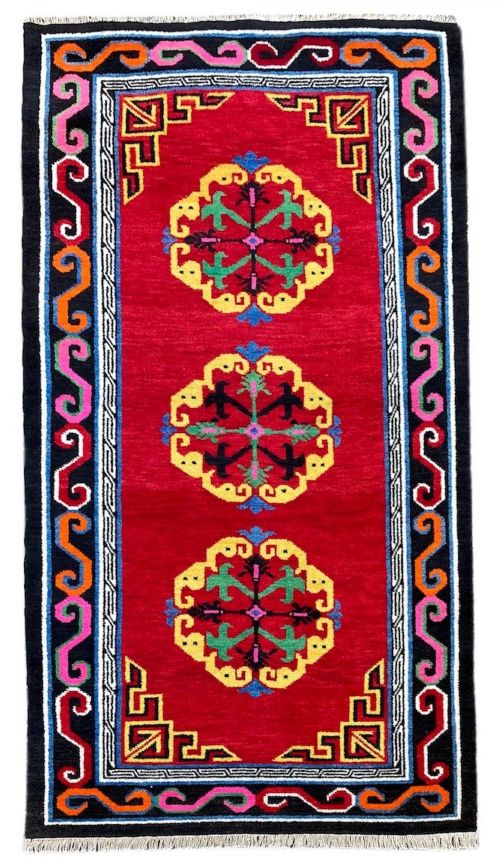
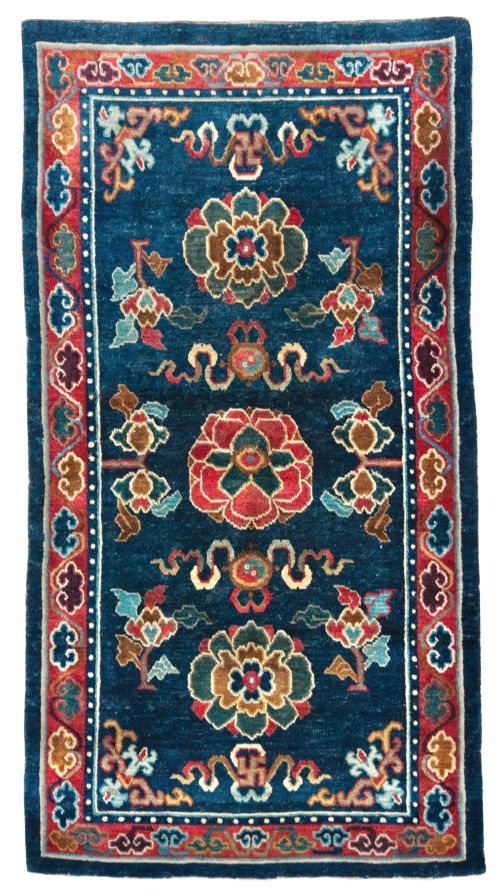
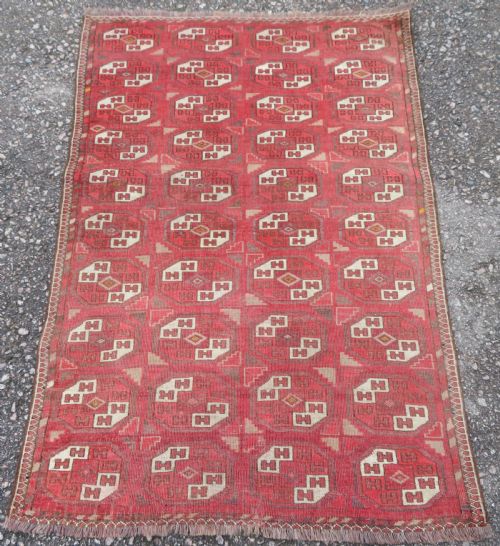
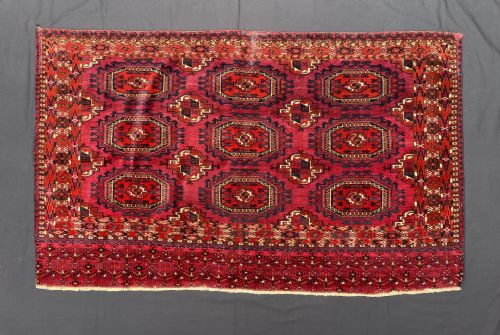
A small central asian carpet encompasses tribal weavings created by nomadic and village groups across the region, including Turkmen tribes such as the Tekke, Yomut, Ersari, and Saryk. These pieces frequently take the form of utilitarian bag faces, torbas, chuvals, and small dowry rugs rather than floor coverings intended for large rooms.
The selection on this page demonstrates the diversity of regional formats, ranging from tent door rugs and mafrash faces to prayer rugs and small main carpets. Production dates span from the mid-nineteenth century through to the early twentieth century, reflecting traditional weaving methods passed down through generations.
Tribal identity dictates the specific design vocabulary of each piece, from recurring gul motifs to structural proportions. Buyers encounter works shaped by specific oasis and desert environments, utilised originally within yurt interiors for storage and decoration.
Materials and Construction
Weavers relied primarily on wool for the pile and foundation, selecting soft fleeces that yielded a dense and resilient handle. Cotton and occasional highlights of silk appear in specific design elements, adding contrast to the deep madder grounds.
Natural dyes provide the characteristic palette of reds, browns, and ivory, derived from local plants and minerals. These colorants interact with the wool over decades to develop a rich patina that chemical dyes cannot replicate.
Listings span the nineteenth and early twentieth centuries, dominated by wool and cotton structures infused with natural dyes.
Distinctions in Quality
Quality rests upon the density of the knotting and the precision with which intricate secondary motifs are executed. Finer weaves allow complex tribal guls and border details to maintain sharp definition.
The integrity of the natural dyes and the quality of the original wool dictate the visual depth of the surface. Pieces retaining vibrant, saturated madder tones alongside supple foundations represent the upper tier of surviving examples.
The Small Central Asian Carpet Glossary
- Gul
- A primary medallion or repeating octagonal motif used extensively in Turkmen carpet design. Each tribe traditionally employed distinct gul variations to signal lineage and identity.
- Torba
- A small storage bag woven by nomadic women for use inside the yurt. These rectangular hangings typically feature elaborate field designs and tiered borders.
- Chuval
- A large tent bag utilised for domestic storage during seasonal migrations. Their faces survive frequently as independent collector fragments.
- Mafrash
- A trapezoidal panel belonging to a bedding storage chest. These woven faces display dense geometric patterns suited to narrow formats.
- Elem
- The decorated lower panel of a carpet or main bag face, positioned beneath the primary field. It often contains distinctive floral or tree motifs.
Small Central Asian Carpet: Frequently Asked Questions
What is a torba used for?
Nomadic families utilised torbas as storage bags hung against the lattice walls of the yurt. They held smaller household possessions and personal items.
Over time, many of these utilitarian pieces were preserved separately from their original backing fabrics as decorative textiles.
How can I identify a Tekke rug?
Tekke carpets and bag faces generally feature orderly rows of principal guls separated by secondary quarter-guls. The palette relies heavily on rich red and brown tones.
Finer examples display exceptionally dense knotting and soft wool foundations characteristic of nineteenth-century oasis production.
Are these carpets suitable for floor use?
While originally made for active domestic and nomadic environments, antique pile pieces of this age experience wear under heavy foot traffic. Many collectors prefer to display them on walls or in low-traffic areas.
Proper padding and careful placement help preserve the fragile wool and natural dye foundations.
What distinguishes natural dyes here?
Natural dyes derived from madder and other regional plants produce nuanced tonal variations known as abrash. These shades soften harmoniously as the wool ages.
Synthetic alternatives introduced later lack the depth and subtle colour shifts found in nineteenth-century pieces.