
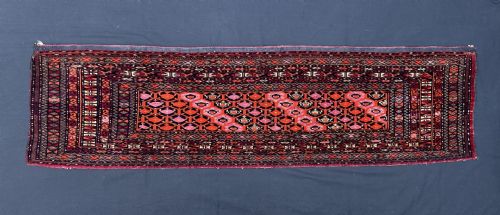


Burgundy Tribal Woven Bag
These burgundy tribal woven bag examples are Central Asian textile pieces offering rich nomadic artistry and deep madder tones.
Burgundy Tribal Woven Bag
A burgundy tribal woven bag represents nomadic textile artistry originating primarily from Turkmenistan and the wider Central Asian region during the nineteenth century. These pieces include torba faces, chuvals, and kap bags created by specific tribal groups such as the Tekke, Yomut, Ersari, Sariq, and Salor.
The version most likely to be met on this page is a nineteenth-century Turkmen bag face or complete small storage piece, typically displaying rich madder red and burgundy grounds. These woven textiles functioned traditionally within nomadic tent interiors for storage and domestic organisation before finding appreciation as decorative wall art.
Materials and construction
The construction relies entirely on hand-spun wool combined with natural dyes to achieve the deep burgundy and red tones characteristic of these nomadic weavings. Cotton also appears in certain structural elements or foundation details.
Weaving techniques involve precise knotting and flatweave construction, often paired with plain weave backs on complete pieces. Artisans utilised natural dye sources to establish enduring colour palettes that remain vibrant across decades.
Nomadic weavers packed household bedding so tightly into these bags that the wool backing took on the exact shape of the yurt floor.
Assessing quality in nomadic weaving
Quality is distinguished by the fineness of the weave and the complexity of the gul motifs, such as Salor or schemle designs. Tighter knotting and meticulous execution of curled leaf or kedjebe patterns separate finer examples from standard production.
Condition and completeness also define the upper tier, noting whether pieces retain original plain weave backs or complete structural integrity. The clarity and saturation of the natural dyes further elevate the standing of individual bags.
The Burgundy Tribal Woven Bag Glossary
- Torba
- A small bag used by nomadic groups for domestic storage inside the yurt. These rectangular pieces frequently feature elaborate face designs.
- Chuval
- A large storage bag utilised for bedding and household goods by Turkmen tribes. They often display multiple prominent guls.
- Gul
- A medallion motif repeated across Turkmen carpets and bags to identify specific tribes. Each design carries distinct hereditary significance.
- Madder
- A natural dye plant root utilised to produce rich red and burgundy tones in traditional textiles. It provides the dominant colour foundation for these pieces.
- Kap
- A small storage bag or container produced across the Trans-Caspian steppes. These items served practical nomadic transport and storage functions.
Burgundy Tribal Woven Bag: Frequently Asked Questions
How were these bags used?
Nomadic families hung these woven containers inside their dwellings to keep belongings organised and protected. They served as functional storage for domestic items.
Today, collectors appreciate them as wall art or decorative accents that bring rich nomadic history into modern interiors.
How do I identify different tribes?
Tribal attribution relies on specific gul motifs, colour palettes, and structural characteristics unique to groups like the Tekke or Yomut. Each weaving community maintained distinct design traditions.
Detailed study of the central medallions and secondary ornaments reveals the specific origins of individual pieces.
What materials are used?
The construction depends on hand-spun wool dyed with natural substances derived from local plants and minerals. Cotton also appears in certain structural weaves.
These traditional materials ensure durability and contribute to the deep burgundy and red hues characteristic of the region.