
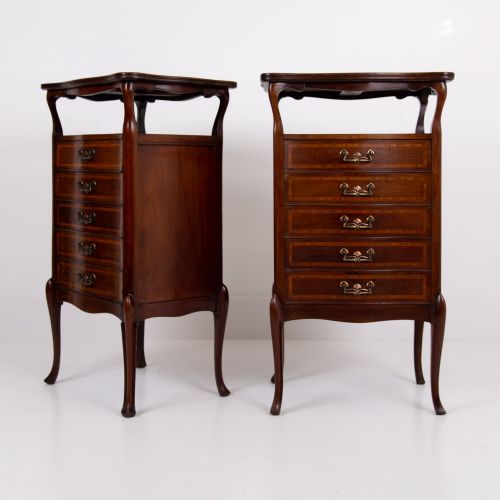
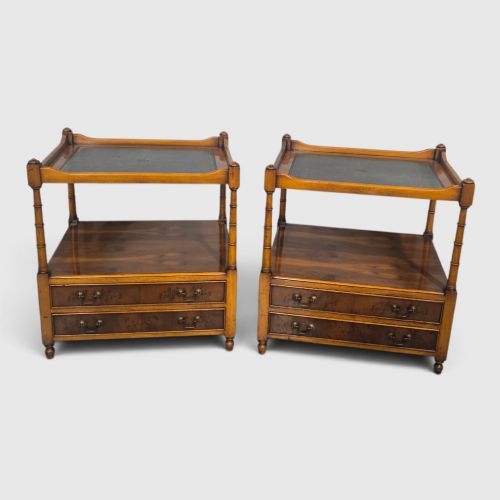

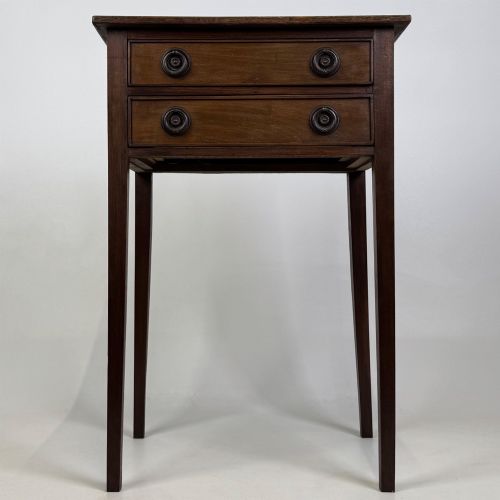
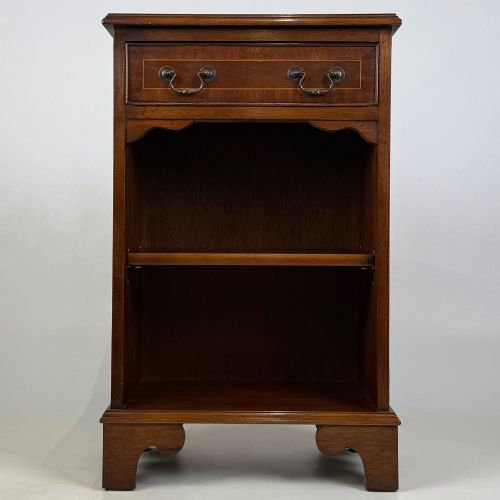
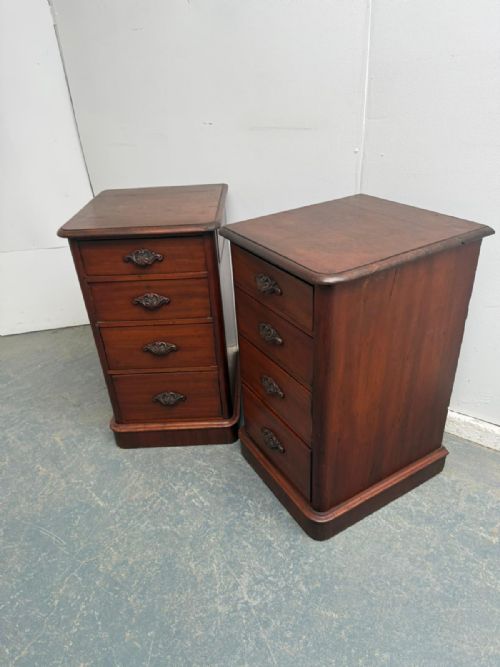
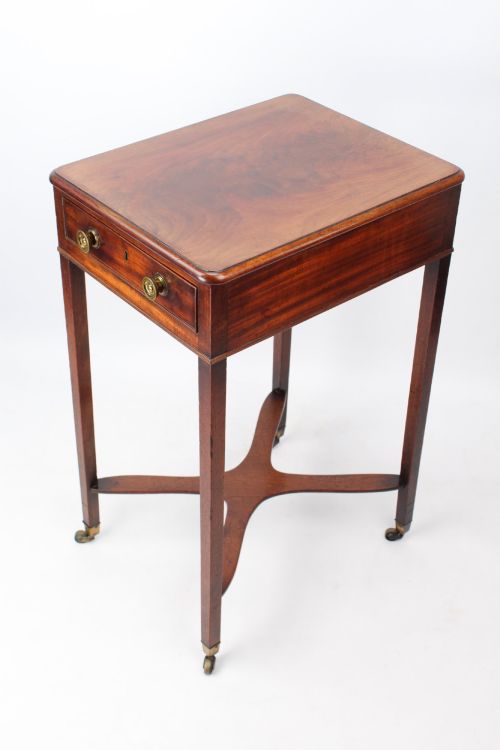
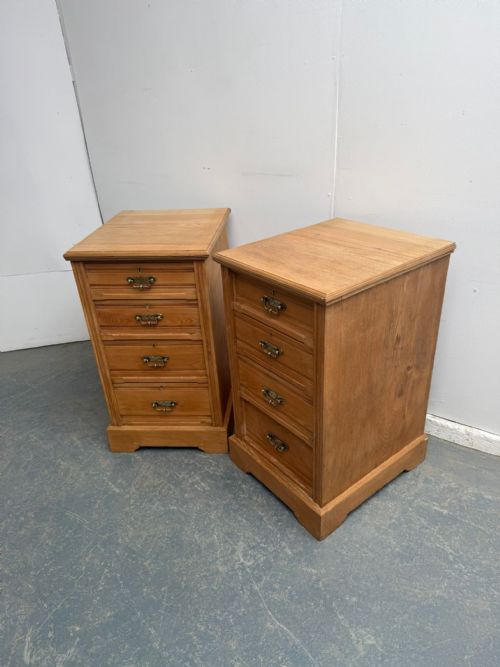
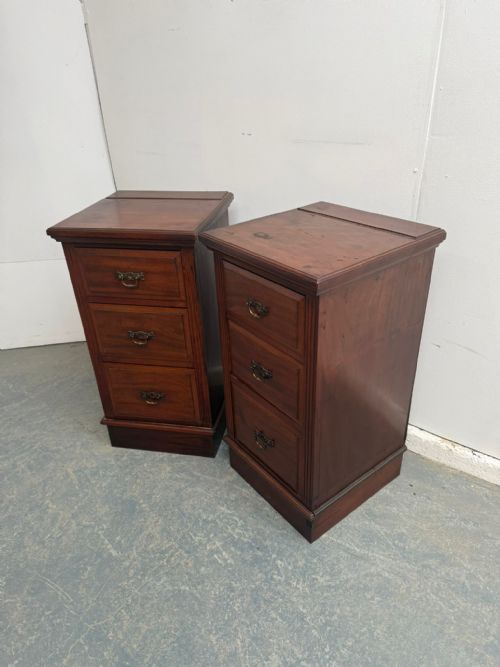
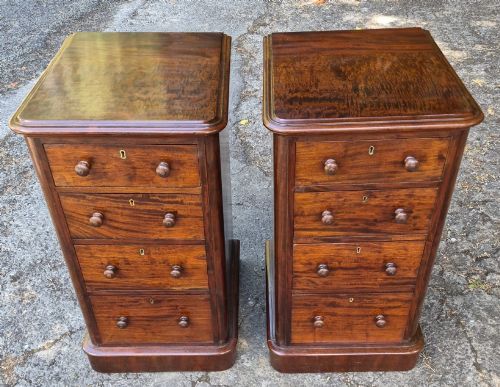
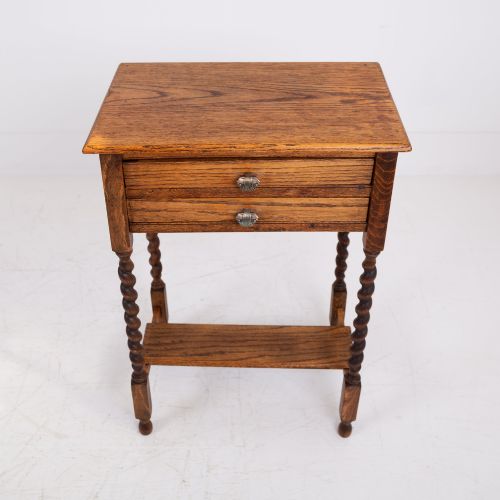
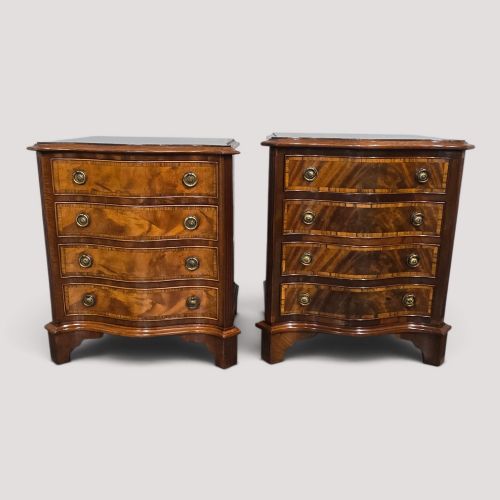
Small Bedside Drawers
Small bedside drawers serve as compact storage beside a bed, offering practical surface space and concealed compartments within modest proportions.
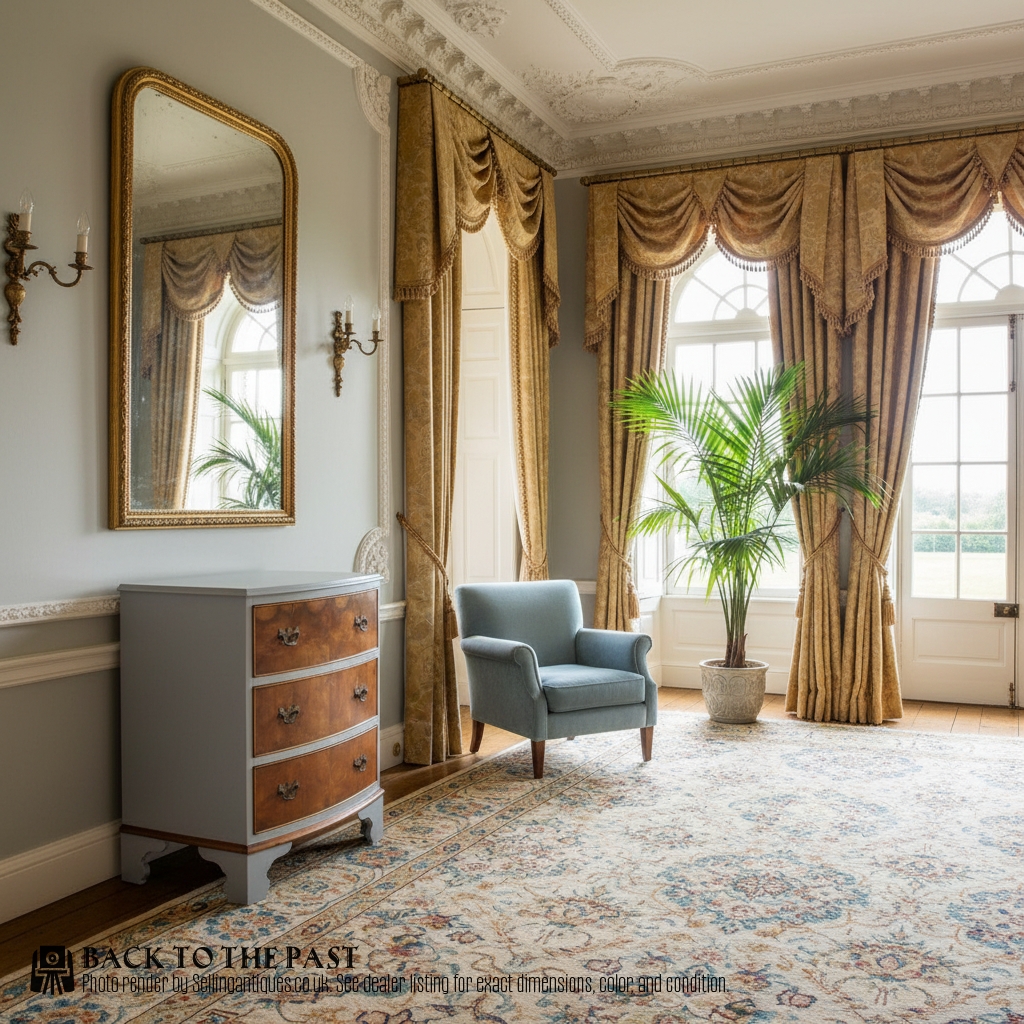
Small Bedside Drawers
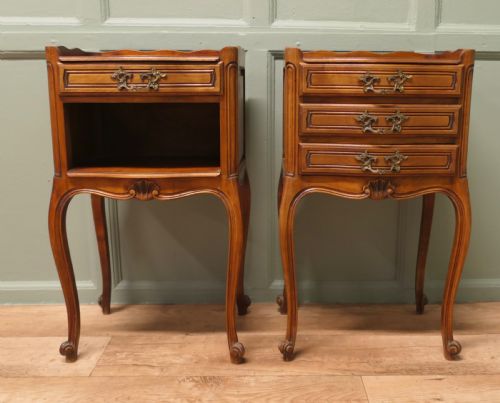
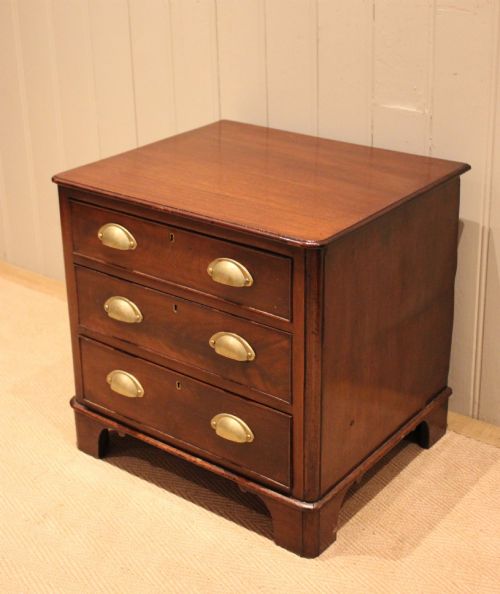
Small bedside drawers span several historical periods, appearing frequently in Victorian, Edwardian, and Georgian forms alongside 1920 and 1930 designs. Buyers searching this phrase encounter low chests of drawers, nightstands, and dedicated bedside cabinets adapted for domestic sleeping quarters.
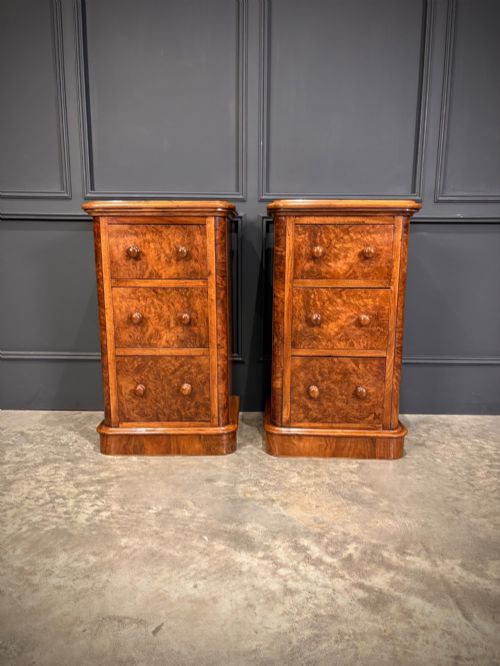
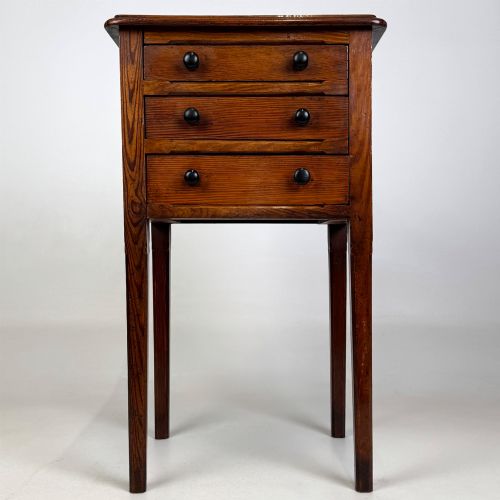
Mahogany and walnut predominate among the materials, often complemented by burr walnut veneers, oak, ash, and pitch pine. These pieces range from simple side tables with a single drawer to taller Wellington chests and serpentine commodes.
Origins vary across English, French, and Swedish traditions, incorporating styles from Queen Anne Revival to Art Deco. Many examples survive as matched pairs, while others present individual proportions suited to compact spaces.
Construction and materials
Cabinetmakers utilised solid timbers such as mahogany, oak, and walnut for structural integrity, applying decorative wood veneers like burr walnut, kingwood, and tulipwood to drawer fronts and top surfaces. Waxed finishes protect the timber while highlighting natural grain patterns.
Brass handles, pulls, and key escutcheons provide functional hardware accents across both Georgian prototypes and later revival pieces. Drawer construction relies on traditional joinery methods suited to the demands of daily use in domestic chambers.
Secret locking stiles on tall Wellington chests keep midnight reading habits safe from curious eyes.
Distinctions in manufacture
Superior examples display careful timber selection, particularly in the matching of figured veneers like burr walnut across multiple drawer fronts. The crispness of carved details, the tightness of dovetail joints, and the balanced proportions of serpentine or bow fronts separate finer specimens from utilitarian items.
Original hardware and consistent surface patination contribute to the integrity of a piece. Alterations or adaptations, such as chests modified from larger furniture or nineteenth-century pieces adjusted in height, influence the character and historical continuity of the cabinet.
Gomme
The Small Bedside Drawers Glossary
- Wellington chest
- A tall, narrow chest of drawers typically secured by a hinged locking stile on one vertical edge. This form originates from the nineteenth century and offers substantial vertical storage within a small floor footprint.
- Serpentine
- A front contour characterised by a convex central section flanked by concave curves. This shaping demands precise woodworking skills.
- Bachelors chest
- A low, compact chest of drawers featuring a fold-over top or a brushing slide above the primary drawers. These multifunctional pieces combine writing surfaces with enclosed storage.
- Commode
- A low cabinet or chest of drawers, often of French origin, raised on legs. The term encompasses decorative bedside storage units finished with fine veneers.
- Veneer
- A thin layer of decorative timber applied to a secondary wood foundation. Burr walnut and tulipwood veneers create patterned surfaces on drawer fronts.
Small Bedside Drawers: Frequently Asked Questions
What periods do these drawers come from?
These pieces date from the eighteenth century through to the 1930s, encompassing Georgian, Victorian, Edwardian, and Art Deco eras.
Revival styles from the nineteenth and early twentieth centuries also replicate earlier aesthetic traditions.
Are pairs common for bedside use?
Many listings include matching or near-matched pairs of cabinets and chests designed to flank a bed symmetrically.
Single pieces also appear frequently for standalone placement in smaller rooms.
What woods were used for these cabinets?
Mahogany and walnut form the basis of most pieces, accompanied by oak, ash, and pine.
Exotic veneers such as burr walnut, kingwood, and tulipwood appear on decorative surfaces.
How do I identify a bedside chest from a standard chest?
Bedside chests feature reduced proportions in height, width, and depth to sit level with typical mattress heights.
They often incorporate specific drawer configurations or cabinet doors suited to bedside storage.