
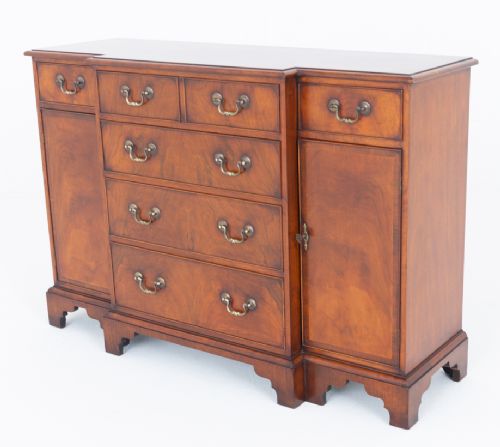


Georgian Revival Walnut Chest
These pieces of georgian revival walnut chest furniture offer classic proportions and rich timber figuring for the modern home.
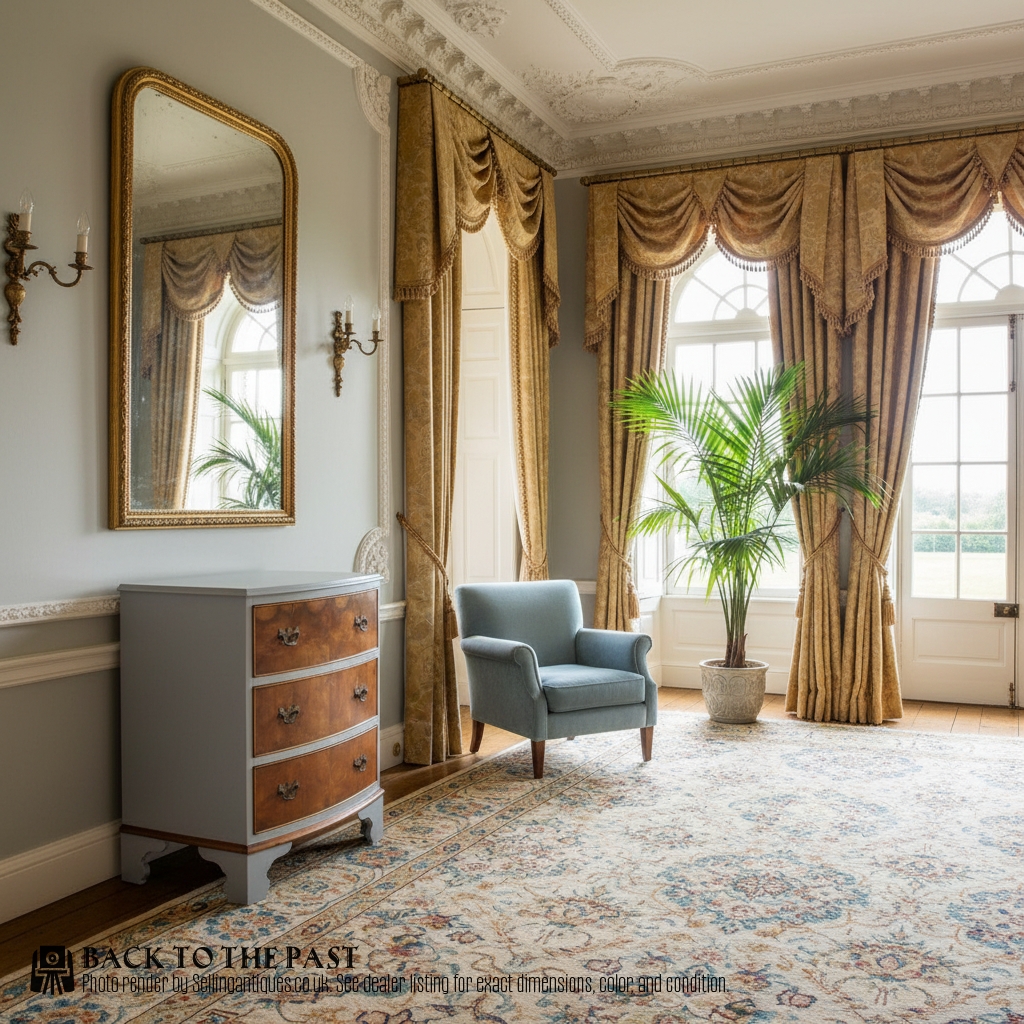
Georgian Revival Walnut Chest
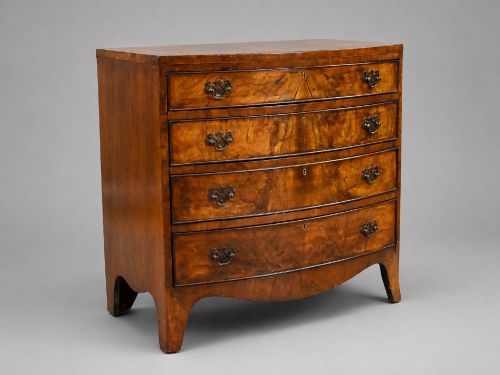
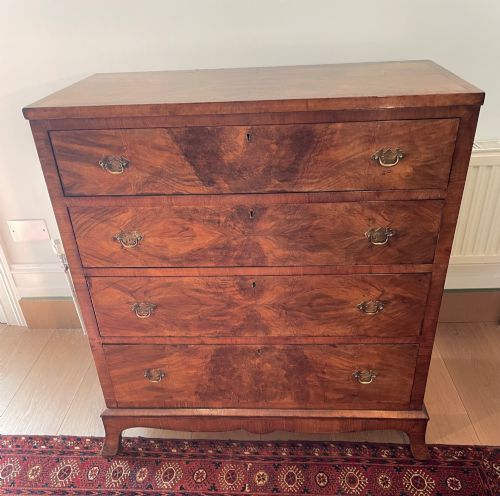
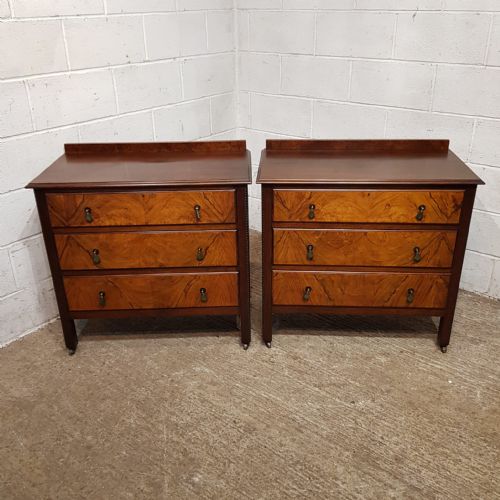
A georgian revival walnut chest draws upon earlier eighteenth-century designs, reinterpreted during the early twentieth century, particularly the nineteen-twenties and nineteen-thirties. You will most frequently encounter chests of drawers in various heights, alongside occasional sideboards, tallboys, and bedside cabinets.
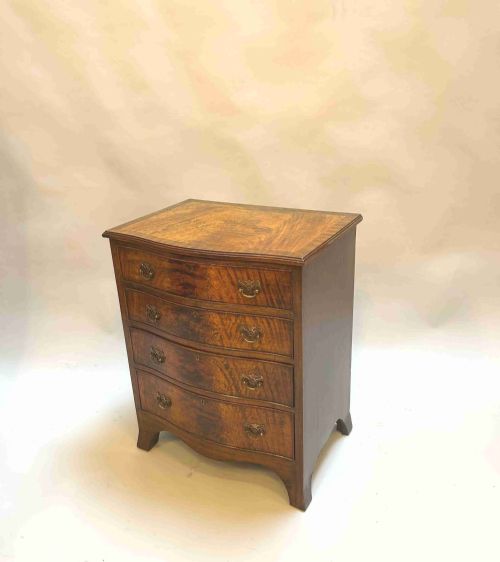
Makers of this period favoured forms with bow fronts, serpentine shapes, and bachelors slides, constructed primarily during the Edwardian era and the interwar decades. These items combine traditional drawer configurations with the distinct aesthetic of the George V period.
How They Were Made
Craftsmen utilised solid walnut, oak, and pine alongside decorative veneers of burr walnut and figured walnut to achieve rich surface patterns. Drawer linings often incorporated secondary timbers such as oak or pine.
Brass hardware, including swing handles and escutcheons, was fitted to complement the dark grain of the timber. Selected pieces also featured painted wood finishes or specialised block fronts.
What Varies In Quality
The selection of timber grain largely determines the visual appeal, with heavily figured burr walnut commanding greater attention than plain walnut surfaces. Smooth veneer application and consistent matching across drawer fronts separate standard items from finer examples.
Structural integrity depends on the precision of drawer construction and the stability of secondary woods like oak and pine. Original brass mounts and retained elements such as brushing slides also indicate superior craftsmanship.
The Georgian Revival Walnut Chest Glossary
- Burr walnut
- A specialised timber veneer taken from the growth burls of the walnut tree, prized for its swirling, highly figured grain patterns. It provides a highly decorative surface on drawer fronts and top panels.
- Bow front
- A convex, outwardly curved furniture front that softens the linear geometry of a chest. This shape appears frequently on twentieth-century revival pieces.
- Tallboy
- A tall chest of drawers, often constructed as a chest on chest or a single elevated cabinet. It offers substantial vertical storage capacity.
- Bachelors slide
- A pull-out shelf fitted just above the top drawers, historically used as a writing surface or temporary shelf. It remains a desirable feature on select chest formats.
- Block front
- A furniture front divided vertically into three sections, with the outer sections raised and the central section recessed. This technique adds depth and shadow to the facade.
Georgian Revival Walnut Chest: Frequently Asked Questions
When were these chests made?
Most pieces date from the early twentieth century, spanning the Edwardian period through the nineteen-thirties. They replicate eighteenth-century Georgian styles using the manufacturing methods of that later era.
Production clustered heavily around nineteen-twenty and nineteen-thirty, reflecting a strong revivalist interest in walnut furniture.
What woods are used?
Construction relies primarily on walnut, featuring decorative veneers of burr walnut and figured walnut across the visible exterior surfaces. Secondary timbers like oak and pine appear inside drawer frames and carcase backs.
Selected items incorporate brass hardware and occasional painted wood elements to complete the design.
How do I style one?
A chest of drawers or bedside cabinet suits both traditional and contemporary interiors by introducing warm timber tones and figured grain patterns. Their compact proportions make them practical for bedrooms, hallways, or living spaces.
Pair them with neutral walls to highlight the natural patterns of the walnut veneer.
What is a bachelors slide?
A bachelors slide is a pull-out wooden shelf integrated directly above the top drawer of a chest. It served as a compact writing surface or a temporary resting place for clothing.
Its presence usually indicates a more detailed and desirable cabinet specification.