


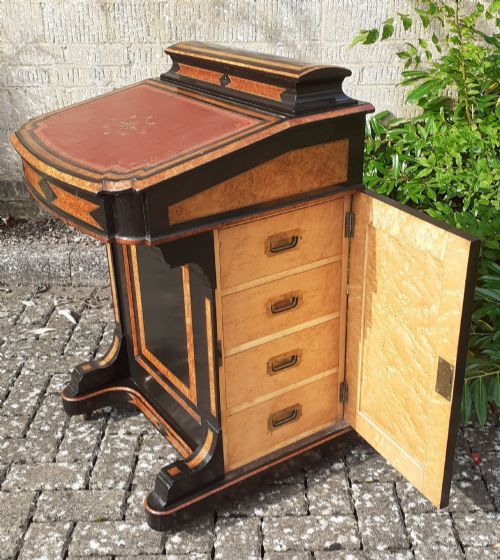
Slanted Top Writing Desk
A slanted top writing desk brings functional workspace and concealed storage together, offering a practical antique for daily study and correspondence.
Slanted Top Writing Desk
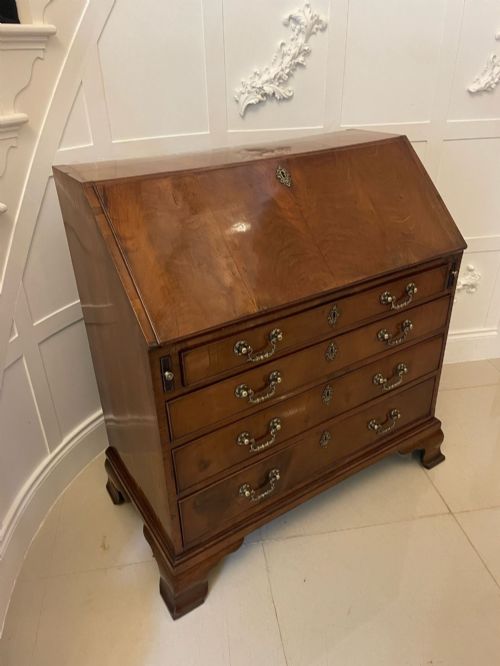
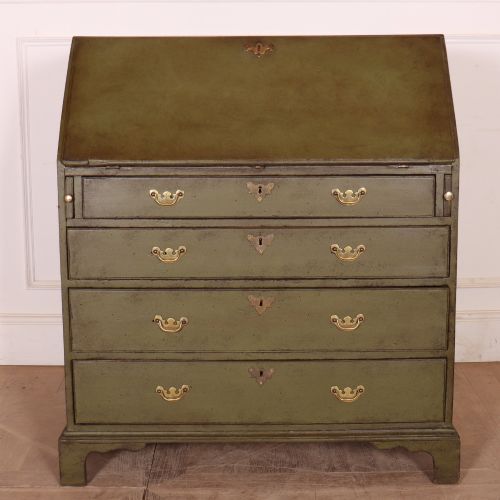
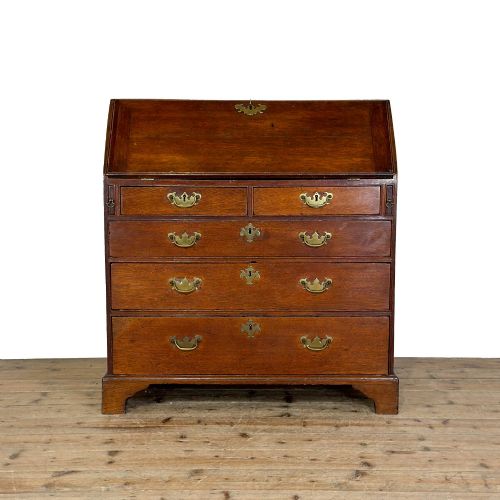
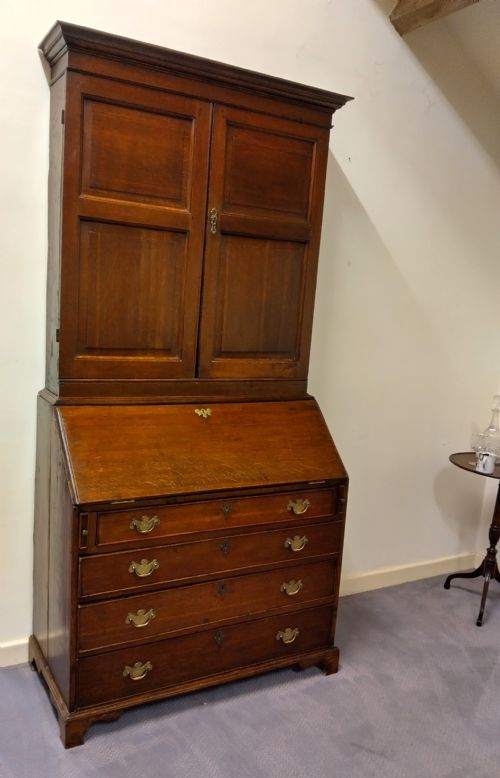
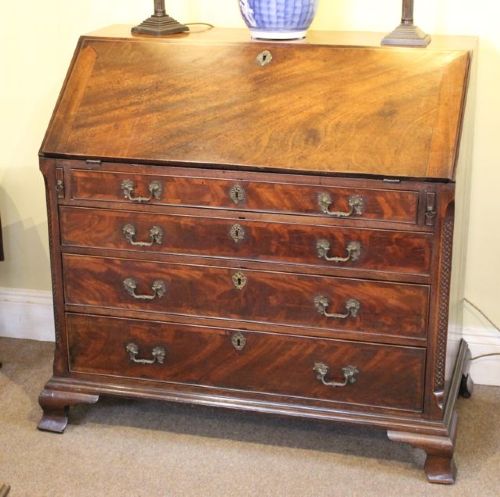
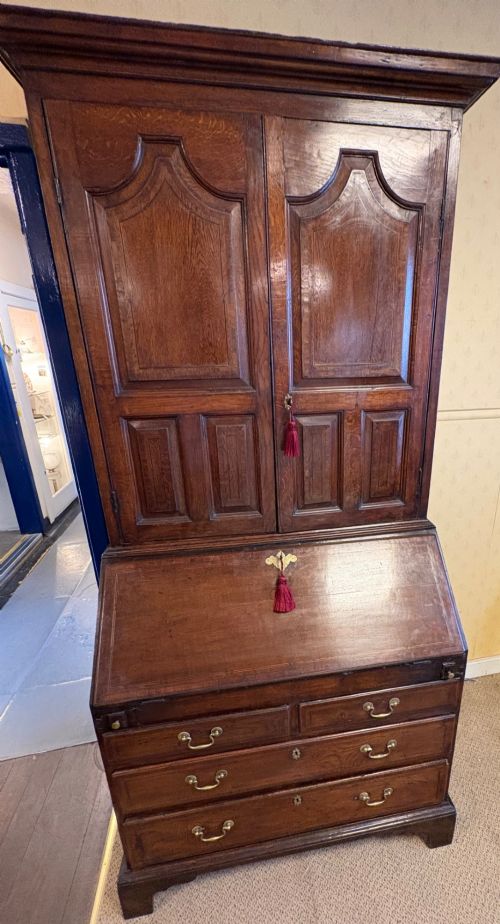
A slanted top writing desk primarily takes the form of a bureau or bureau bookcase, featuring a hinged writing flap that opens down to reveal an inner arrangement of small drawers and pigeonholes. These pieces emerge across the seventeenth, eighteenth, nineteenth, and twentieth centuries in regional woods, built to house paper supplies and writing instruments.
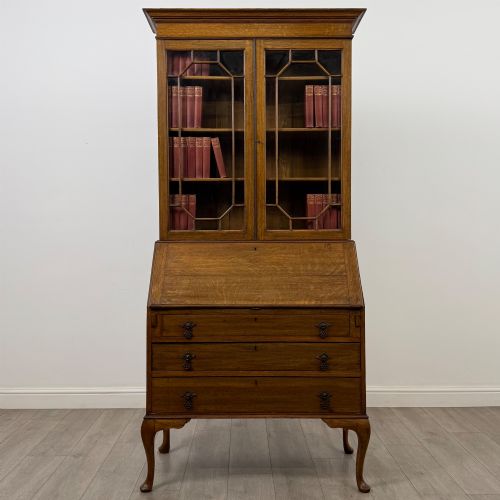
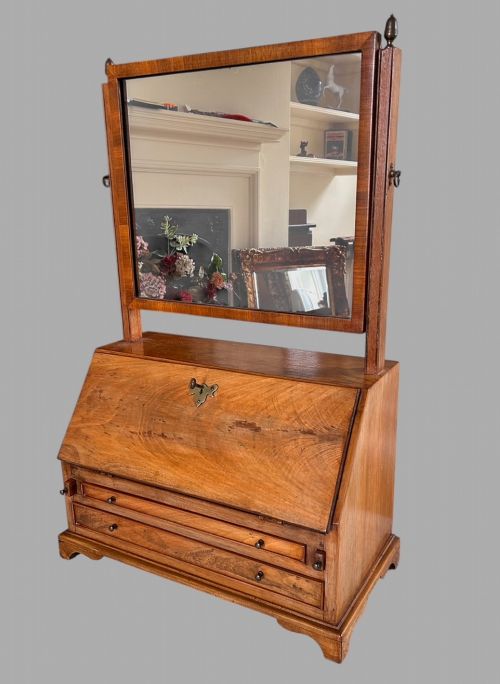
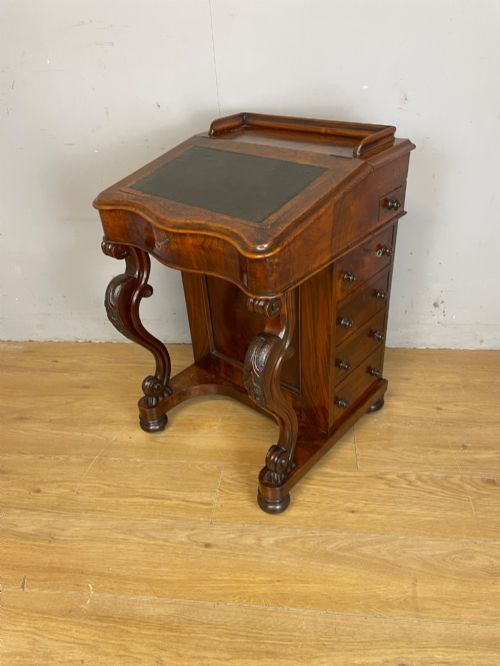
Buyers also encounter compact variations such as the Davenport desk and the tabletop bureau, along with larger architectural pieces like clerks desks and bureau bookcases. The selection spans distinct eras including Georgian, Victorian, and Edwardian periods, demonstrating how the writing surface evolved from simple folding lids to elaborate stationery compartments.
The materials utilised range from native hardwoods like oak and mahogany to decorative veneers such as burr walnut, rosewood, and amboyna, often enhanced with marquetry or inlay. Such variety ensures that a slanted top writing desk fits modest domestic corners as well as expansive studies.
Materials and construction
Cabinetmakers constructed the primary carcase of a slanted top writing desk using solid timbers such as oak and mahogany, or applied choice veneers of burr walnut and rosewood over a secondary wood base. Dovetail joints secured the drawer construction, while hinged brass or iron mechanisms supported the sloping writing flap.
Interior fittings frequently involved intricate pigeonholes, stepped drawers, and sliding compartments constructed with fine subsidiary timbers. Secondary details incorporated leather writing inserts, brass mounts, and inlaid banding to finish the writing surface and exterior panels.
Materials documented across the selection include mahogany, oak, burr walnut, rosewood, amboyna, and leather.
Gradations in manufacture
The distinction between tiers of a slanted top writing desk rests upon the selection of timber figures and the precision of the cabinetwork. Pieces displaying book-matched veneers, herring-bone inlay, and untouched original ironwork represent superior execution by skilled makers.
Internal complexity also dictates standing, with fitted interiors possessing secret compartments, stepped shelving, and finely turned pigeonholes achieving greater distinction than plain utilitarian versions. The integrity of the original hinges, writing surfaces, and structural joints defines the lasting standard of each desk.
Gillow & Co
The Slanted Top Writing Desk Glossary
- Bureau
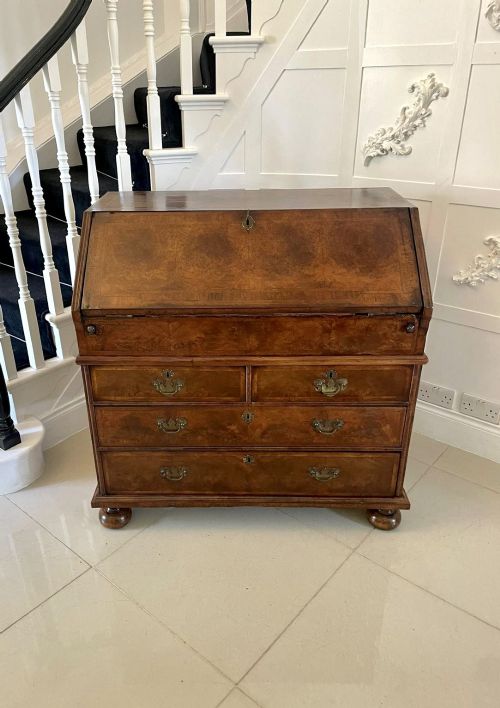
- A desk featuring a sloping hinged lid that opens to form a writing surface above a set of drawers. This term frequently describes the primary form of a slanted top writing desk.
- Davenport
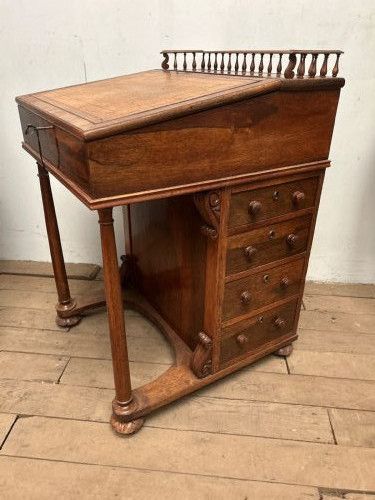
- A compact form of writing desk featuring a slanted writing surface and drawers opening to the side. It gained popularity during the nineteenth century in rosewood, walnut, and amboyna.
- Bureau bookcase
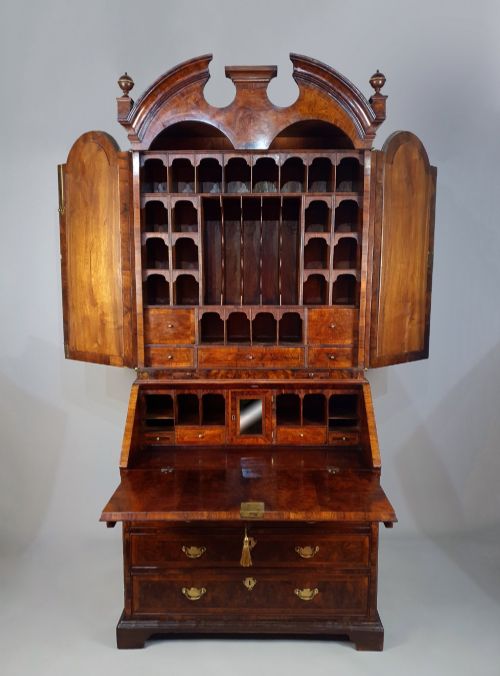
- A taller furniture form combining a slanted top writing desk base with an upper section enclosed by doors. Upper doors commonly feature glass panels or wooden frames.
- Fitted interior
- The arrangement of small drawers, pigeonholes, and compartments concealed behind the sloping lid of a desk. These internal spaces organise stationery and documents.
- Herringbone inlay
- A decorative banding technique using small veneer segments arranged in a V-shaped pattern. This detail frames drawer fronts and writing flaps on walnut pieces.
Slanted Top Writing Desk: Frequently Asked Questions
What is a slanted top writing desk?
A slanted top writing desk is a piece of furniture equipped with an angled hinged flap that serves as a writing surface. Opening the flap provides access to internal compartments and drawers designed for correspondence.
These pieces appear in various configurations, from compact Davenport desks to full-scale bureau bookcases produced across several centuries.
How were these desks used?
Owners utilised these desks for reading, letter writing, and storing private documents within the fitted interior compartments. The sloping lid provided an ergonomic angle for handwriting before the widespread use of flat top tables.
Closed, the slanted lid concealed papers and writing tools, keeping domestic spaces tidy.
Where should I place a desk?
A slanted top writing desk suits studies, living rooms, and bedrooms where floor space allows for the slanted lid to open fully. Compact versions like Davenport desks function well in smaller rooms.
Positioning the piece away from direct sunlight protects delicate veneers such as burr walnut and rosewood from fading.
How do I identify the period?
Identifying the period involves examining the secondary timbers, construction methods, hardware, and stylistic details such as bracket feet or inlaid banding. Eighteenth-century pieces often utilise oak or mahogany with solid drawer linings.
Victorian and Edwardian examples frequently introduce decorative marquetry, amboyna, or alternative woods like pine and satinwood.