




Brass Bound Campaign Desk
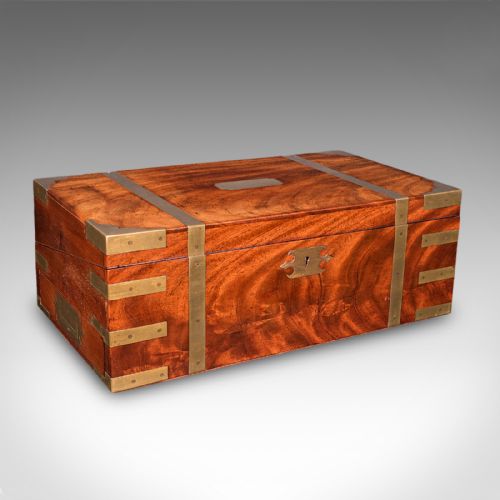
A brass bound campaign desk brings portable heritage into daily life, offering compartmented storage and hinged writing surfaces designed for travel.
Brass Bound Campaign Desk
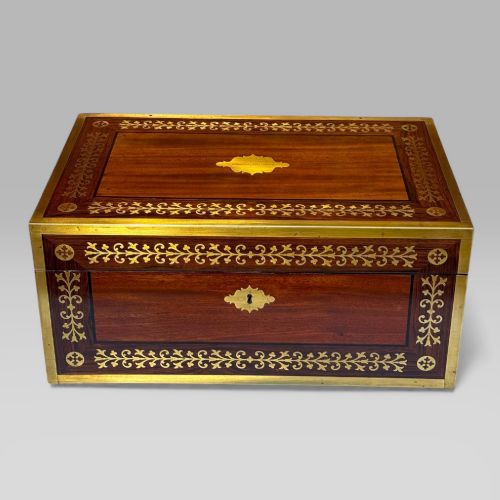
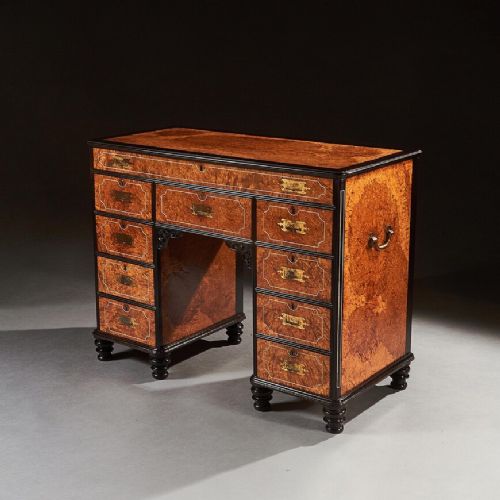
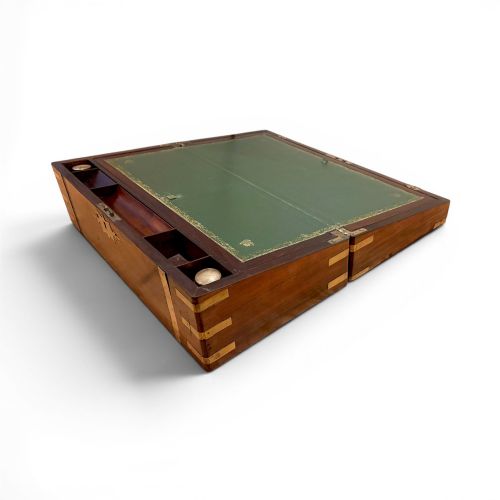
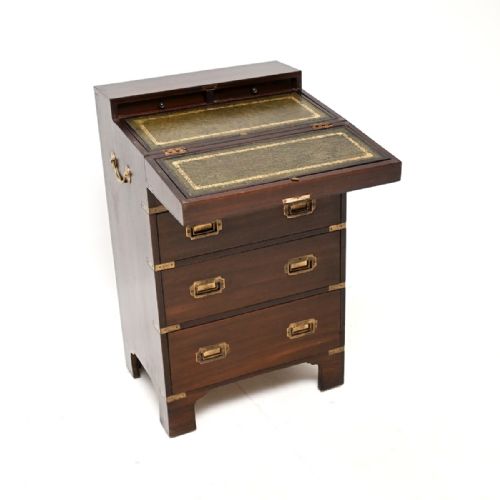
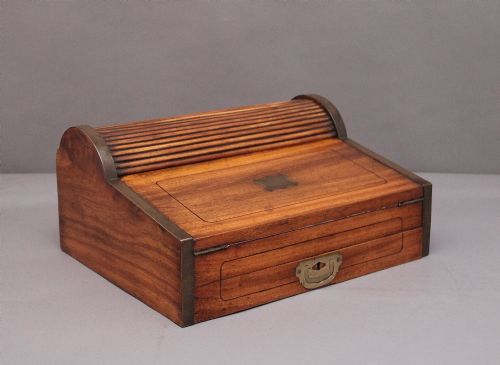
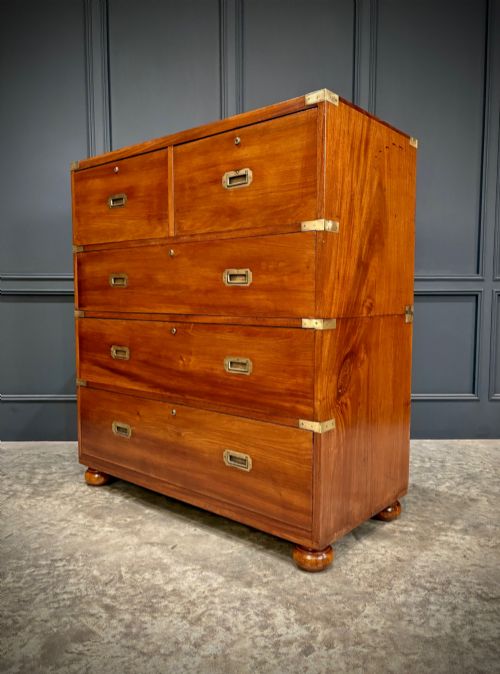
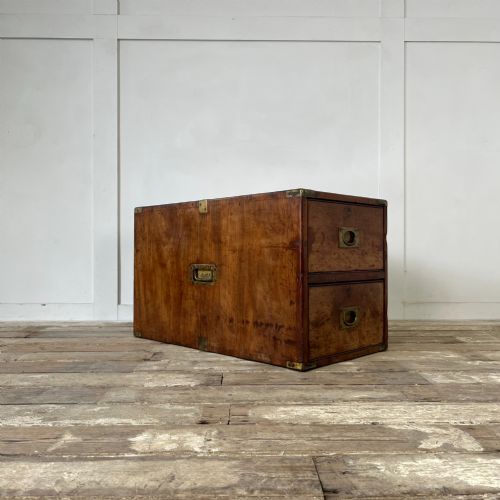
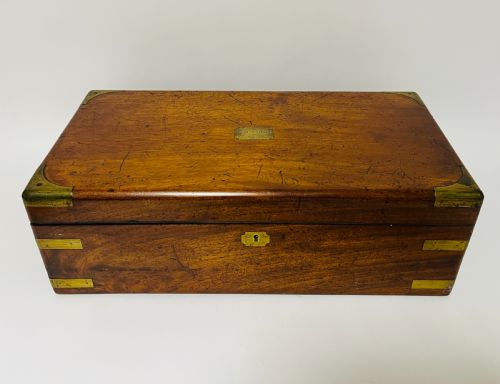
A brass bound campaign desk encompasses portable writing furniture engineered for officers and travellers during the Georgian, Regency, and Victorian periods. Buyers seeking these items will regularly encounter compact writing slopes, lap desks, and folding boxes alongside larger sectional chests of drawers.
The objects derive from an era requiring secure transport of correspondence and valuables across distant territories. Most examples found on this page consist of writing slopes and secretaire chests constructed in mahogany, rosewood, camphor wood, or walnut.
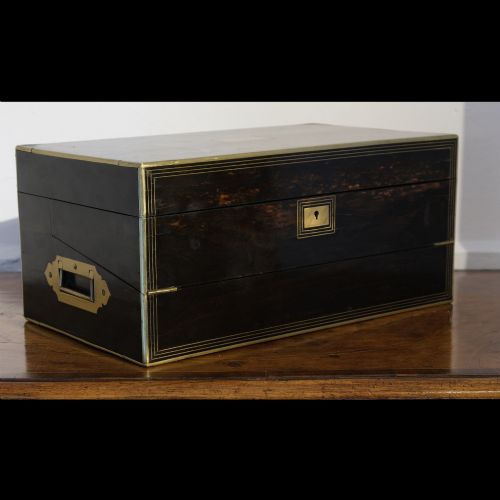
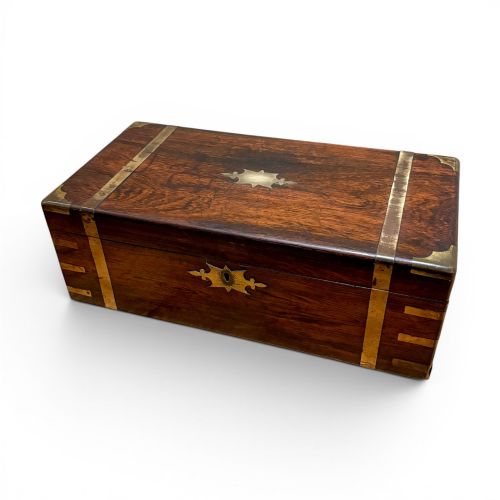
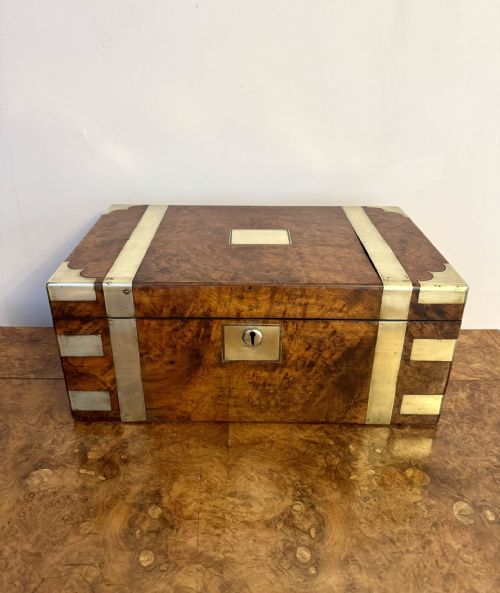
Makers designed these pieces to separate into sections or fold flat for transit, reinforcing the corners and edges with brass strapwork and flush handles. This protective metalwork defines the visual identity of every brass bound campaign desk encountered today.
How They Were Made
Cabinetmakers utilised dense timbers such as mahogany, teak, and camphor wood to withstand tropical climates and rigorous travel without warping. They reinforced structural corners, edges, and escutcheons with heavy brass mounts secured by numerous small screws, protecting the vulnerable wood from impact.
Interior fittings involved intricate joinery to create secret drawers, stationery compartments, and folding leather-lined writing surfaces. Makers integrated specialised brass locks, including Bramah mechanisms, to secure sensitive documents during transit.
Several writing slopes include dedicated secret compartments designed to hide private sovereign coins from curious eyes.
What Varies in Quality
Superior examples display dense, well-figured veneers such as burr walnut, amboyna, or pollard oak, paired with thick, hand-cast brass mounts fitted flush to the timber. Lesser pieces rely on plain secondary woods with thinner brass inlay and simpler interior arrangements.
The complexity of the internal engineering marks the tier of the piece, with top-tier examples incorporating concealed spring-loaded compartments, candle sconces, and working keys for sophisticated lock mechanisms.
The Brass Bound Campaign Desk Glossary
- Writing slope
- A portable box with a hinged, slanted lid that folds down to reveal a writing surface and internal compartments. These items formed the foundation of personal correspondence while travelling.
- Secretaire chest
- A chest of drawers featuring a pull-out top drawer with a drop-front fitted interior for writing. This form combined general storage with a dedicated desk.
- Bramah lock
- A high-security cylindrical lock patented in the late eighteenth century. These mechanisms offered superior protection for valuables within campaign boxes.
- Secret drawers
- Concealed compartments hidden behind removable panels or triggered by secret latches. Makers used these spaces to store confidential documents and currency.
Brass Bound Campaign Desk: Frequently Asked Questions
What is a brass bound campaign desk?
A brass bound campaign desk is portable antique furniture designed for travel, featuring protective brass corners and hinges.
These pieces range from folding lap desks to heavy sectional chests with integrated writing surfaces.
How were these desks used?
Officers and officials used them to write correspondence and store documents while stationed away from permanent bases.
The folding design allowed everything to be packed securely into crates or wagons.
What woods were commonly used?
Cabinetmakers built these items from durable hardwoods like mahogany, rosewood, teak, and camphor wood.
Exotic veneers such as amboyna and burr walnut appeared on finer domestic or diplomatic commissions.
How do I identify a period piece?
Examine the construction methods, timber choice, and brass hardware for signs of nineteenth or early nineteenth-century manufacturing.
Hand-cut screws, dovetail joinery, and heavy brass strapwork help indicate authentic period origin.