

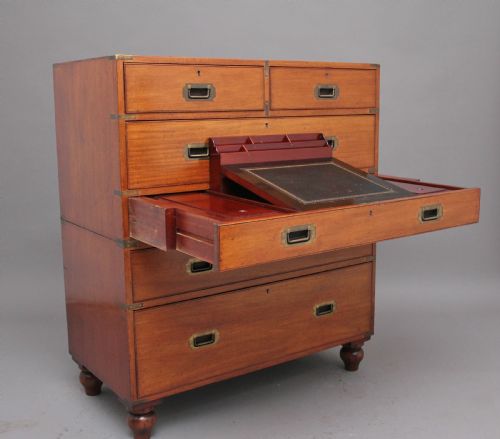


Military Writing Desk
A military writing desk is a sturdy, portable piece engineered for officers on the move, combining practical storage with a reliable writing surface.
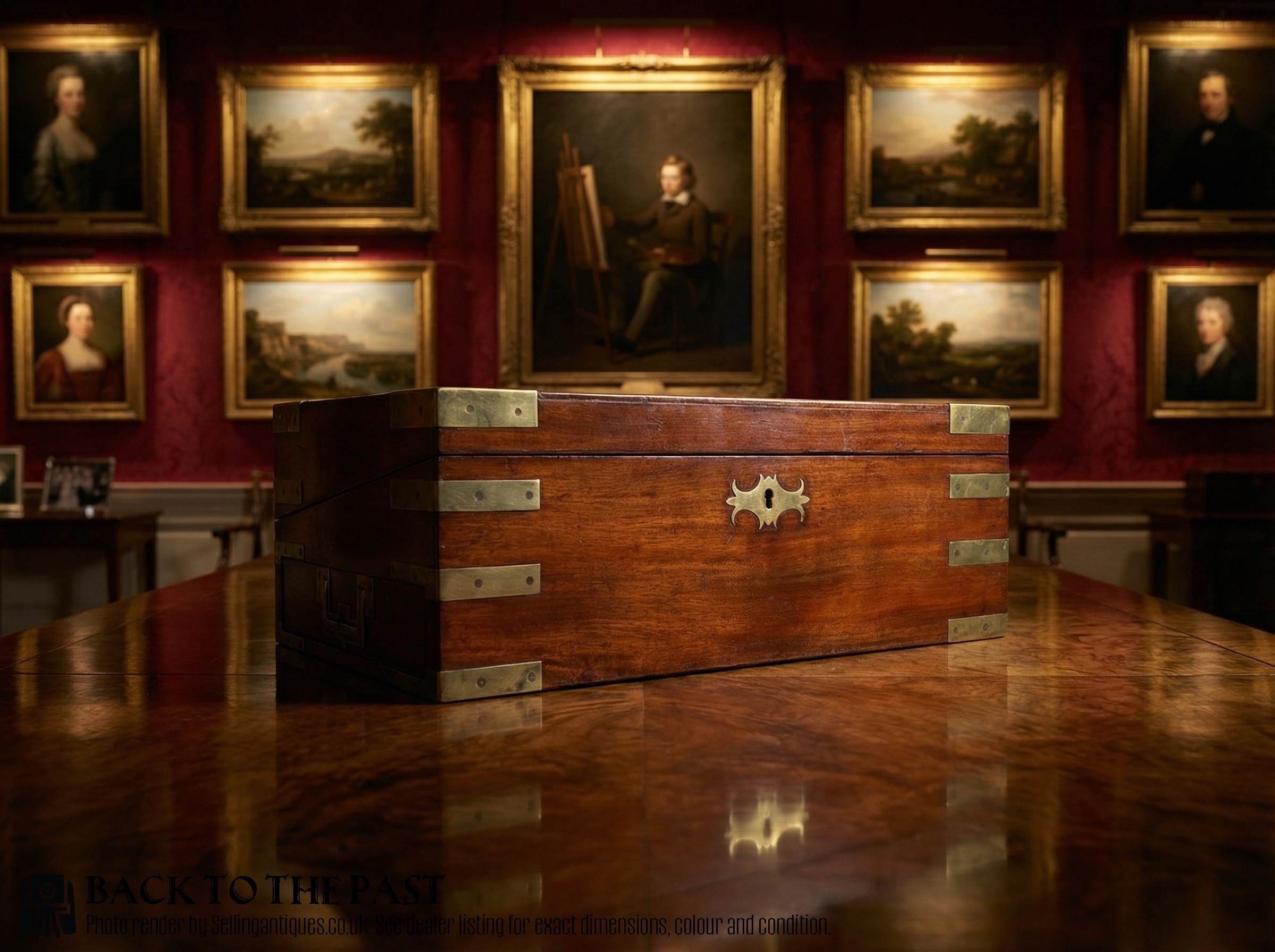
Military Writing Desk
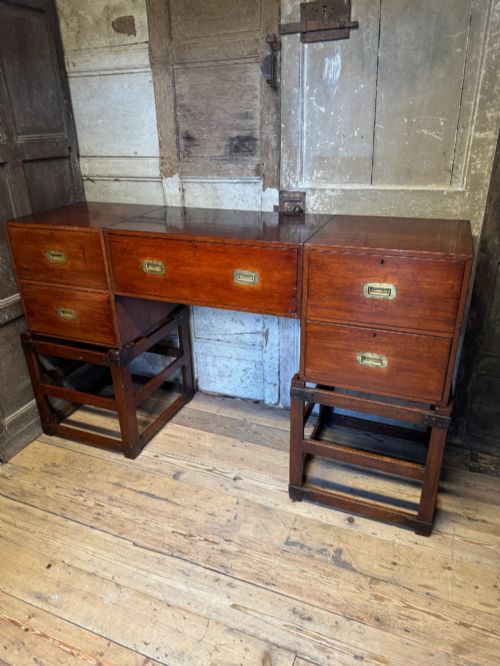
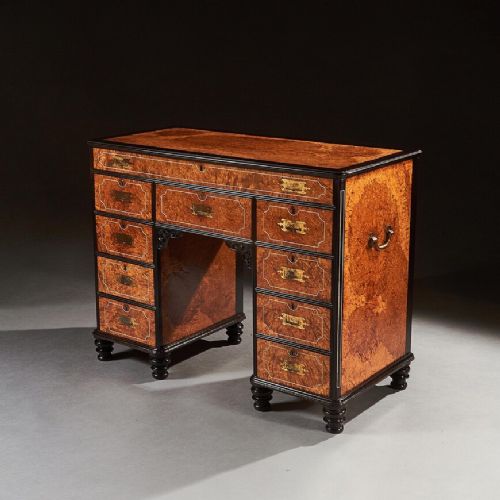
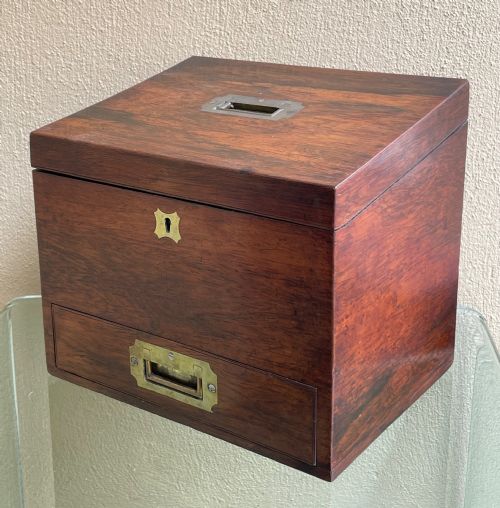
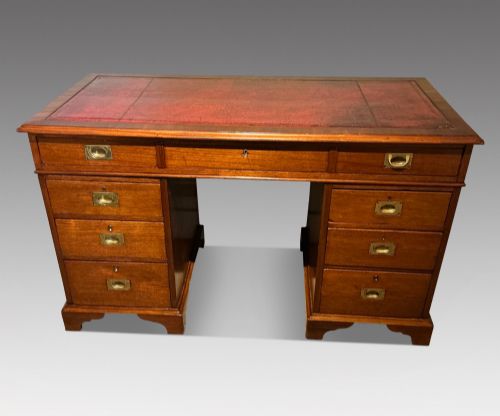
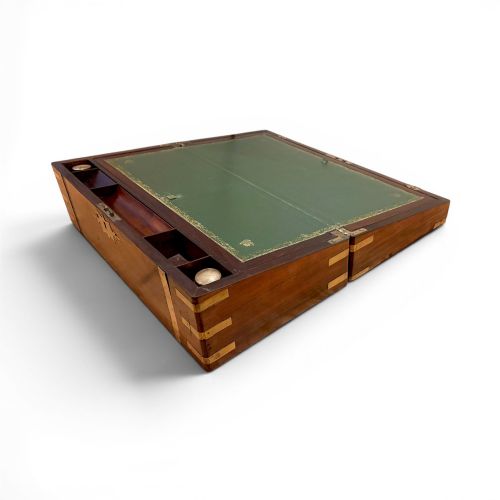
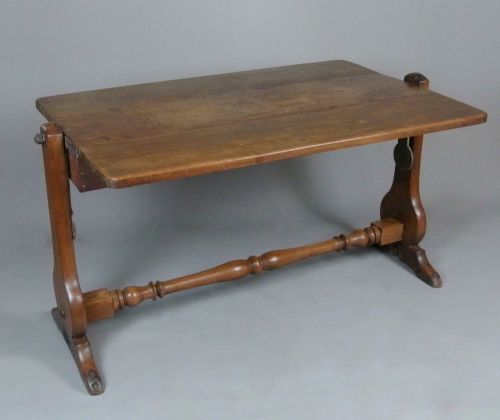
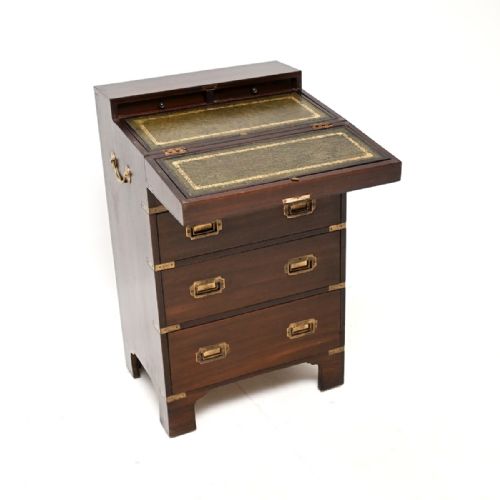
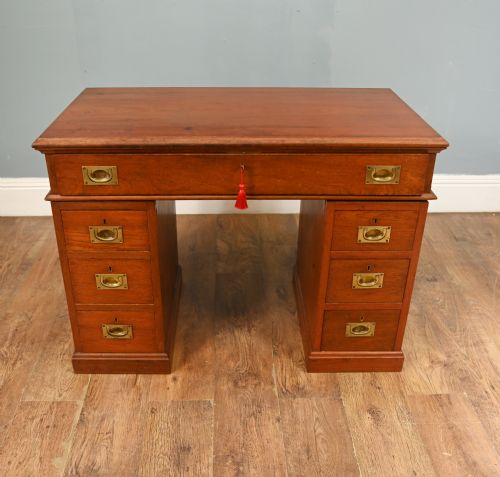
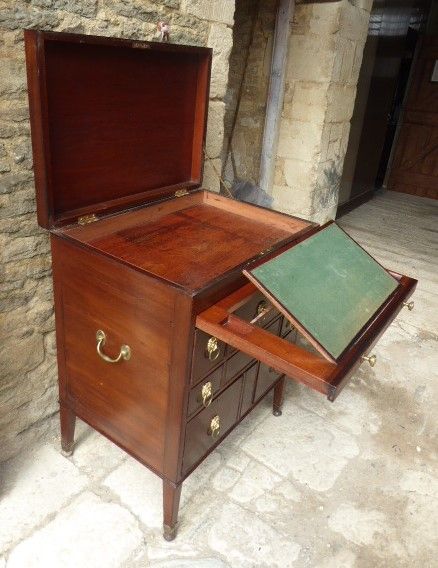
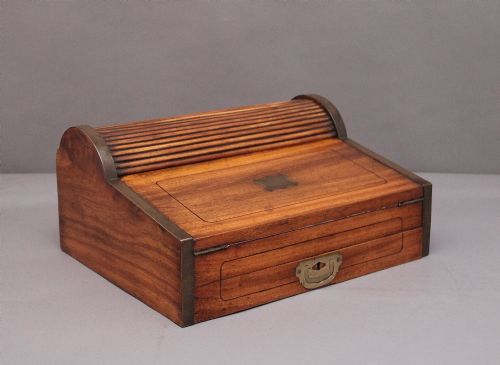
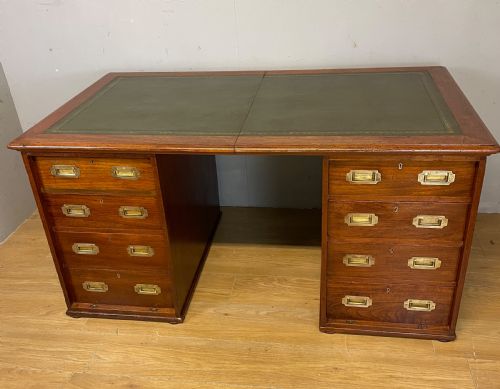
A military writing desk is a specialised piece of campaign furniture designed to be packed down and transported during active service. These items range from compact, lap-bound writing slopes to substantial pedestal desks and multi-part secretaire chests.
The versions most commonly met on this page belong to the Victorian era and the wider nineteenth century, constructed primarily in robust woods like mahogany, teak, and camphor wood. They frequently incorporate brass corners, inset handles, and fitted interiors intended to secure documents and writing instruments on the march.
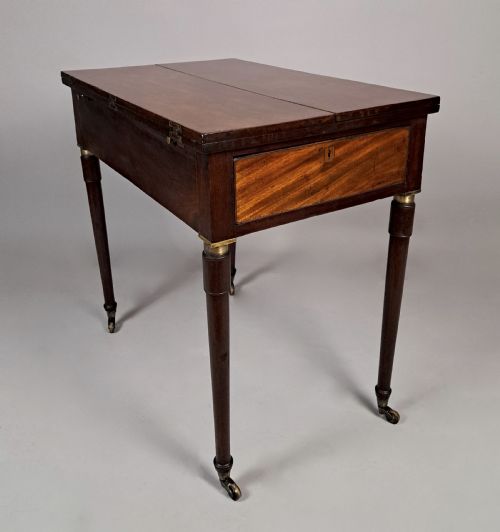
Buyers also encounter related forms such as folding tables, correspondence boxes, and bureau chests influenced by colonial deployment and campaign styles. Each piece reflects a utilitarian heritage adapted for officers who needed functional workspace wherever their duties took them.
What Varies in Quality
The standard of execution lies in the precision of the joinery and the grade of the hardware, where superior examples exhibit seamless dismantling mechanisms and hand-cut dovetails. Lesser pieces rely on simpler fixings and plain secondary timbers hidden behind polished veneers.
Originality of internal fittings, secret drawers, and working locks significantly influences the character of a piece. Retaining the original brass mounts and untouched secondary surfaces marks the distinction between standard campaign utility and finer workshop output.
The listings on this site span the eighteenth to the early twentieth century, with nineteenth-century Victorian and Georgian examples appearing most frequently.
Gillows
The Military Writing Desk Glossary
- Campaign furniture
- Portable furnishings designed to dismantle or fold for transport by officers on military deployment. These items prioritize modular construction and structural resilience over static domestic styling.
- Secretaire chest
- A chest of drawers featuring a fitted pull-down writing drawer that conceals small compartments and pigeonholes. This form integrates administrative utility with standard bedside or lodging storage.
- Writing slope
- A portable box with a hinged, sloping lid that opens to reveal a flat or angled writing surface and stationery storage. Many examples include secret compartments for valuables.
- Brass bound
- Edges and corners reinforced with flush-mounted brass strips and brackets to prevent splitting during transit. This technique also conceals the division lines in multi-part chests.
- Camphor wood
- An aromatic hardwood native to Asia, frequently utilised for campaign chests due to its natural resistance to insects and damp conditions. It often retains a distinct fragrance.
Military Writing Desk: Frequently Asked Questions
How did officers use a military writing desk?
Officers utilised these desks in temporary quarters, tents, or ships' cabins to manage correspondence, write reports, and store personal journals.
The fold-out surfaces and internal compartments kept documents organised and accessible during active deployment.
Are these desks easy to dismantle?
Many larger examples, such as secretaire chests and pedestal desks, separate into two or three distinct modular sections held together by internal brass pins or bolts.
Smaller slopes and folding tables simply latch shut or collapse on hinged frames for immediate packing.
What woods were commonly used?
Cabinetmakers relied on dense, durable timbers capable of enduring rough handling and tropical climates, including mahogany, teak, camphor wood, and rosewood.
Brass hardware was integrated to shield vulnerable corners from heavy impacts during transport.
How do I distinguish a genuine campaign piece?
Authentic campaign pieces feature structural characteristics like flush-fitting brass handles, modular construction joints, and reinforced corners designed for portability.
They also display period-appropriate secondary timbers and construction methods consistent with nineteenth-century military manufacturing.