


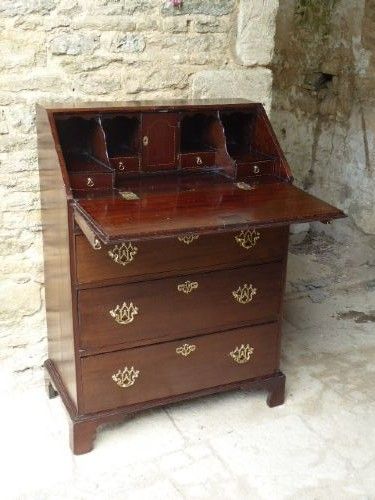
Slanted Top Writing Bureau
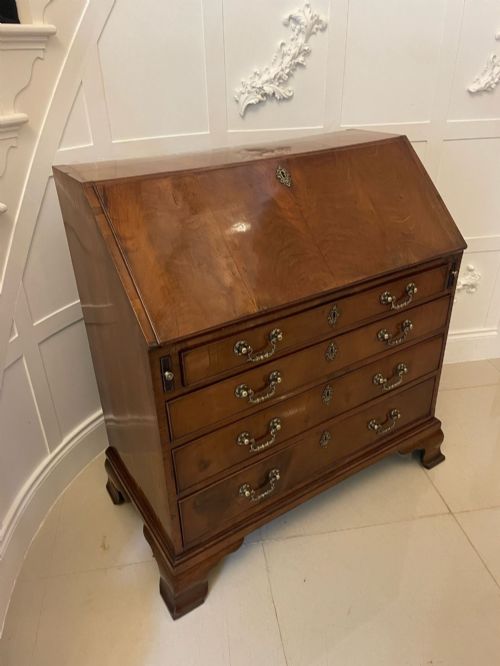
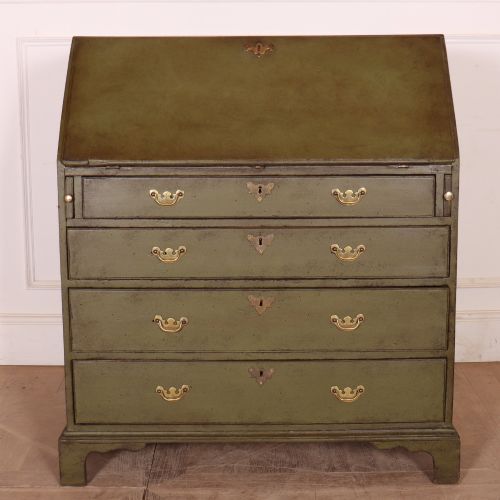
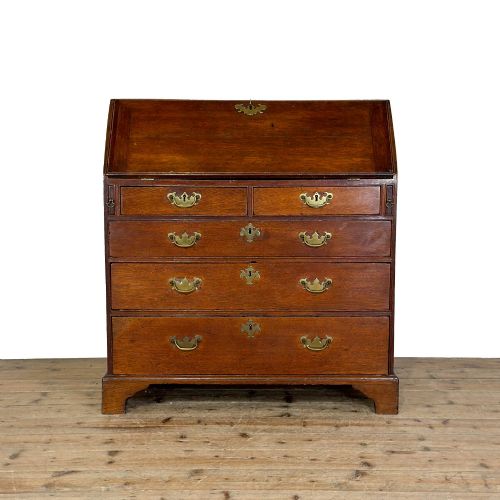
A slanted top writing bureau offers a fall-front desk space above drawers, providing a practical writing station with concealed compartments.
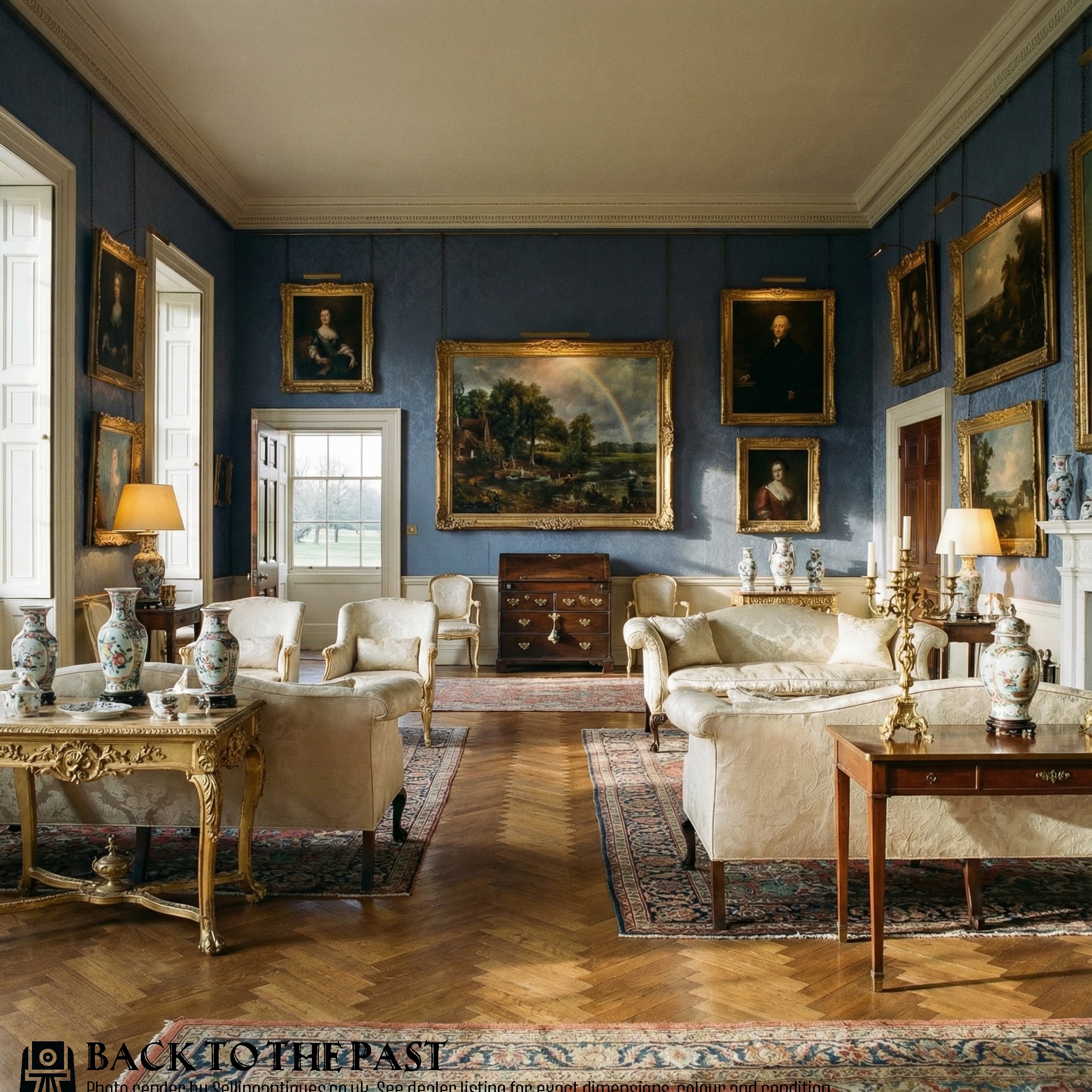
Slanted Top Writing Bureau
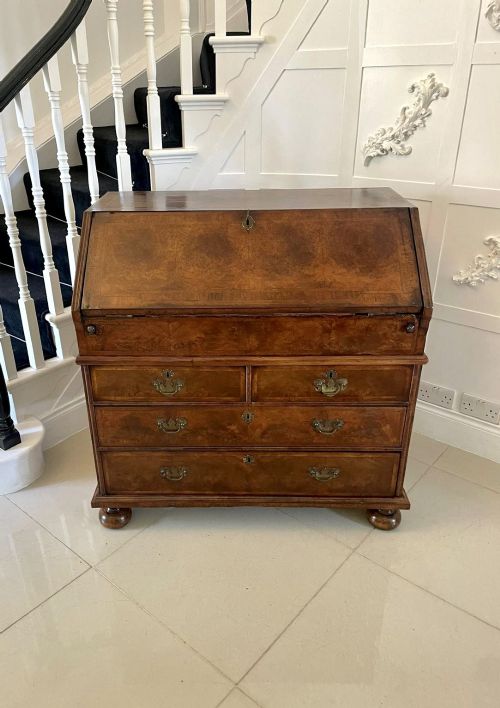
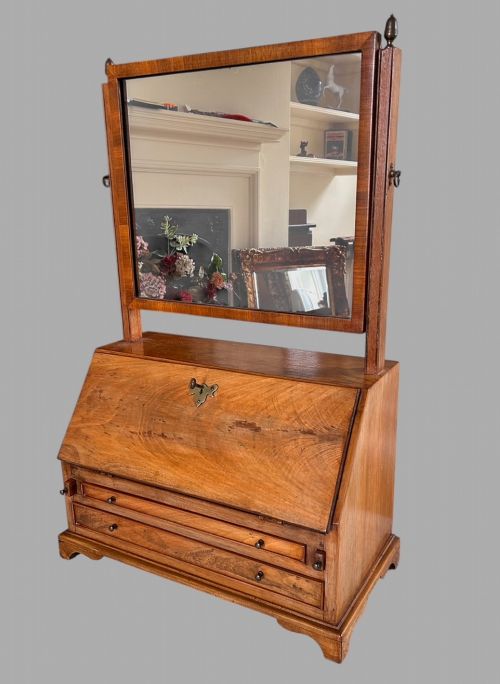
A slanted top writing bureau combines a sloping fall-front writing surface with functional storage beneath, designed for correspondence and household administration. Pieces matching this description appear across multiple periods, including the eighteenth century, the Victorian era, and the Edwardian period.
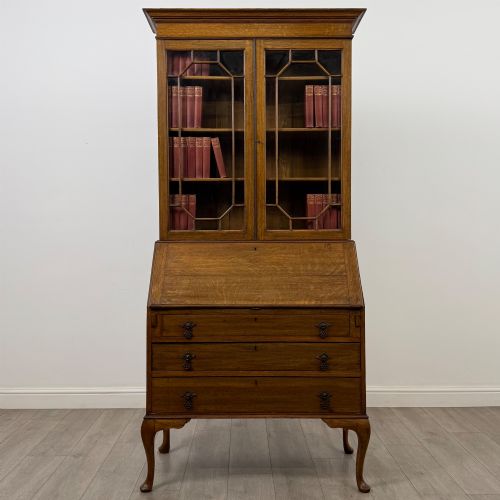
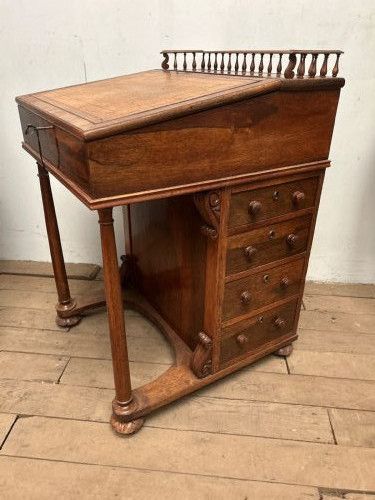
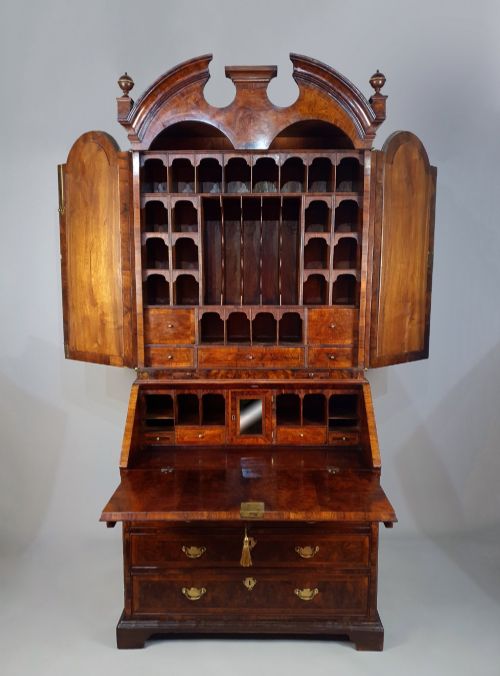
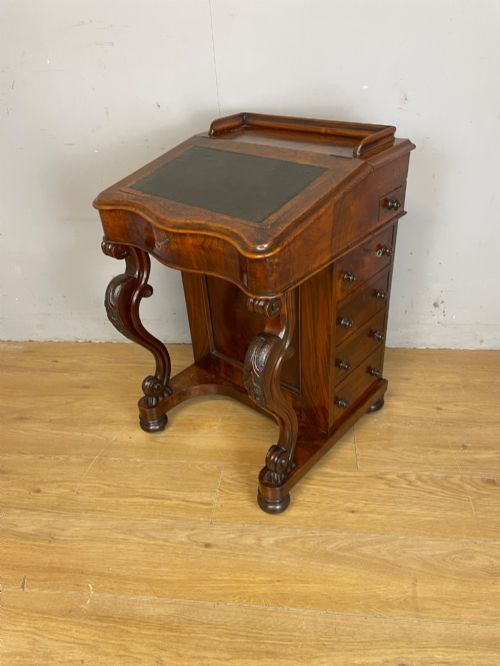
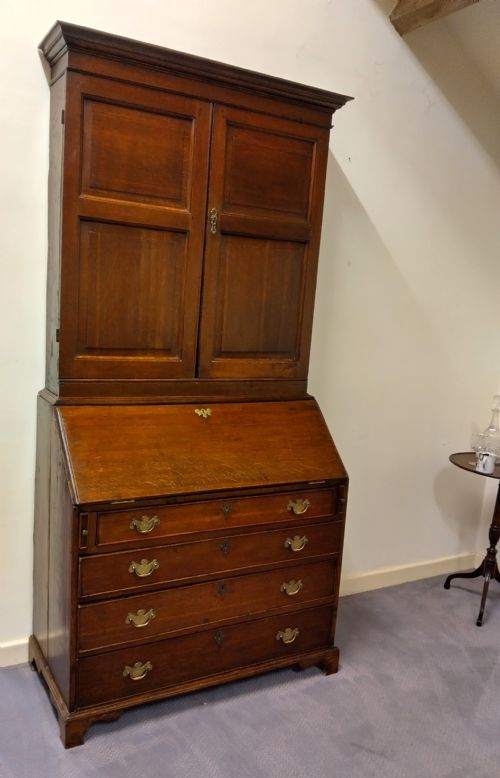
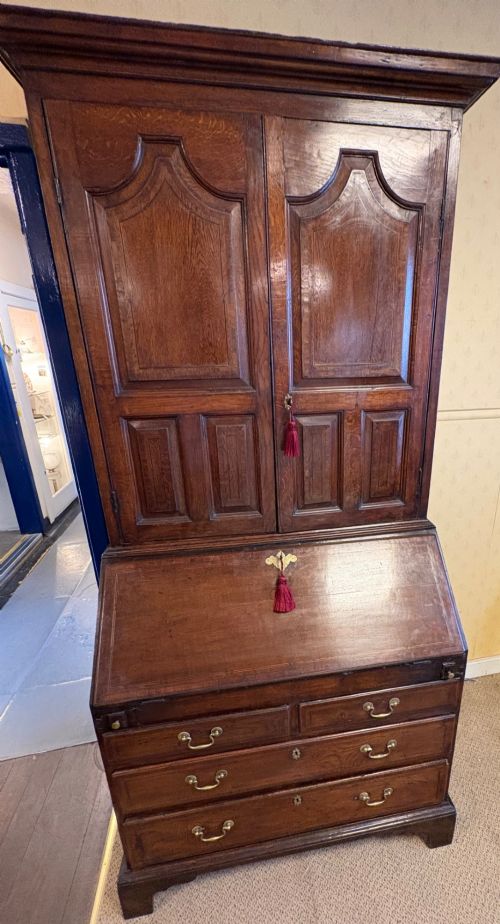
The selection here encompasses compact variants like the Davenport alongside larger bureau bookcases fitted with glazed upper sections. Materials span native timbers such as oak and mahogany alongside decorative veneers including burr walnut and rosewood.
Regional and stylistic variations include Georgian proportions, Queen Anne influences, and Regency craftsmanship. Buyers encounter both freestanding desks and pieces raised on stands, reflecting changing domestic requirements across centuries.
Materials and Construction
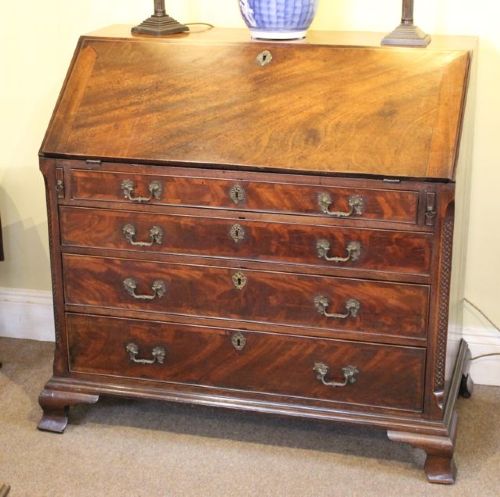
Cabinet makers utilised solid timbers such as oak and mahogany for structural integrity, often applying figured veneers like burr walnut, rosewood, and amboyna to primary display surfaces. Herringbone inlay and brass hardware frequently accent the exterior joinery.
Internal compartments incorporate fitted drawers, pigeonholes, and sliding boards constructed with traditional dovetail joints. Secondary woods support internal dividers, while leather or fabric inserts provide a durable writing surface upon the lowered fall-front.
Listings feature eighteenth-century pieces alongside nineteenth-century Victorian and Edwardian examples, constructed in oak, mahogany, walnut, and rosewood.
Judging Quality
Quality rests upon the choice of timber figure, the crispness of veneer matching, and the precision of internal pigeonholes and small drawers. Superior examples retain original brass handles, working locks, and fitted candle slides.
Structural refinement shows in tightly fitted dovetails, uniform timber ageing, and balanced proportions between the writing slope and the lower chest of drawers. Pieces displaying original ironwork or undisturbed surface finishes command greater attention.
Gillows
The Slanted Top Writing Bureau Glossary
- Bureau
- A desk featuring a sloping lid that opens to reveal a fitted interior of small drawers and pigeonholes. It typically sits atop a chest of drawers.
- Davenport
- A compact writing desk featuring a sloped top, side drawers, and a stationery compartment, popular during the nineteenth century.
- Bureau Bookcase
- A tall piece combining a lower desk section with an upper shelving unit enclosed by wooden or glazed doors.
- Fall-front
- The hinged sloping board of a bureau that lowers to form a horizontal writing surface.
- Herringbone inlay
- A decorative border pattern created by laying small pieces of veneer in a V-shaped sequence.
Slanted Top Writing Bureau: Frequently Asked Questions
What is inside a slanted top writing bureau?
Lifting or lowering the fall-front reveals a fitted interior containing small drawers, pigeonholes, and sometimes secret compartments for papers.
These internal spaces often feature contrasting satinwood or secondary timbers arranged around a central small door.
How do I date an antique bureau?
Dating relies on examining construction methods, timber choices, and hardware styles across the piece. Dovetail joints, handle backplates, and veneer types provide clear indicators of period manufacture.
Eighteenth-century examples often utilise oak linings and solid mahogany, whereas later Victorian versions frequently employ walnut veneers over pine or mahogany carcasses.
Where should I place a bureau in my home?
A bureau suits living rooms, studies, or bedrooms where its dual function as a desk and storage chest provides practical utility. The enclosed writing slope keeps paperwork hidden when not in use.
Positioning the piece away from direct sunlight and heat sources protects delicate veneers and leather writing surfaces from drying out.
What is the difference between a bureau and a Davenport?
A traditional bureau is a full-sized desk with a fall-front sitting above a chest of drawers, designed to be used with a separate chair. A Davenport is much smaller and incorporates side drawers with a top-mounted stationery box.
Both offer sloped writing surfaces, but Davenports take up significantly less floor space.