


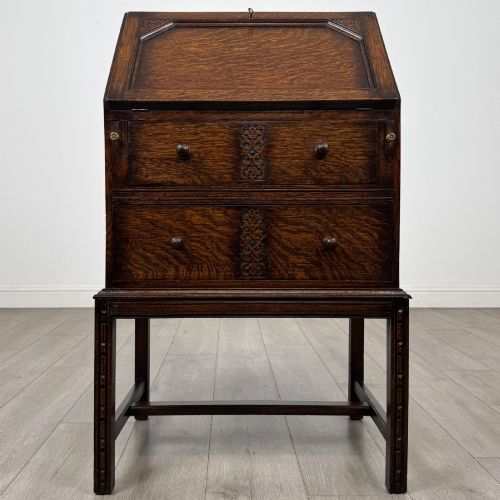

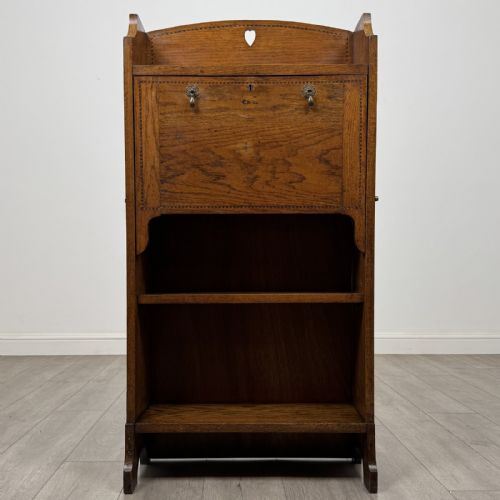
Compact Writing Cabinet
A compact writing cabinet offers a clever station for correspondence, combining a desk surface and tidy storage in a footprint suited to smaller rooms.
Compact Writing Cabinet
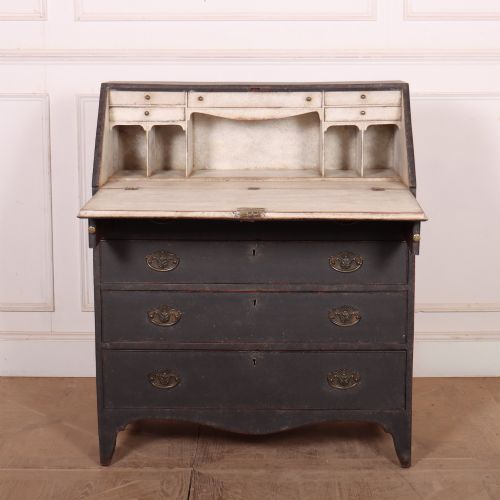
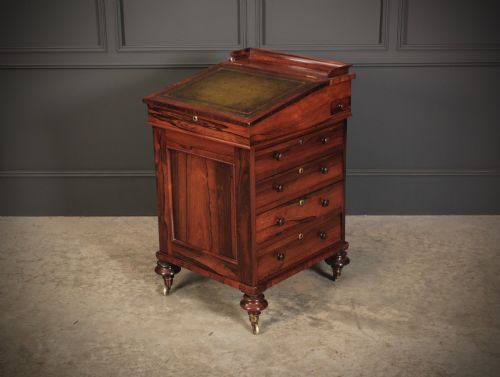
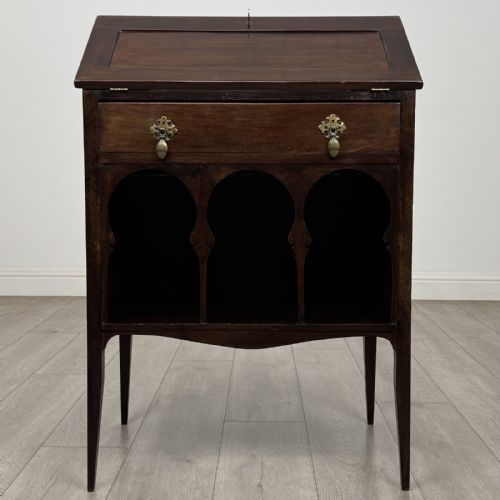
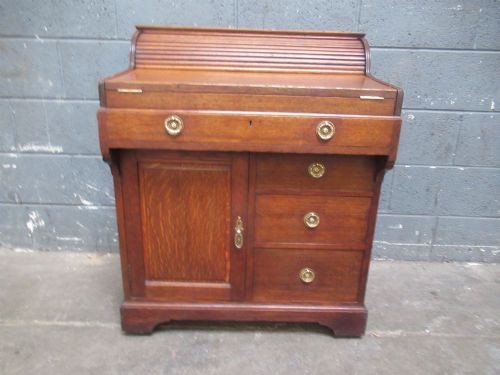
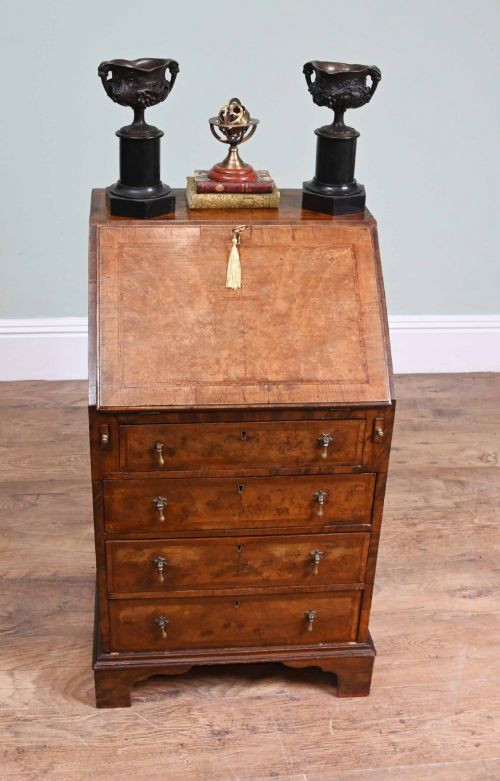
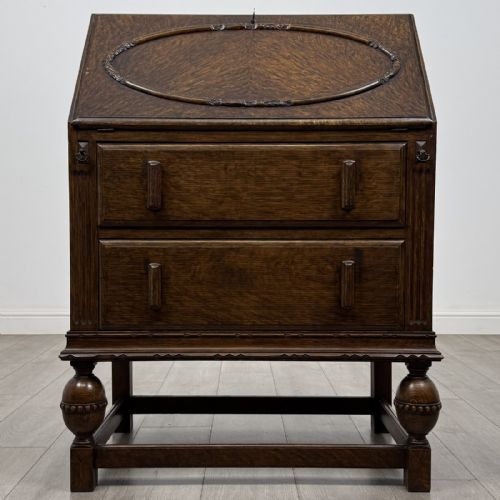
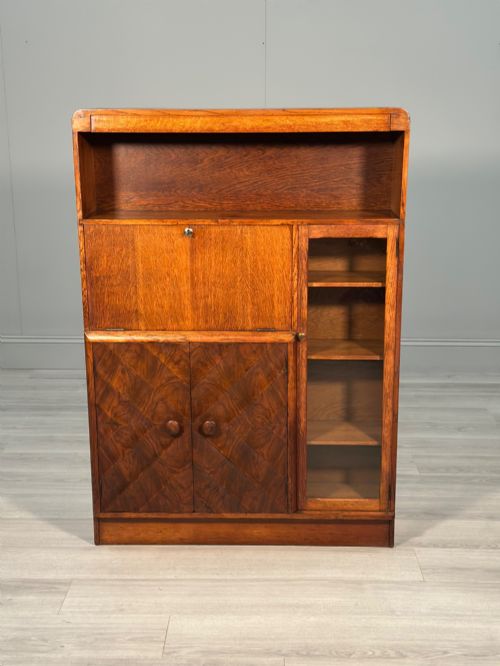
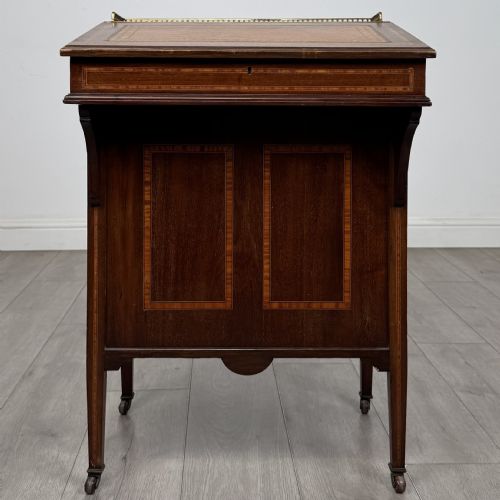
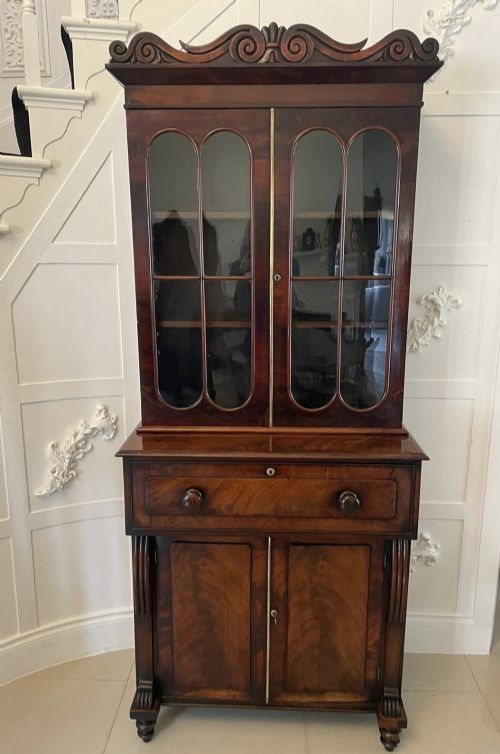
A compact writing cabinet covers a range of smaller desk forms designed to conceal papers and writing tools when not in use. You will frequently encounter Davenport desks, small Georgian and Victorian bureaux, and writing cabinets originating from the 19th and early 20th centuries.
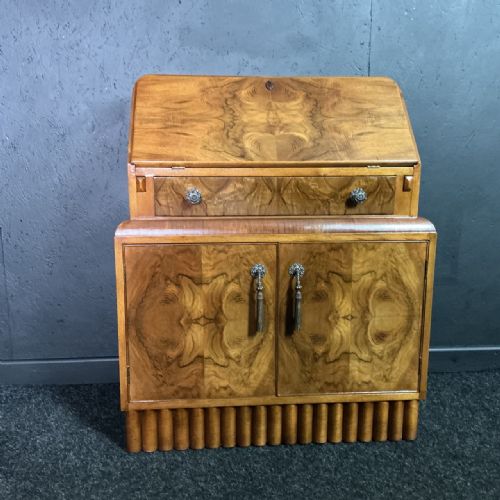
The selection ranges from Regency and George IV rosewood and mahogany pieces to Edwardian oak bureaux and Art Deco walnut designs. These smaller writing pieces served domestic needs where floor space was at a premium, accommodating letters and ledgers in compact quarters.
Makers utilised ingenious internal fittings, including pop-up stationery compartments, revolving desk boxes, and concealed drawers. The variety spans simple student desks in golden oak up to elaborately figured burr walnut and amboyna Davenport desks.
Materials and construction
Cabinetmakers built these pieces using solid timbers like oak, mahogany, and rosewood, often applying decorative veneers such as burr walnut, flame mahogany, and amboyna to primary display surfaces. Crossbanding and subtle inlay work added visual interest without expanding the overall dimensions of the cabinet.
Functional hardware played a central role in construction, with brass mounts, hinged writing slopes lined in leather, and specialised locking mechanisms safeguarding private papers. Drawers and internal pigeonholes were jointed tightly to withstand daily use in domestic studies and drawing rooms.
Compact Writing Cabinet Retail Price Guide 2026
Typical asking prices for compact writing cabinet among the pieces listed under this phrase on Sellingantiques today, from the lower quarter to the upper quarter. They describe what is for sale here now, not the wider market.
Some Victorian Davenport desks house secret compartments triggered by hidden wooden catches, keeping private letters safe from prying eyes.
Distinguishing quality
The merit of a piece rests on the choice of timber and the crispness of its execution, from the figure of the walnut veneer to the precision of the joinery. Finer examples display carefully matched grain patterns across the fall-front or writing slope, alongside secondary timbers of equal grade used within the drawer linings.
Mechanical ingenuity sets superior writing cabinets apart, particularly smooth-operating pop-up stationery compartments, well-fitted internal drawers, and original brass hardware. Pieces carrying maker signatures or retailer stamps from established cabinetmakers demonstrate a higher standard of workshop production.
Gillows of Lancaster·F.H. Marshall And Co Glasgow·Bryn Mawr
The Compact Writing Cabinet Glossary
- Davenport
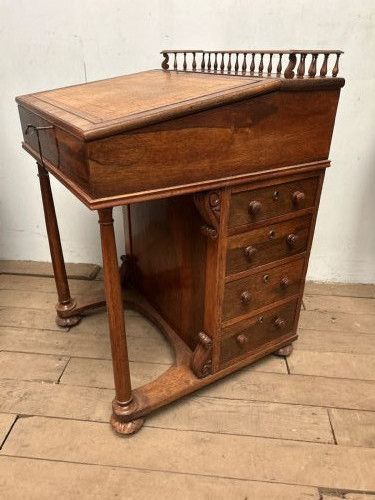
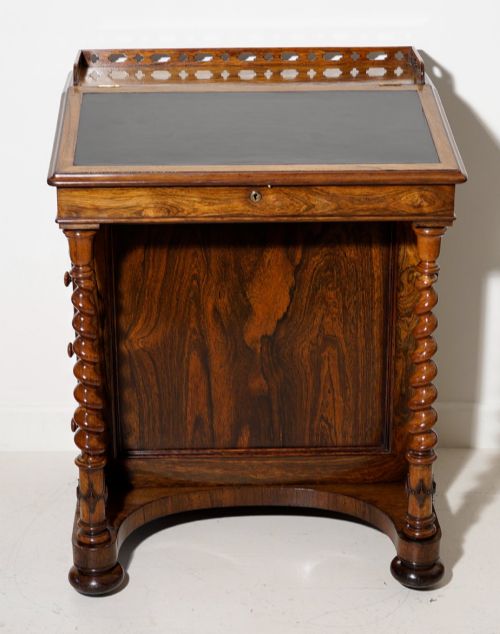
- A small compact desk featuring a sloping writing surface hinged above a pedestal of drawers. It typically incorporates a side-mounted pen tray and stationery compartment.
- Bureau
- A desk form featuring a hinged writing flap that opens down to reveal a fitted interior of pigeonholes and small drawers. They appear in freestanding formats or integrated beneath bookcases.
- Secretaire
- A piece of furniture incorporating a concealed writing drawer or drop-front desk compartment. This term often describes cabinets or tall chests that double as writing desks.
- Bonheur du jour
- A light lady's writing desk featuring a small cabinet, shelves, or pigeonholes on the upper surface above the main writing top. This form emerged in the 18th century and continued through later revival periods.
- Crossbanding
- A decorative border technique where thin strips of veneer are laid across the grain of the primary wood surface. It frames panels and drawer fronts on better quality cabinetry.
Compact Writing Cabinet: Frequently Asked Questions
What is a Davenport desk?
A Davenport desk is a compact writing cabinet featuring a sloping lid on top of a pedestal of drawers. The design originated in the late 18th century and became popular through the Victorian era for boudoirs and small studies.
Most examples include a small compartment on top for inkwells and pens, alongside drawers that open to the side rather than the front. Their small footprint made them practical for writing letters without occupying an entire room.
How do I use a compact writing cabinet today?
These pieces function well in modern homes as laptop stations or dedicated correspondence desks. The enclosed compartments keep stationery, notebooks, and small electronics out of sight when not in use.
To protect the timber and leather surfaces, place them away from direct sunlight and radiators. Use coasters and blotters to prevent moisture rings or ink stains on historic writing slopes.
How do I tell Victorian from Edwardian pieces?
Victorian writing cabinets often feature darker timbers like rosewood, walnut, and mahogany, frequently enhanced by heavy carving, burr veneers, or ebonised details. The proportions tend to be substantial even when the overall footprint is small.
Edwardian pieces generally favour lighter woods such as golden oak or satinwood inlay, reflecting a shift towards brighter interiors. Construction during the Edwardian period also embraced Arts and Crafts simplicity alongside revived Georgian styles.