


Slanted Front Desk
A slanted front desk brings centuries of cabinet-making skill into a room, offering a private writing surface that folds away neatly behind fitted pigeonholes and drawers.
Slanted Front Desk
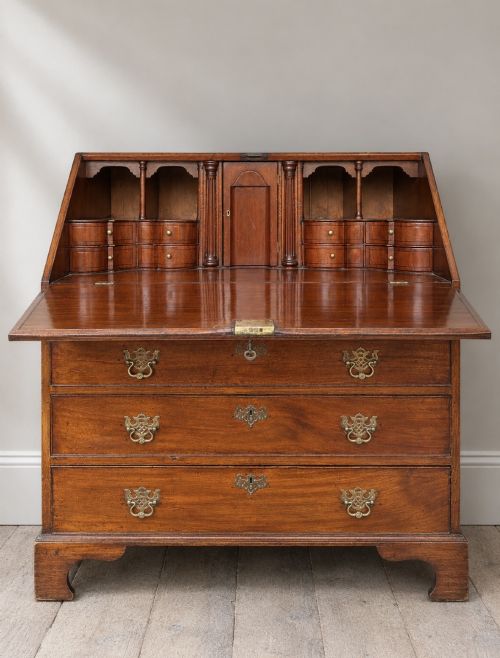
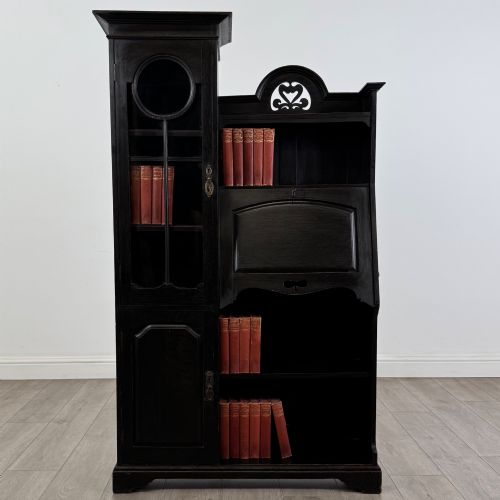
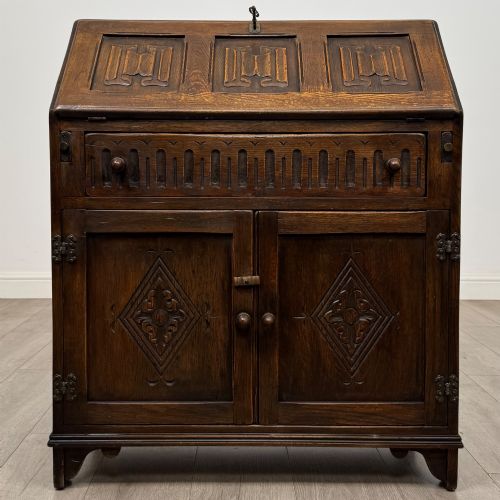
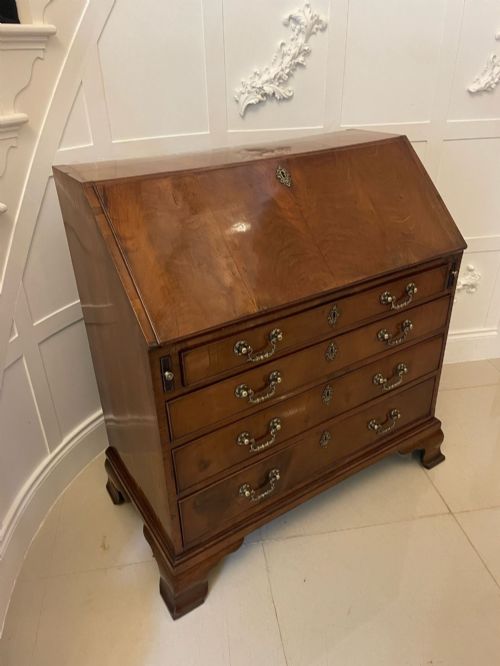
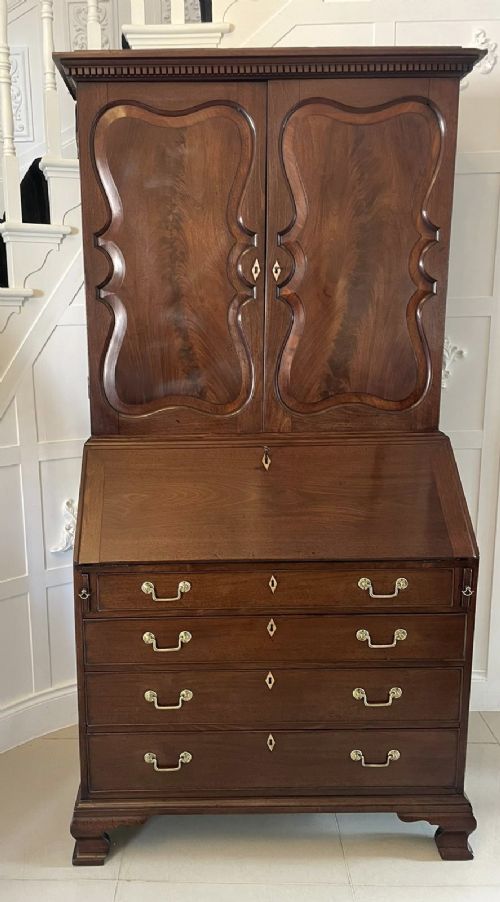
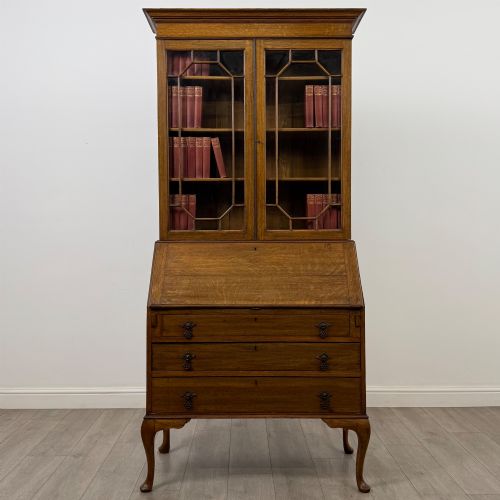
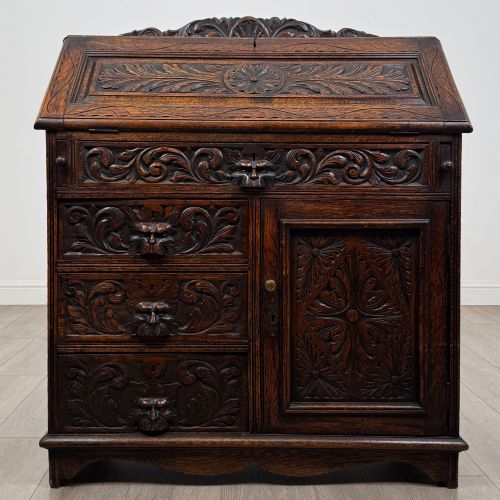
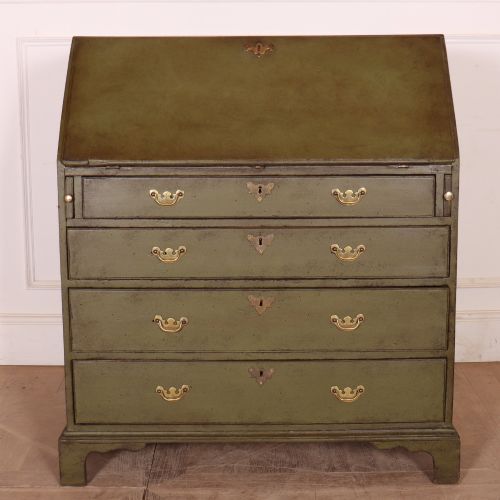
A slanted front desk encompasses pieces known across periods as bureaux, writing desks, and bureau bookcases. These items appear in variations ranging from compact table-top models to substantial two-part oak and mahogany constructions.
The most common forms on this page date from the eighteenth century through the Edwardian era. Pieces span simple vernacular oak examples to highly decorated walnut and mahogany forms with fitted interiors.
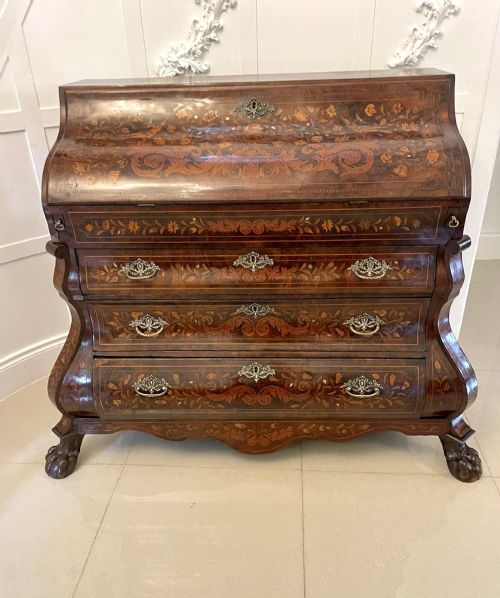
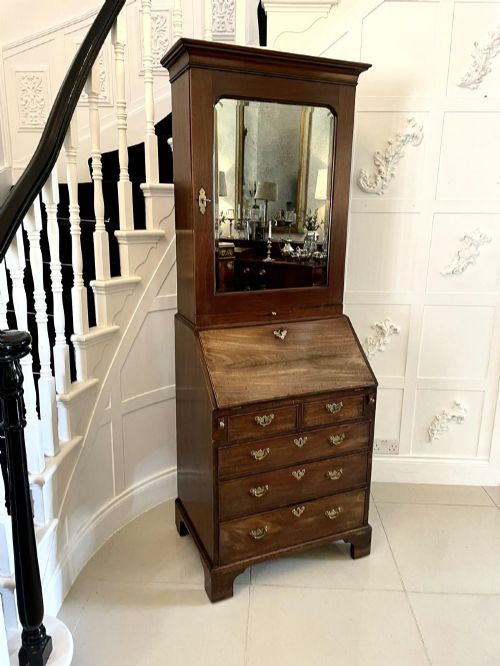
Buyers encounter regional interpretations such as Dutch marquetry sloping fronts, French bombe-shaped writing cabinets, and English bureau bookcases with glazed upper sections. Each style reflects the domestic requirements of its period.
Materials and construction
Cabinet-makers relied primarily on native oak for early pieces, shifting toward figured mahogany, burr walnut, and satinwood as global trade routes expanded. Timber selection dictated the structural stability required to support a hinged writing flap.
Secondary techniques involve complex parquetry, floral marquetry, and herringbone inlay applied across curved and flat surfaces. Brass handles, escutcheons, and bracket feet complete the assembly of these wooden writing cabinets.
Several early oak desks arrived with clever secret compartments hidden behind sliding pigeonhole partitions for storing confidential correspondence.
Evaluating craftsmanship
Quality rests in the selection of timber veneers and the precision of the internal arrangement. Superior examples exhibit continuous grain matching across the drop-front and meticulous pigeonhole construction within.
The execution of secondary elements such as hand-cut dovetails on internal drawers and the crispness of carved details dictate the standing of a desk. Original brass hardware and sound hinges indicate a well-preserved piece.
Gillows·Heals of London
The Slanted Front Desk Glossary
- Bureau
- A writing cabinet featuring a sloping lid that opens to reveal a fitted interior of small drawers and pigeonholes. This term applies to both freestanding desks and those with upper bookcase sections.
- Marquetry
- Decorative veneer patterns formed by fitting together thin pieces of wood, bone, or ivory into intricate floral or geometric designs. Craftsmen applied this technique to the exterior flaps of high-status desks.
- Bombe
- A swelling, outward-curved contour found on the front and sides of continental European furniture. This shape requires advanced woodworking skill to maintain structural integrity.
- Pigeonhole
- A small, open compartment set inside the writing section of a desk for sorting letters and papers. These compartments often hide behind small secret drawers.
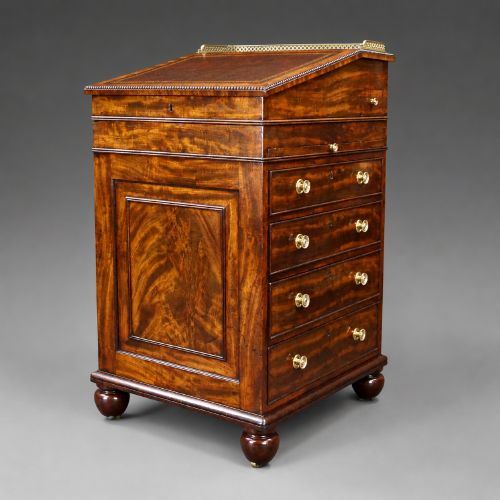
- Davenport
- A compact form of writing desk featuring a sloped, hinged writing surface above a pedestal of drawers. This variant gained popularity during the nineteenth century.
Slanted Front Desk: Frequently Asked Questions
What is a slanted front desk?
A slanted front desk is a traditional writing cabinet featuring a hinged sloping lid. When lowered, this lid provides a flat writing surface and exposes a fitted interior containing small drawers and letter slots.
Historically called a bureau, the form dates back centuries and appears in woods ranging from plain oak to figured mahogany and burr walnut.
How do I date a bureau?
Dating relies on observing construction methods, timber choices, and hardware styles. Eighteenth-century examples often feature solid oak drawer linings and hand-cut dovetails, while Edwardian pieces display later mechanical developments and lighter framing.
Leg styles also indicate the period, moving from bracket feet and bun feet to tapered legs or dedicated stands.
Where should I place it?
These desks suit studies, living rooms, and bedrooms where space benefits from furniture that conceals paperwork. Because the drop-front projects outward when opened, leave sufficient clearance in front of the piece for a chair.
Keep wooden items away from direct heat sources and strong sunlight to protect polished walnut and mahogany surfaces.
How do I maintain the wood?
Maintenance involves dusting with a dry cloth and applying traditional beeswax periodically to nourish the timber. Avoid modern silicone sprays that build up and attract dust over time.
Maintaining stable room humidity prevents the solid woods and delicate veneers from cracking or warping.