
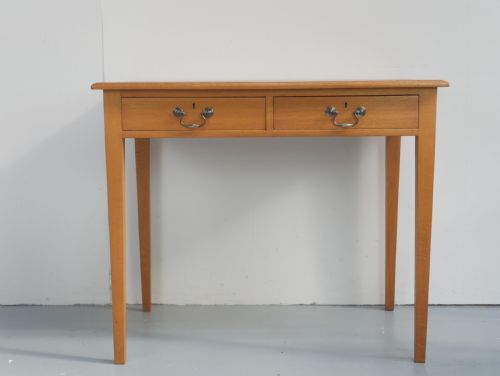


Golden Oak Writing Bureau
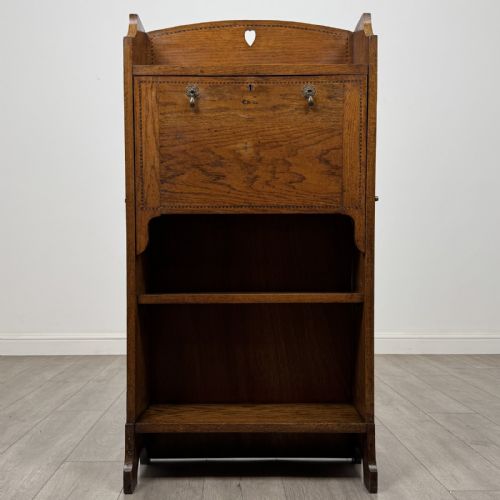
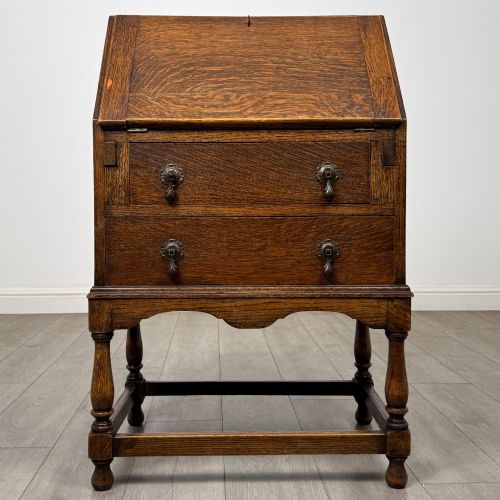
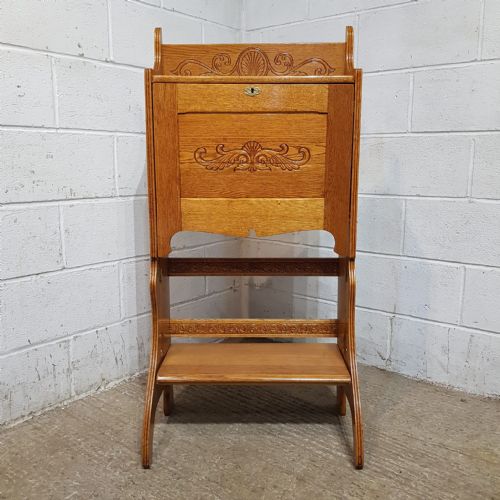
A golden oak writing bureau brings warm grain and practical pigeonholes to a study, offering a sturdy workspace built for daily correspondence.
Golden Oak Writing Bureau
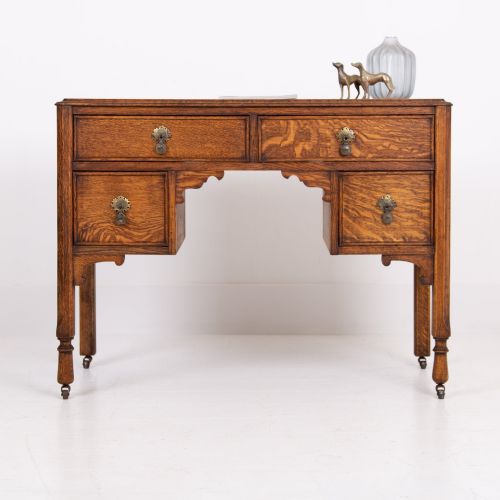
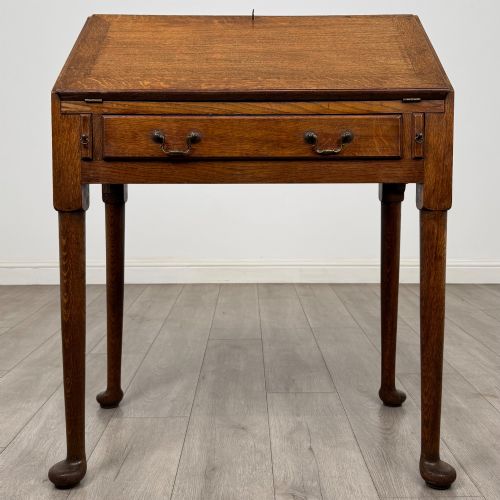
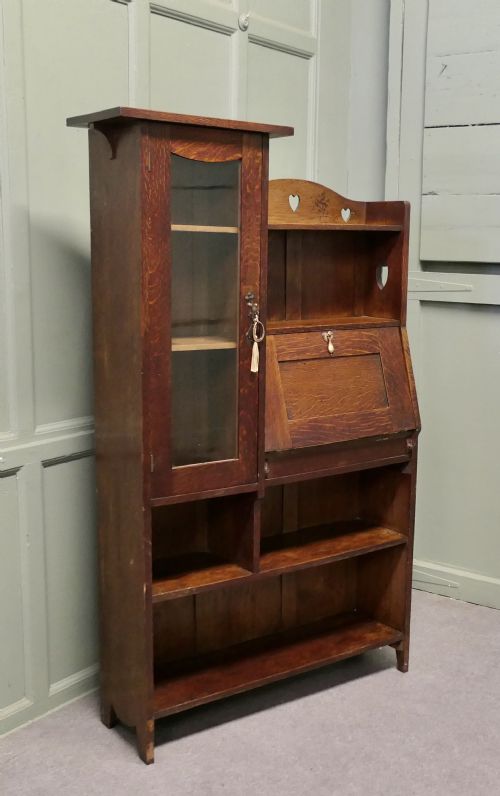
A golden oak writing bureau typically appears from the Victorian, Edwardian, and early twentieth-century periods, spanning styles from late Victorian design to Arts and Crafts simplicity. Buyers searching for a golden oak writing bureau frequently encounter drop-front sloping desks, roll-top variants, and larger secretaire bookcases fitted with internal compartments.
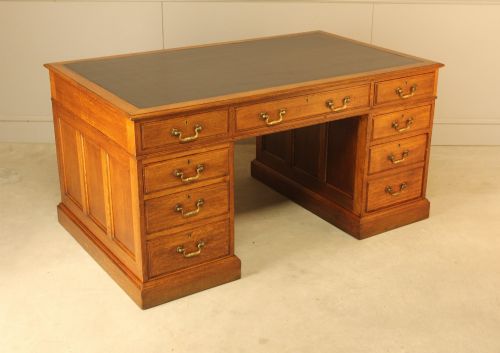
The objects listed range from compact students' desks to substantial library pieces, often combining writing surfaces with bookcases or display cabinets. Edwardian and 1900 examples dominate the selection, bringing lighter tones and functional internal stationery fittings to the domestic interior.
Materials and construction
Makers utilised solid oak and pollard oak for carcasses and drawer linings, frequently pairing the pale timber with brass handles, glass doors, and leather inserts. Secondary timbers like satinwood and kingwood occasionally appear as crossbanding on related desks.
Joinery methods rely on traditional dovetailed drawers and panelled construction, ensuring structural rigidity for heavy writing surfaces and roll-top mechanisms. Glazed sections use timber astragals to hold glass panes securely within bookcase doors.
The listings span from the sixteenth century through the Victorian and Edwardian eras into the 1930s.
Judging the standard
Quality rests upon the selection of timber, particularly the liveliness of the golden oak grain and the crispness of any carved or applied Arts and Crafts details. Superior pieces demonstrate precise dovetailing in the drawers and smooth operation in drop-front hinges or tambour shutters.
The interior arrangement dictates much of the distinction between standard and finer items, with fitted pigeonholes, small drawers, and original brass hardware elevating the piece. The integration of secondary woods like satinwood or pollard oak signals a higher grade of manufacture.
Maples of London and Paris·James Shoolbred and Co·Thomas Turner·Jenners
The Golden Oak Writing Bureau Glossary
- Bureau
- A desk featuring a sloping hinged flap that opens to reveal a fitted interior of small drawers and pigeonholes.
- Secretaire bookcase
- A tall piece of furniture combining a writing drawer or drop-front desk compartment with upper shelves enclosed by glass doors.
- Roll top desk
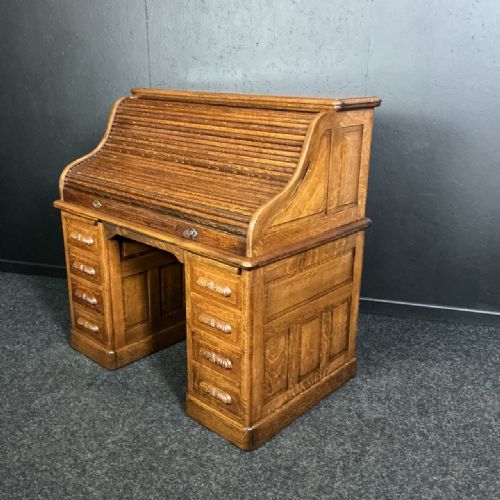
- A desk with a flexible tambour shutter made of narrow slats of wood that slides in a track to cover the writing surface.
- Crossbanding
- A strip of veneer applied to the border of a panel or drawer front with the grain running perpendicular to the surrounding wood.
- Arts and Crafts
- A design movement prioritising simple forms, visible construction methods, and the integrity of natural materials.
Golden Oak Writing Bureau: Frequently Asked Questions
What is a golden oak writing bureau?
A golden oak writing bureau is a compact or substantial desk featuring a slanted drop-front lid that opens to form a writing surface above internal pigeonholes and drawers.
Most examples date from the Victorian and Edwardian eras, constructed in pale or golden-toned oak with functional storage compartments for correspondence.
How do I date an oak bureau?
Dating relies on stylistic clues, hardware styles, and construction methods visible in the drawers and back panels.
Edwardian and 1900 examples often show lighter golden oak finishes and Arts and Crafts influences, whereas Victorian pieces tend to be heavier and darker.
Where were these desks used?
These desks served primarily in home studies, libraries, and parlours for managing household accounts and writing letters.
Their fitted interiors kept stationery organised while the drop-front lid concealed the writing materials when not in use.
What is the difference between a bureau and a roll top?
A traditional bureau uses a hinged sloping flap that pulls down toward the user to create a flat writing surface.
A roll top desk employs a slatted wooden tambour that slides backward over the desk surface to reveal the workspace and pigeonholes.