
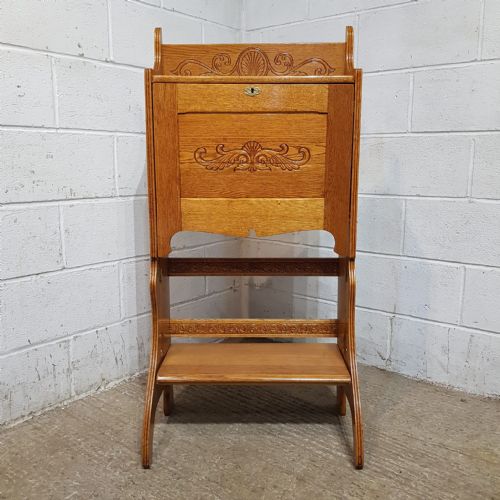
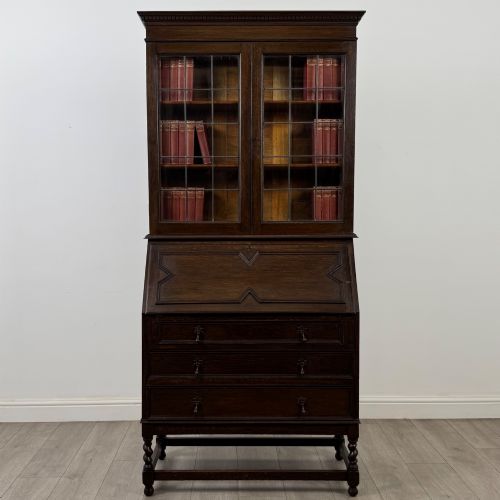


Carved Oak Secretary Desk
A carved oak secretary desk is a hardworking writing cabinet offering a fitted interior and drawers, built to last through generations of daily use.
Carved Oak Secretary Desk
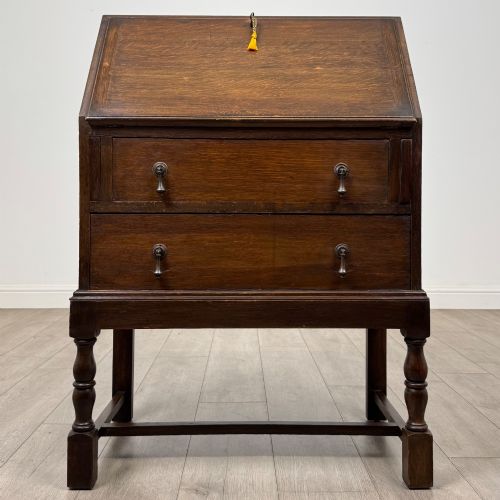
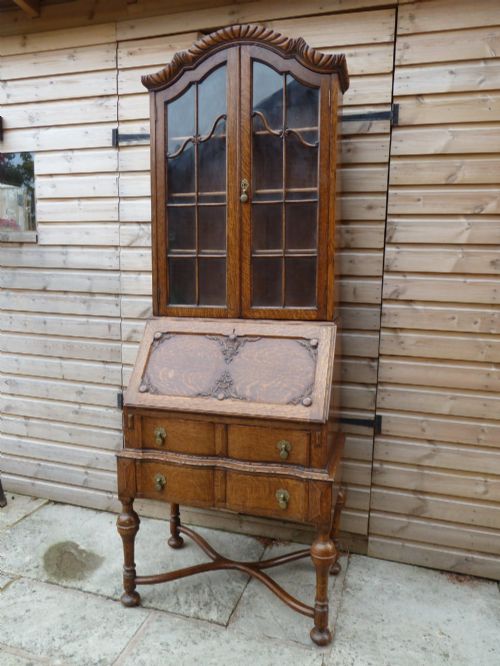
When you search for a carved oak secretary desk, you encounter a variety of forms including bureaus, bureau bookcases, and writing desks designed for domestic correspondence and administration. These pieces combine a sloping writing flap or drop front with internal pigeonholes and small drawers, resting atop a chest of larger drawers.
The selections available range widely in period, spanning from eighteenth-century Georgian and Norwegian examples through Victorian and Edwardian interpretations up to twentieth-century revivals. Pieces frequently display revivalist aesthetics such as Jacobean, Tudor, and Arts and Crafts, bringing deep historical character into a domestic interior.
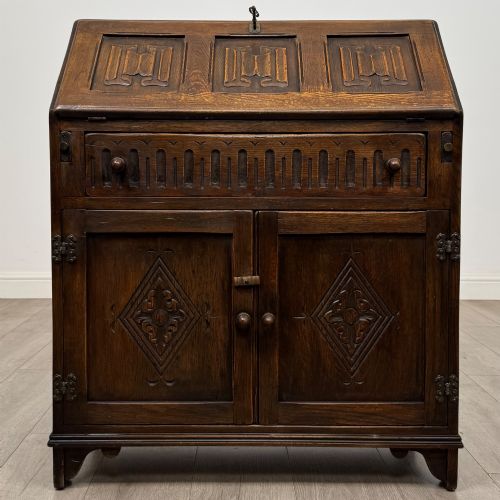
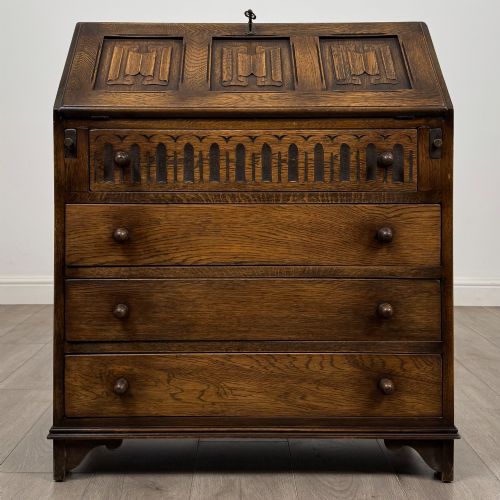
You are most likely to meet twentieth-century and Edwardian interpretations finished in plain or golden oak, alongside pieces bearing distinct linenfold panels or geometric mouldings. Bureau bookcases combining upper shelving with the lower writing compartment appear regularly among these listings.
How they were made
Carpenters constructed these items primarily from solid English and pollard oak, sometimes utilising oak veneers over secondary timbers to achieve striking grain patterns on the writing surface and drawer fronts. Iron, brass, and wrought hardware such as drop handles, escutcheons, and decorative panels provide functional reinforcement and contrast against the dark timber.
Carving techniques define the decorative vocabulary, featuring intricate linenfold motifs, geometric strapwork, and Jacobean-style relief work executed entirely by hand or with early mechanical assistance. Interior compartments often incorporate sliding secrets, small drawers, and pigeonholes fitted with precision joinery to conceal documents and stationery.
Listings feature oak material across periods from the seventeenth century through to nineteen-forty, including Edwardian and Victorian iterations.
What varies in quality
The depth and crispness of the timber carving separate standard production items from masterworks, with hand-chiselled linenfold and geometric panels displaying superior relief and shadow. Timber selection also dictates grade, where dense pollard oak or well-figured English oak demonstrates finer natural graining than plainer commercial boards.
Interior complexity and the integrity of the fitted writing section reveal the standard of construction, particularly where secret compartments, sliding wells, and pigeonholes operate smoothly. Original hardware, intact brasswork, and sound structural joints without excessive timber shrinkage distinguish the finest examples.
Morris & Co·George W Jack·Robert Mouseman Thompson·Liberty & Co
The Carved Oak Secretary Desk Glossary
- Bureau
- A writing cabinet featuring a sloping hinged flap that opens to form a desk surface above a set of drawers. It serves as a compact workstation for household administration.
- Linenfold
- A style of wood carving that imitates folded parchment or linen, commonly used on panelled cabinet doors and desk fronts during revival periods. It adds a textured, tactile quality to flat surfaces.
- Secretaire
- A piece of furniture containing a drawer or compartment that pulls down or folds out to create a writing desk. It often sits within the upper section of a taller bookcase.
- Pigeonhole
- A small, open compartment within a desk interior used for sorting letters and documents. These compartments form the core of the fitted writing nest.
- Pollard oak
- Oak timber taken from trees that have been pollarded, resulting in a gnarled grain pattern filled with rich circular marks. Cabinetmakers prize this wood for its decorative veneer potential.
Carved Oak Secretary Desk: Frequently Asked Questions
What is a secretary desk?
A secretary desk is a dual-purpose piece of furniture combining a bookcase or storage cabinet with a fold-down writing surface. The sloping flap drops forward to reveal an internal arrangement of small drawers and pigeonholes.
Beneath this writing flap sits a chest of drawers for larger storage. This design allows users to conceal paperwork quickly when not in use.
How do I date an oak bureau?
Dating relies on examining the construction methods, handle hardware, and prevailing revival styles visible in the timber. Eighteenth-century examples feature hand-cut dovetails and pegged joints, whereas Edwardian and later pieces utilise machine-cut elements.
Stylistic cues such as linenfold panels or Arts and Crafts ironwork further narrow the manufacturing window. Maker stamps and original receipts provide definitive historical confirmation.
Where should I place a bureau bookcase?
These tall combination units require adequate wall space and clearance for the writing flap to drop down fully without blocking room traffic. Placing them in a study, library, or living room creates an effective focal point.
Keep them away from direct sunlight and heat sources to prevent the oak timber from drying out and splitting over time.
How do I maintain oak furniture?
Maintain oak surfaces by dusting regularly with a soft, dry cloth and applying natural beeswax periodically to nourish the grain. Avoid silicone-based polishes that build up a hazy film over the carved details.
Maintain stable indoor humidity levels to protect the solid timber and prevent veneer lifting on sensitive veneered variants.