


Oak Bureau with Cupboard
These oak bureau with cupboard pieces combine a writing desk with enclosed storage, offering both workspace and panelled concealment for the modern interior.
Oak Bureau with Cupboard
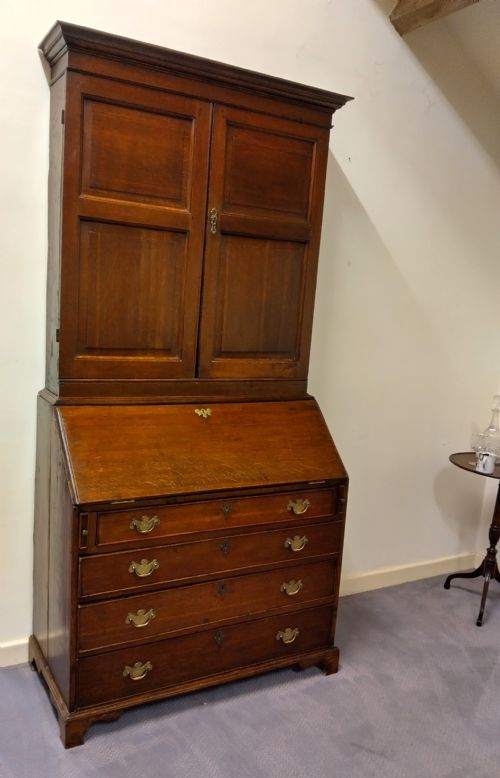
An oak bureau with cupboard brings together a fall-front writing surface and enclosed shelving, uniting practical desk space with concealed storage. You encounter these in forms ranging from compact Edwardian and 1920s iterations to substantial 18th century and Georgian examples.
The selection on this page spans several distinct eras and stylistic revivals, including Jacobean Revival, Tudor Revival, Arts and Crafts, and Georgian Vernacular. Alongside standard desks and bureaus, you will find bureau bookcases, bureau cabinets, dressing table desks, and hybrid side cabinet desks.
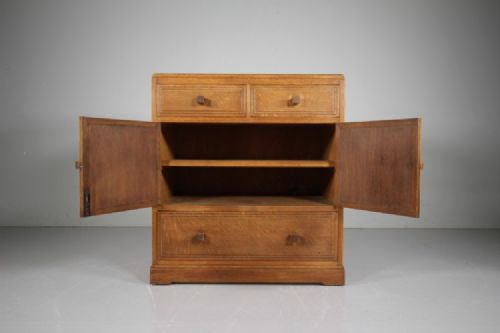
Makers utilised various configurations, sometimes pairing solid oak with oak veneer, glass panels, fabric, and contrasting mahogany sections. Iron and brass fittings appear across the periods, providing structural support and operating handles, hinges, and locks.
How they were made
Makers constructed these cabinets primarily from solid oak and oak veneer, frequently incorporating mahogany as a secondary timber. Metal elements in iron and brass appear on hinges, locks, and keyplates, alongside glass panels fitted to upper cupboard doors.
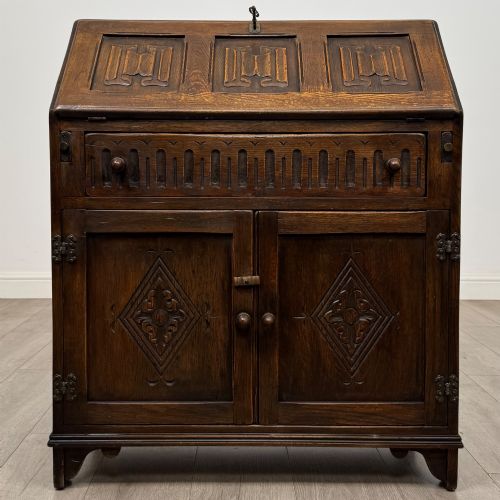
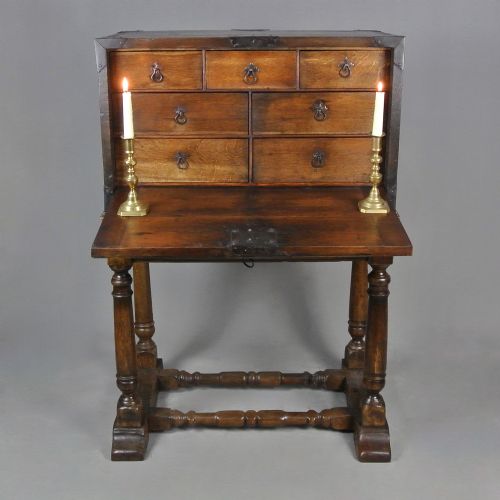
Surface decoration relies on traditional woodworking techniques, including carved panels and linenfold motifs seen on early 20th century and Edwardian models. Interiors often feature fitted pigeonholes and small drawers behind the fall-front flap, complemented by bevelled mirrors on Arts and Crafts variants.
Materials recorded across these items comprise solid oak, oak veneer, mahogany, brass, iron, glass, and fabric.
What varies in quality
Differentiation across the range depends on the integrity of the timber selection, the crispness of carved details like linenfold or geometric motifs, and the survival of original hardware such as brass handles and keys. Vernacular pieces display regional joinery traits that distinguish provincial workshops from metropolitan cabinet makers.
Structural alterations, such as adaptations for modern technology like televisions or the application of later veneers, shift a piece away from its original state. The sophistication of interior pigeonhole arrangements and the harmony between the desk section and the upper cupboard determine the overall refinement of the design.
The Oak Bureau with Cupboard Glossary
- Bureau bookcase
- A writing bureau with an enclosed shelving or cupboard section integrated directly above the desk. This form provides dual functionality for storage and display.
- Linenfold
- A style of wood carving that mimics folded fabric, commonly found on panels of early twentieth century and Edwardian oak furniture. It adds texture to flat cupboard doors and fall-fronts.
- Georgian vernacular
- Furniture made in provincial regions during the Georgian era, following local traditions rather than high London fashions. These pieces often feature sturdy oak construction and unpretentious proportions.
- Fall-front
- A hinged writing flap that drops down to create a horizontal desk surface and lifts up to conceal the interior pigeonholes. It forms the central operational feature of any bureau.
Oak Bureau with Cupboard: Frequently Asked Questions
What is an oak bureau with cupboard?
An oak bureau with cupboard is a dual-purpose piece of furniture combining a drop-front writing desk with an enclosed upper storage section or bookcase. These items range from compact Edwardian variants to substantial eighteenth century Welsh desk cabinets.
The design allows users to write at a fold-down flap while keeping books, papers, or household items hidden behind panelled or glazed doors. They serve as functional workspaces that also conceal everyday clutter.
How do I date an oak bureau?
Dating relies on examining construction methods, timber choices, hardware, and stylistic details such as linenfold carving or Arts and Crafts bevelled mirrors. Pieces span from seventeenth century frameworks up to 1920s revivals.
Earlier examples from the seventeen hundreds often show pegged joints and vernacular regional traits, while Edwardian and later twentieth century iterations utilise machine-cut elements and applied veneers.
How do I use one in a modern home?
These pieces function well in studies, living rooms, or bedrooms by offering a compact writing station that tidily closes up when not in use. The upper cupboards accommodate books, glassware, or media equipment.
Some historical models have even been adapted to house televisions while retaining their traditional exterior appearance. Their robust oak construction suits both traditional and contemporary interiors.
What styles are available?
The available styles encompass Georgian, Victorian, and Edwardian eras, alongside revival movements like Jacobean and Tudor Revival. Arts and Crafts examples also feature prominently within the selection.
Materials extend beyond solid oak to include oak veneer, mahogany, brass handles, and glass panels. This variety reflects changing domestic tastes across three centuries of cabinet making.