


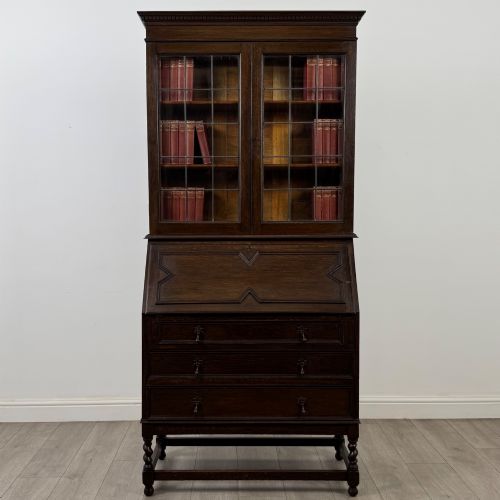


Jacobean Style Bureau
A jacobean style bureau brings heavy timber and formal front panels to a room, offering a sloping writing flap above drawers.
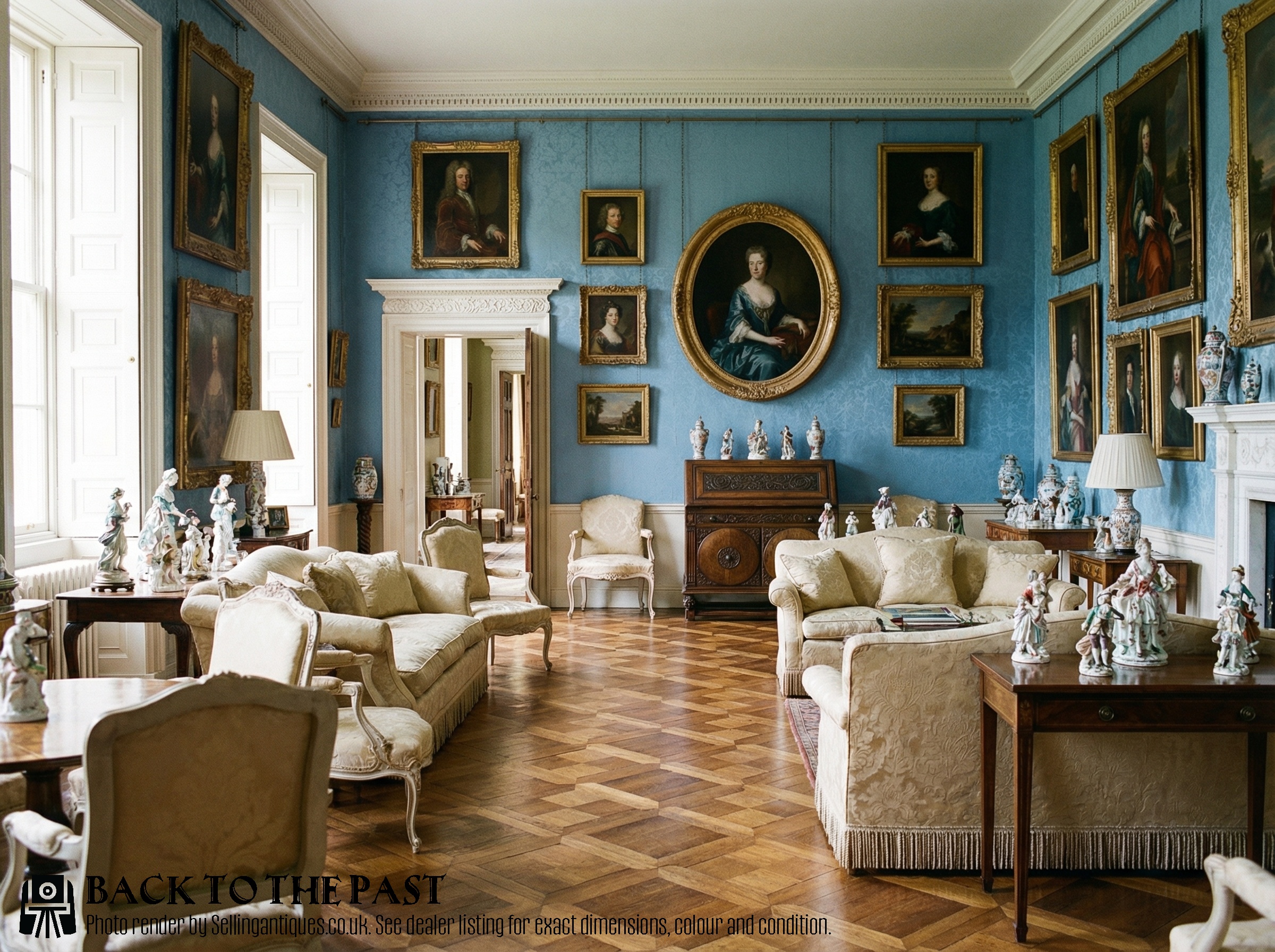
Jacobean Style Bureau
Buyers seeking a jacobean style bureau look for sloping fall-front writing desks rooted in revival aesthetics. Most examples encountered here date from the twentieth century, including Edwardian interpretations and pieces from the nineteen-twenties.
The dominant format pairs the writing slope with bank chests of drawers or upper bookcase cabinets. These pieces echo earlier seventeenth-century forms while functioning as practical writing furniture.
Makers drew on Tudor and Jacobean motifs, constructing heavy oak carcases that anchor a study or living space.
Materials and construction
Solid oak provides the structural foundation for nearly every piece in this category, often finished in medium or dark tones. Artisans utilised brass for drop handles and key escutcheons, adding metal detail against the wood.
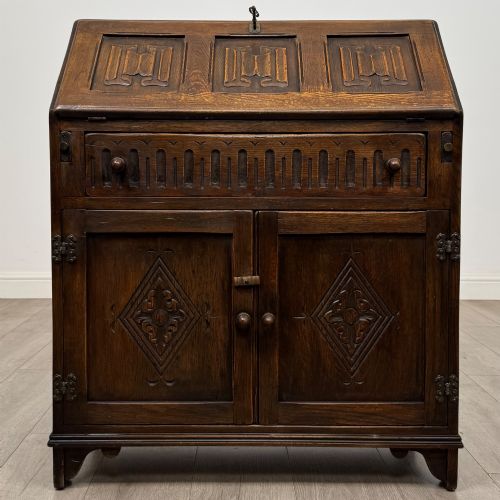
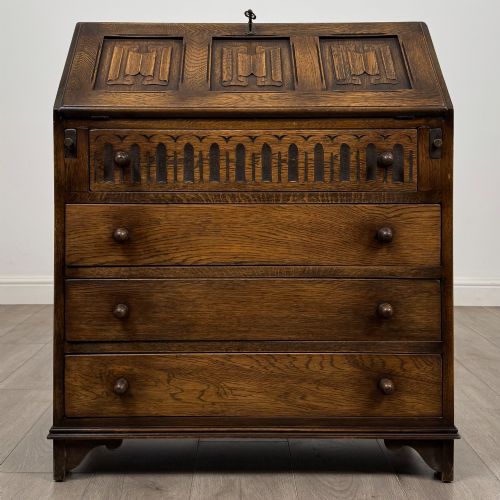
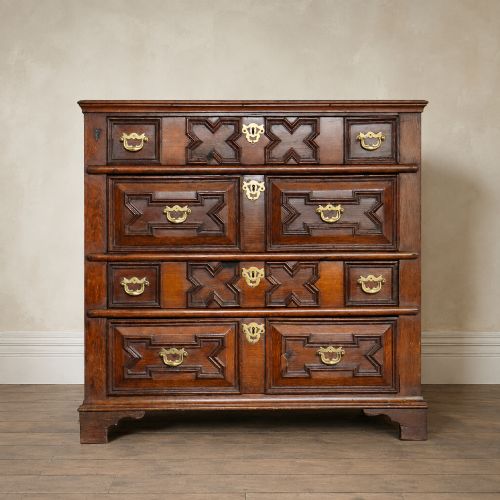
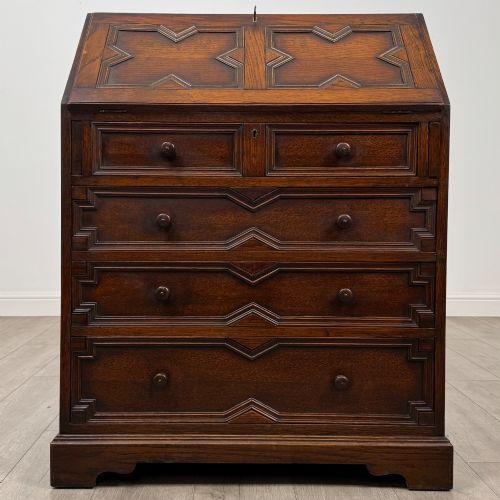
Geometric moulding and carved linenfold panels appear across the drop fronts and drawer faces, defining the revival aesthetic. Glass panels occasionally feature in the upper doors of taller bureau bookcases.
Listings in this category span Edwardian production, nineteen-twenties revivals, and eighteenth-century examples, all predominantly constructed in solid oak.
Assessing quality and proportion
Quality rests on the crispness of the geometric mouldings and the depth of the linenfold carving on the fall front. Plain timber surfaces rely entirely on the grain and the solidity of the oak construction.
The integration of the writing flap hinges and the internal compartment fitments separates standard production from finer craftsmanship. Fitted pigeonholes and small drawers inside the writing slope show greater attention to detail.
Wylie & Lochhead
The Jacobean Style Bureau Glossary
- Bureau
- A desk featuring a sloping hinged lid that drops down to form a writing surface, usually concealing small drawers and pigeonholes inside.
- Linenfold
- A style of wood carving that imitates folded fabric, frequently seen on the panels of Edwardian revival furniture.
- Geometric moulded
- A decorative technique using raised mouldings applied in geometric patterns to drawer fronts and door panels.
- Bureau bookcase
- A taller furniture form that combines a sloping writing desk below with glazed shelving cabinets above.
Jacobean Style Bureau: Frequently Asked Questions
What is inside a bureau?
Lifting the sloping fall front reveals a collection of small internal drawers, pigeonholes, and occasionally a central concealed compartment for letters.
These fitted compartments provide dedicated spaces for writing materials and small documents, keeping the main writing surface clear when closed.
How do I date a revival bureau?
Examination of the internal secondary woods, drawer construction joints, and hardware helps distinguish Edwardian and nineteen-twenties revival pieces from original seventeenth-century furniture.
Revival pieces in this category typically display twentieth-century manufacturing techniques beneath their historical revival styling.
Are these desks heavy?
Solid oak construction and substantial timber carcases make these items considerably heavy and sturdy.
Positioning the desk requires careful planning of the room layout, as moving them once placed demands multiple pairs of hands.
What is the difference between a bureau and a bureau bookcase?
A standard bureau consists of the desk base with drawers, whereas a bureau bookcase incorporates an upper shelved cabinet with glazed doors.
Both share the same sloping writing flap mechanism, but the bookcase version extends significantly higher and provides display storage.