

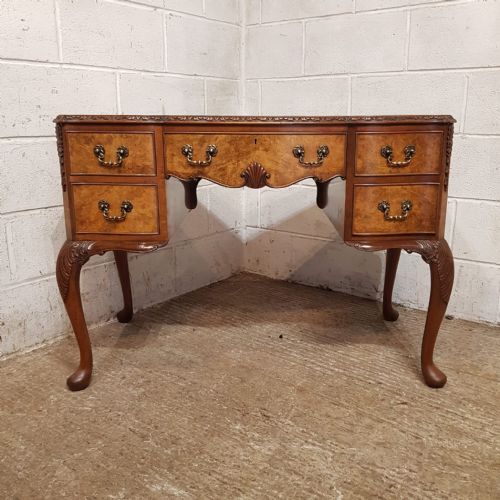


1920s Writing Bureau
These 1920s writing bureau pieces offer practical workspace and enclosed storage, combining period craftsmanship with utility.
1920s Writing Bureau
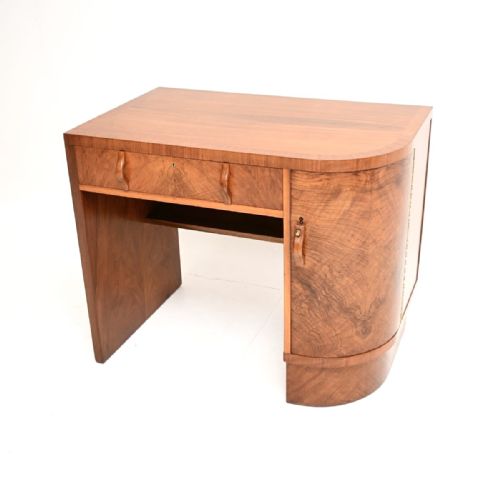
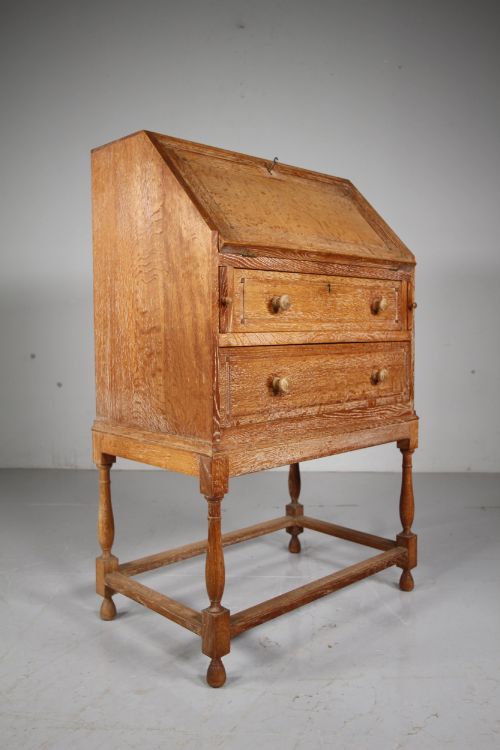
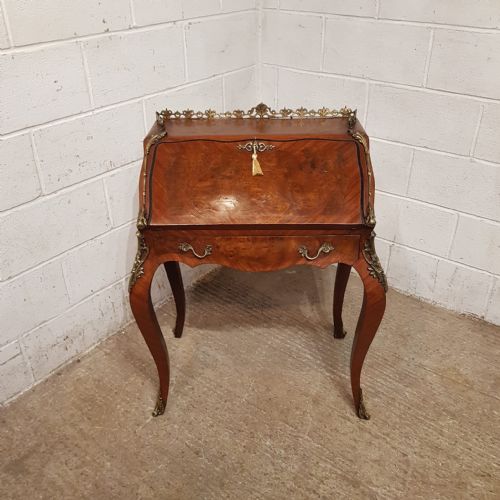
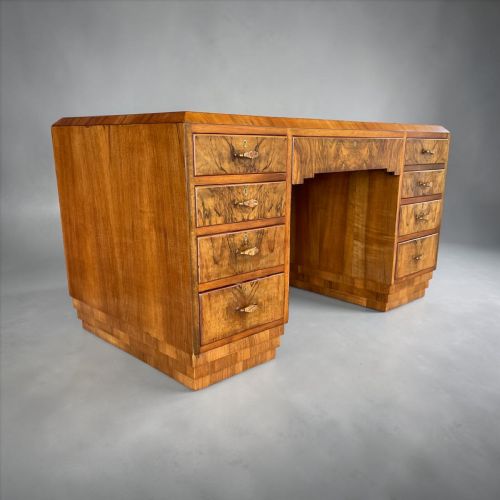
When searching for a 1920s writing bureau, a buyer encounters practical desks, standard bureaux, and bureau bookcases designed for domestic use. The pieces on this page span the 1920 and 1930 periods, incorporating styles from Jacobean Revival and Art Deco to Queen Anne Revival, Arts and Crafts, and Louis XV Revival.
Most items take the form of compact desks, oak bureaux, or burr walnut serpentine fronted desks. Variations include glazed bookcase combinations and roll top formats that conceal internal compartments behind a sloping fall front.
Originating from the interwar years, these items reflect both traditional revivalist tastes and emerging modernist lines. A typical piece provides a dedicated writing surface alongside drawer storage or shelving.
How they were made
Construction relies primarily on solid oak and walnut timber, often enhanced with figured walnut veneer or burr walnut surfaces to highlight natural grain patterns. Brass hardware and ormolu mounts provide structural and decorative accents on selected designs.
Glazed sections utilise glass panes within timber frames for bookcase attachments, while roll top mechanisms employ individual slats to cover the writing area. Labelled examples demonstrate workshop production methods standard to the period.
Design styles present across the selection include Jacobean Revival, Art Deco, Queen Anne Revival, Arts and Crafts, and Louis XV Revival forms.
What varies in quality
Quality differences emerge in the selection of timber veneers and the execution of revival styles. Figured and burr walnut surfaces demand precise matching and finishing compared to standard oak construction.
The integration of functional elements, such as smooth drawer operation and secure fall front hinges, separates standard production items from finer labeled examples. Decorative hardware, including brass fittings and ormolu mounts, also reflects the grade of the piece.
Heals of London
The 1920s Writing Bureau Glossary
- Bureau
- A writing desk featuring a sloping hinged lid that drops down to form a writing surface, concealing pigeonholes and small drawers inside. This form provides both concealed storage and a compact writing area.
- Burr walnut
- Timber taken from a tree growth or burl, yielding intricate, swirling grain patterns highly valued for decorative furniture fronts. It is frequently applied as a veneer over a stable core.
- Ormolu
- Gilt bronze ornamentation applied to furniture for decorative effect, common in revival styles. The technique involves coating bronze with a finely ground gold-mercury amalgam and firing it.
- Roll top desk
- A desk featuring a flexible tambour shutter made of narrow wooden slats that slides in tracks to cover the writing surface. This mechanism allows the user to secure the desk contents without clearing the papers.
- Jacobean Revival
- A furniture style looking back to seventeenth-century English design, characterised by dark oak, turned legs, and geometric panel moulding. Pieces in this style emphasise heavy proportions and traditional joinery.
1920s Writing Bureau: Frequently Asked Questions
How do I identify Art Deco desks?
Art Deco desks from this era feature streamlined geometric forms, smooth polished surfaces, and figured walnut veneers without heavy historical carving. They prioritise clean silhouettes and modern elegance over revivalist ornamentation.
Makers focused on showcasing natural wood grain rather than applied decoration. These pieces often present a distinct departure from earlier Jacobean or Queen Anne revival styles.
Where were these desks used?
Interwar writing bureaux typically served in domestic studies, drawing rooms, or bedrooms for managing correspondence and household accounts. Their compact dimensions made them adaptable for middle-class homes of the period.
The enclosed compartments provided a tidy solution for keeping stationery and documents out of sight when not in use.
What is the difference between oak and walnut?
Oak timber offers a sturdy, visible grain structure that aligns well with Arts and Crafts and Jacobean Revival aesthetics. It provides robust durability for daily use in standard writing furniture.
Walnut, particularly when utilised as figured veneer or burr walnut, delivers a darker tone and intricate patterning suited to Art Deco or Queen Anne Revival pieces. It focuses visual attention on decorative surfaces rather than heavy structural timber.