

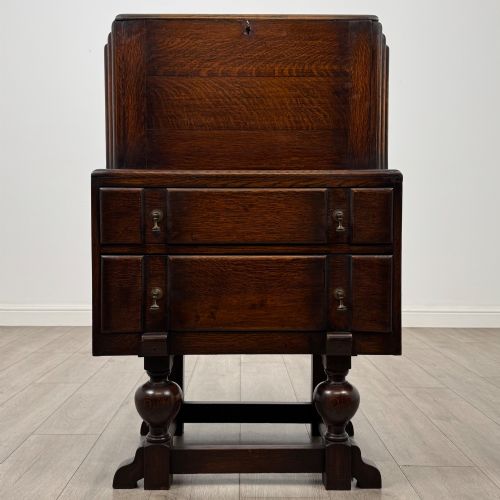
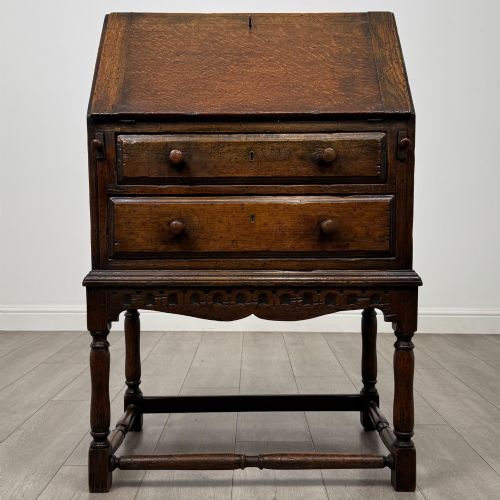
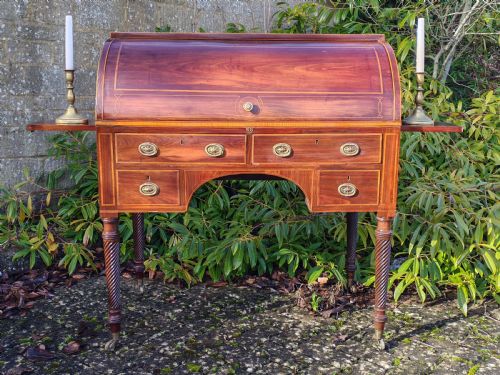
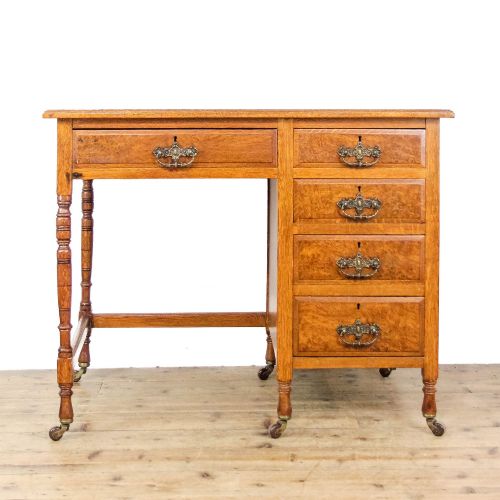


Turned Leg Writing Bureau
A turned leg writing bureau brings practical workspace and period character into a room, spanning styles from sturdy early oak to refined Edwardian walnut.
Turned Leg Writing Bureau
A turned leg writing bureau is a fitted workspace combining a writing surface with storage compartments, resting upon turned supports. The pieces found here span the 17th century through to the 1920s, with heavy representation from the Victorian and Edwardian eras.
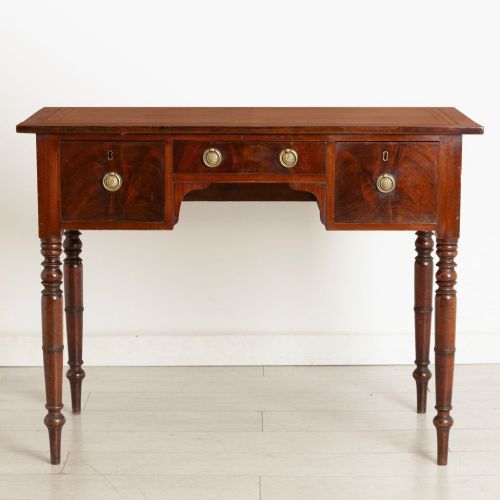
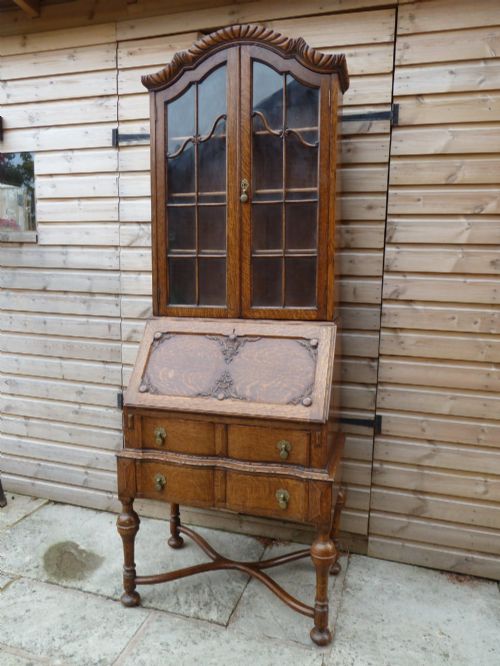
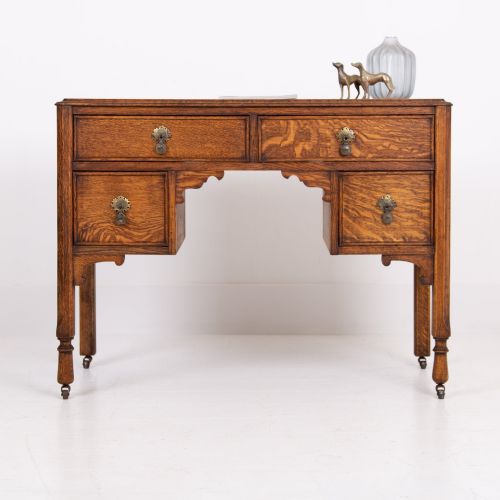
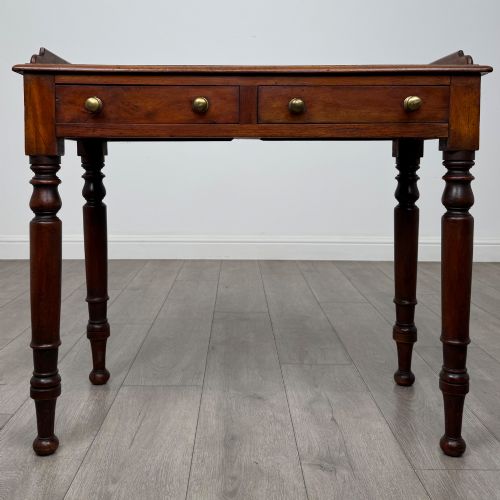
The physical forms include standard writing desks, bureau bookcases, and compact writing tables. Oak and mahogany dominate the selection, often accompanied by walnut, elm, and burr walnut.
Makers and retailers such as Heal and Sons and James Mein of Kelso appear alongside regional items in Jacobean Revival, William and Mary, and Georgian styles. Buyers encounter both simple clerks' desks and elaborate glazed bookcase bureaux.
How they were made
Cabinet makers constructed these items primarily in solid woods like oak, mahogany, and walnut, frequently applying satinwood inlay or burr walnut veneers for visual depth. Structural supports rely on turned wooden legs, while surfaces often incorporate fitted leather inserts.
Working components such as drawers and fall-front writing flaps utilise traditional joinery methods suited to each period. Brass handles and glass panels appear on glazed bookcase variants, showing period-specific hardware attached with hand screws.
Materials across the selection range from utilitarian ebonized pine and sturdy oak to decorative burr walnut, satinwood inlay, and brass hardware.
What varies in quality
Quality rests upon the selection of timber and the precision of the cabinet work, particularly in the alignment of drawers and the stability of turned legs. Finer examples display carefully matched veneers and uncompromised internal partitions within the writing compartment.
The presence of original handles, maker labels, and untouched surface finishes elevates an item's standing. Pieces showcasing refined carving or specialised woods like burr walnut and satinwood inlay demonstrate superior workshop production.
James Mein of Kelso·Heals of London·Heal and Sons·Maple and Co
The Turned Leg Writing Bureau Glossary
- Bureau
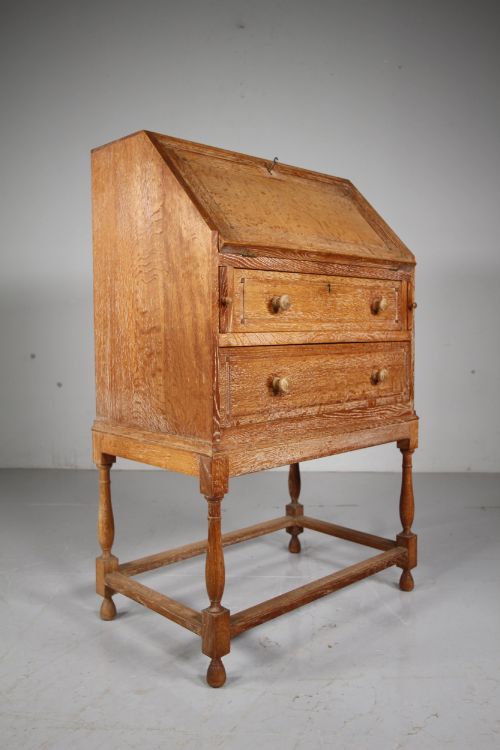
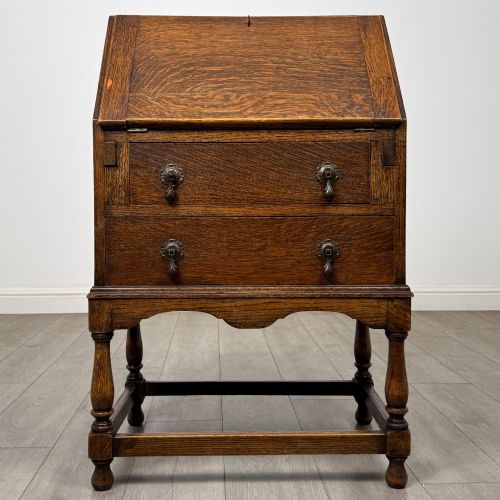
- A desk featuring a sloping hinged lid that drops down to form a writing surface, enclosing small drawers and pigeonholes. These items often sit above a set of wider storage drawers.
- Writing Table
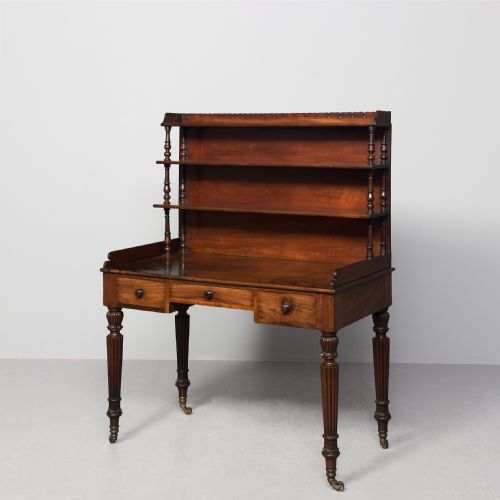
- A freestanding desk designed primarily for correspondence, typically featuring one or more drawers beneath a flat top. They lack the sloping fall-front of a traditional bureau.
- Bureau Bookcase
- A dual-purpose piece comprising a writing bureau base topped by a glazed or panelled cabinet for books. These taller items provide both display and storage capabilities.
- Kneehole Desk
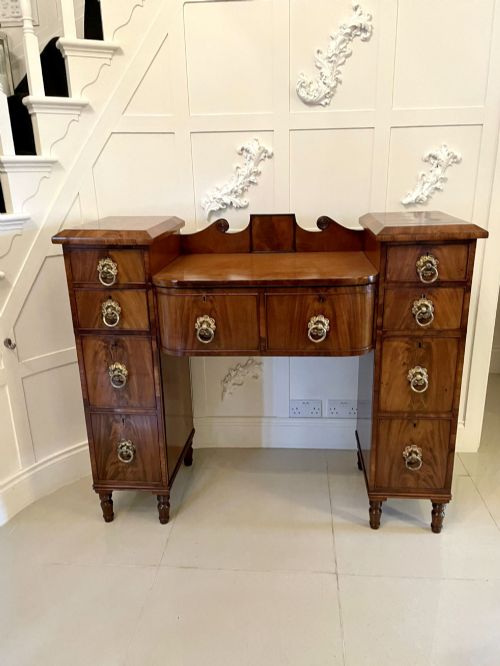
- A compact desk configuration featuring a central recess for the user's legs, flanked by pedestals of smaller drawers. This form allows a seated user to work directly facing the piece.
- Satinwood Inlay
- Decorative ornamentation created by inserting contrasting pieces of light satinwood into the primary timber surface of the desk. This technique highlights geometric borders and panel motifs.
Turned Leg Writing Bureau: Frequently Asked Questions
What is a turned leg writing bureau?
A turned leg writing bureau is a writing desk featuring distinctive turned wooden legs, combining a storage compartment with a surface for writing. These pieces range from early solid oak formats to refined walnut and mahogany Edwardian editions.
They serve as functional workspace furniture while carrying distinct period aesthetics from the 17th century up to the 1920s.
How do I date a writing bureau?
Dating relies upon identifying the primary timber, construction methods, and stylistic cues such as Jacobean Revival turning or Edwardian inlay. Examining the hardware, secondary woods inside drawers, and overall proportions helps align the piece with its era.
Maker labels, where present, provide the most direct confirmation of origin and date.
Where should I place a bureau desk?
These desks suit home studies, living rooms, or bedrooms where their compact footprints and fold-down writing flaps manage paperwork efficiently. Placing them away from direct heat sources protects vulnerable wood veneers and leather surfaces.
Their finished backs and decorative turned legs also allow certain models to sit away from walls within a room layout.
What maintenance do these desks need?
Routine care involves dusting with a dry cloth and occasionally applying appropriate furniture wax to nourish solid oak, mahogany, or walnut timbers. Leather writing inserts benefit from specialised balms to prevent cracking over time.
Avoiding excess moisture and direct sunlight preserves both the wood finish and any delicate satinwood inlays.