
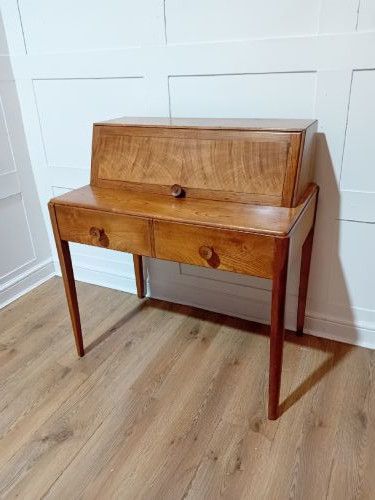
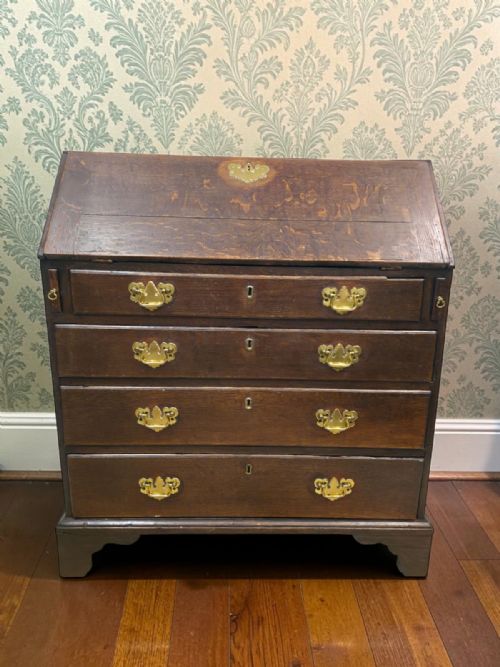
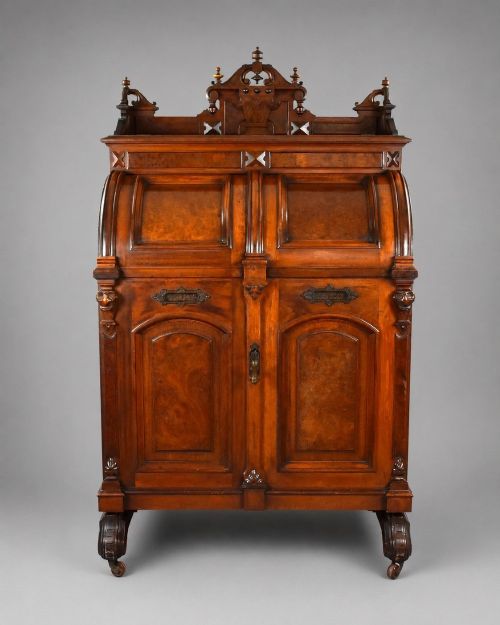
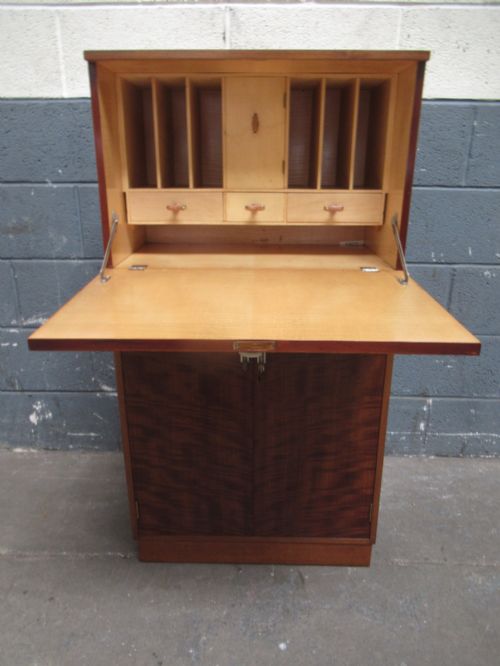
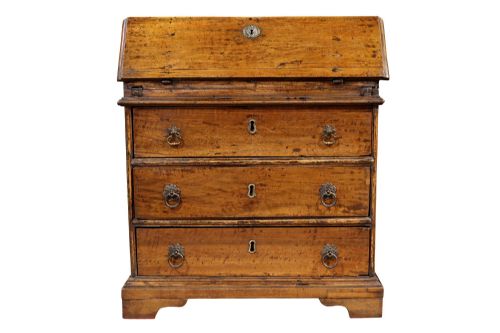


Wooden Fall Front Desk
A wooden fall front desk offers a hinged writing slope that conceals fitted interior compartments when closed.
Wooden Fall Front Desk
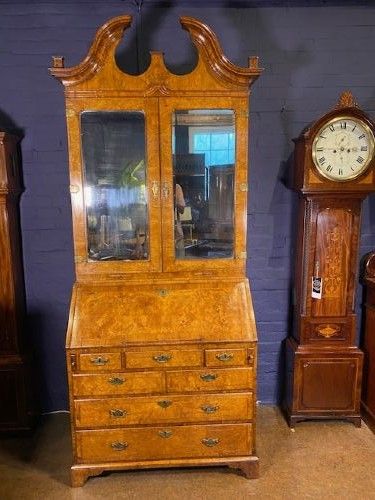
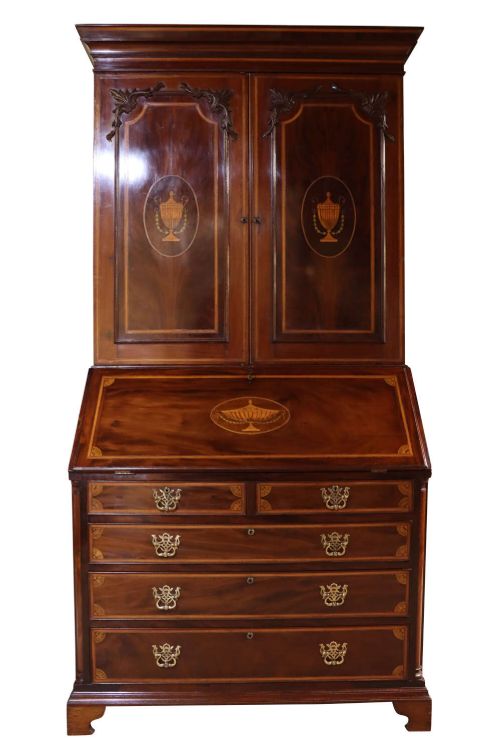
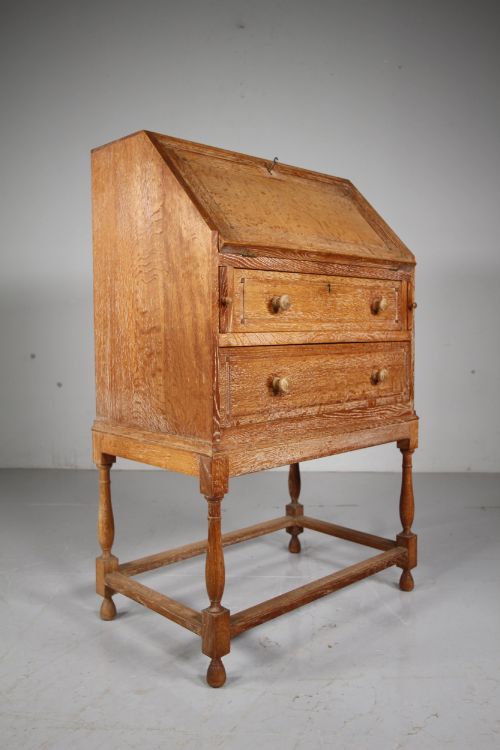
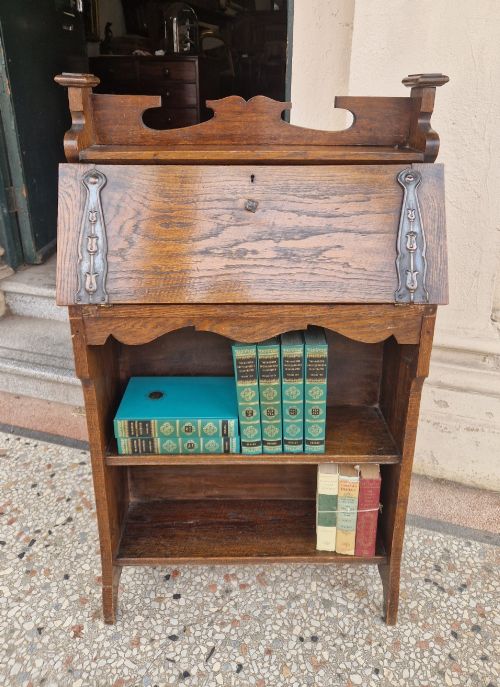
When you search for a wooden fall front desk, you encounter pieces designed for private correspondence and the storage of papers, spanning multiple centuries from the seventeenth through the early twentieth century. The primary forms present on this page include standard bureaux, larger bureau bookcases with upper shelving or cabinetry, and specialised secretaire desks.
The materials utilised in these examples range from dense hardwoods such as mahogany, walnut, and oak down to lighter timbers including elm, fruitwood, satinwood, and pine. Styles follow historical periods closely, moving from Queen Anne and George II designs through George III, Regency, Victorian, Edwardian, and Arts and Crafts traditions.
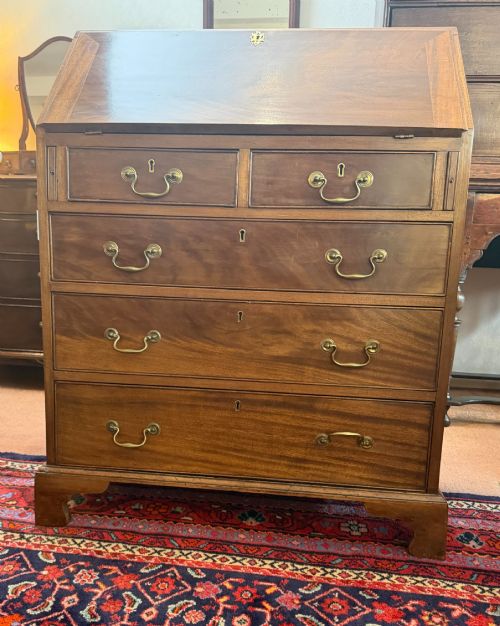
You will most frequently meet mahogany and oak versions dating from the Georgian and Edwardian eras. These domestic writing pieces combine structural storage drawers below with a sloping writing surface that drops down for daily use.
Judging the work
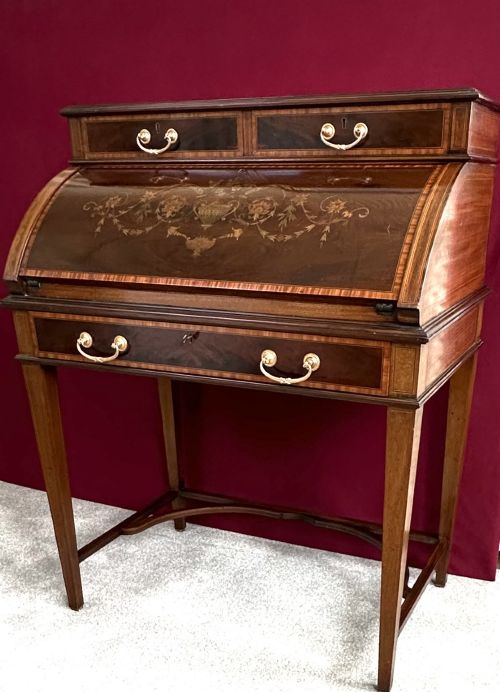
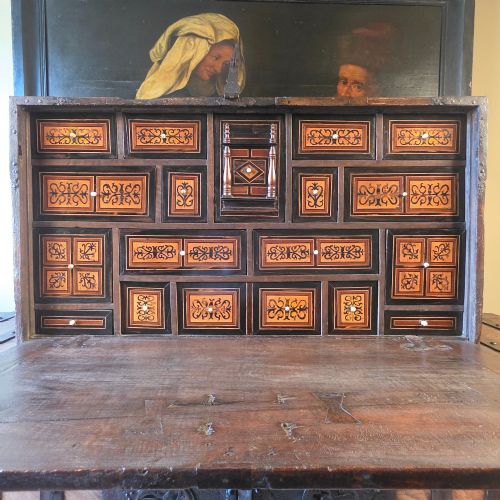
The standard of a wooden fall front desk rests upon the selection of the timber veneers and the precision of the interior joinery. Superior examples display continuous grain matching across the fall front and drawer fronts, alongside neatly fitted interior pigeonholes and secret compartments.
The integrity of the original hardware, working locks, and secondary timbers inside the drawer linings separates master cabinet work from simpler provincial output. Secondary details like original ironwork or subtle marquetry decoration distinguish upper-tier examples from plain utility pieces.
Several pieces feature hidden compartments and secret drawers for stashing love letters or small valuables out of sight.
Heals of London·Arthur Basil Reynolds
The Wooden Fall Front Desk Glossary
- Bureau
- A writing desk with a sloping hinged lid that covers a compartment of pigeonholes and small drawers. This term is frequently interchangeable with fall front desk in historical listings.
- Fall front
- A hinged writing flap that drops from a vertical position to a horizontal surface supported by pull-out lopers or the desk structure itself. It closes the writing area when not in use.
- Secretaire
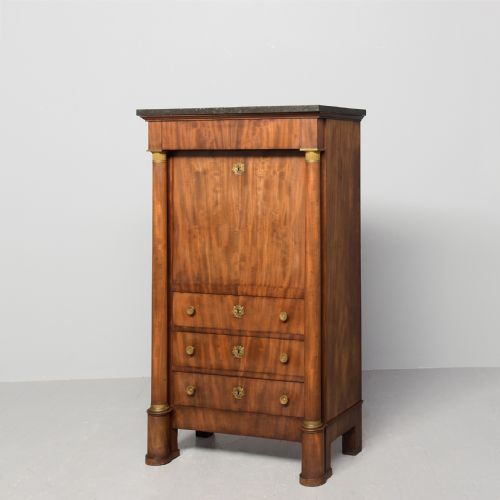
- A piece of furniture containing a writing drawer or drop-front desk compartment. French examples are often designated as secretaire abattant.
- Loper
- A wooden slide or arm that pulls out from the carcase beneath the fall front to support the writing flap. These prevent strain on the hinges when writing.
- Marquetry
- Decorative patterns formed by fitting together thin pieces of wood veneer and other materials onto a carcase. It creates pictorial or geometric designs across the exterior surfaces.
Wooden Fall Front Desk: Frequently Asked Questions
How do I use a fall front desk?
Lower the hinged wooden flap until it rests horizontally, often supported by integrated pull-out lopers, to create a stable writing surface.
Inside, you will find an arrangement of small drawers and pigeonholes designed for stationery, letters, and small personal items.
What is the difference between a bureau and a desk?
Historically, a bureau specifically denotes a writing cabinet featuring a sloping fall front lid that encloses a fitted interior.
General desks may utilise flat tabletops, cylinder fronts, or pedestal configurations without the characteristic hinged writing flap.
How do I identify a Georgian bureau?
Georgian pieces typically employ solid mahogany, oak, or walnut with robust dovetailing, bracket feet, and brass swing handles.
The interior drawers often feature fine secondary softwood linings and small secret compartments concealed behind sliding panels.
Where were these desks placed in a home?
These pieces traditionally served as private writing furniture in studies, libraries, or withdrawing rooms where correspondence was conducted.
Their enclosed fronts allowed owners to conceal unfinished letters and sensitive documents from casual view when guests visited.