




Late Victorian Bureau Desk
A late victorian bureau desk offers practical writing space paired with period craftsmanship, bringing traditional character to any study.
Late Victorian Bureau Desk
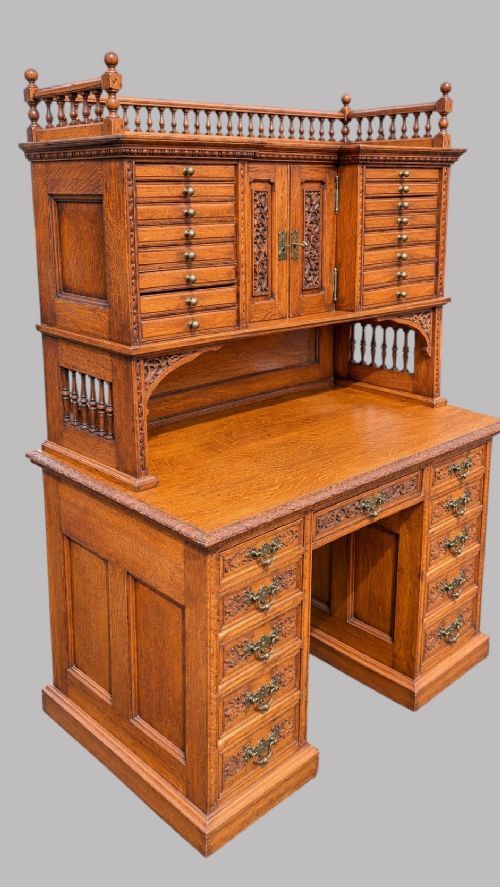
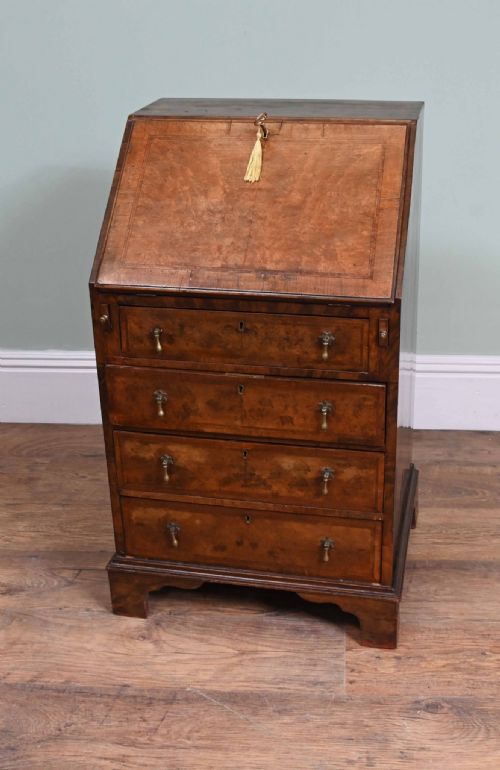
A late victorian bureau desk is a functional piece of antique furniture designed for writing and storage, commonly appearing in oak, mahogany, walnut, and rosewood. These pieces often feature fitted interiors with small drawers and pigeonholes hidden behind a sloping fall-front or cylinder lid.
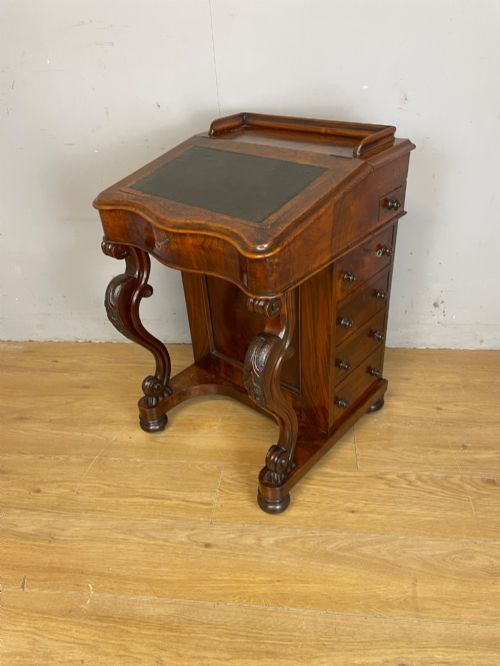
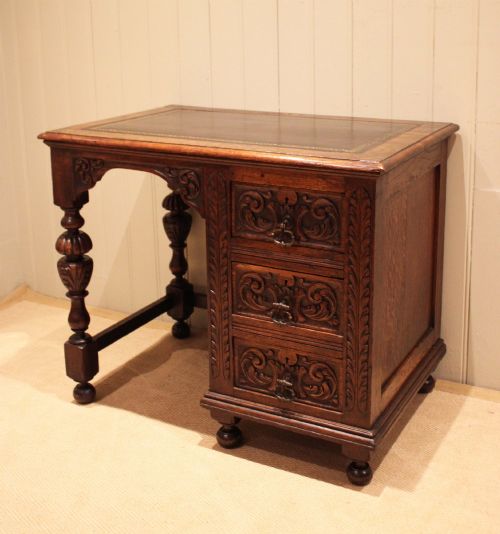
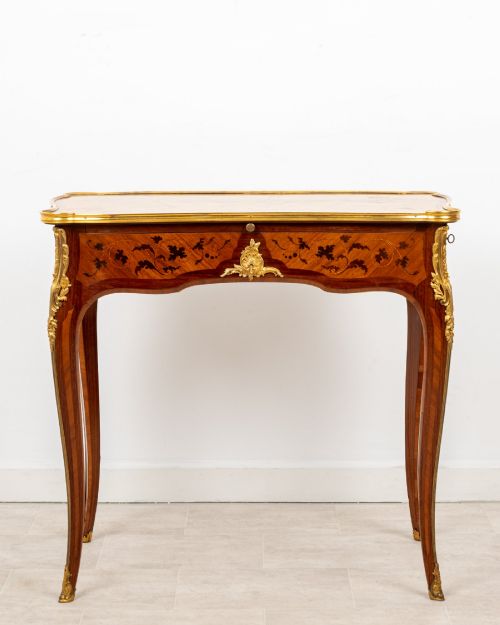
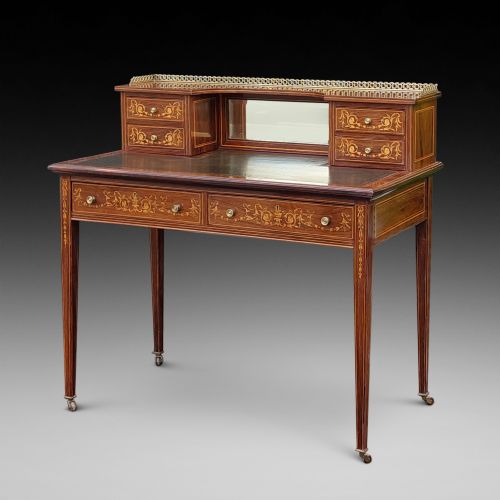
The selections available include standard kneehole desks, Davenport desks, secretaire bookcases, and inlaid satinwood or rosewood writing tables. Most examples date from the late nineteenth century around eighteen eighty to nineteen hundred, reflecting the diverse stylistic revivals of the period.
Materials and construction
Cabinet makers utilised solid timbers such as oak and mahogany alongside decorative veneers including satinwood, walnut, kingwood, and amboyna. Brass hardware, leather writing surfaces, and glass panel doors frequently completed the construction of these desks.
Surface ornamentation involved detailed marquetry inlay, carved woodwork, ebonising, and painted decoration. Cabinetmakers applied these techniques to achieve various revival styles ranging from Sheraton and George II to Louis XV and Aesthetic Movement designs.
Listings feature woods such as oak, mahogany, walnut, rosewood, satinwood, amboyna, and kingwood across multiple nineteenth-century styles.
Distinctions in quality
Quality in a late victorian bureau desk rests upon the selection of timber, the precision of the veneer work, and the execution of any hand-carved or inlaid details. Superior pieces display thoughtful integration of secondary woods and careful attention to the interior fittings.
The presence of maker signatures or stamps from recognised firms elevates a piece above standard workshop production. Better examples also retain their original leather inserts, working locks with matching keys, and uncompromised structural joinery.
Durand·Maple & Co·Liberty of London·Edwards & Roberts·Thomas Turner
The Late Victorian Bureau Desk Glossary
- Bureau
- A desk featuring a sloping lid that opens to form a writing surface and reveals interior compartments. This form provides both concealed storage and a dedicated workspace.
- Secretaire
- A piece of furniture containing a built-in writing drawer or fold-down writing flap. It often combines the storage capacity of a bookcase or cabinet with a writing desk.
- Davenport
- A compact small desk featuring a sloping top and drawers accessed from the side. This form became popular during the nineteenth century for use in smaller rooms or boudoirs.
- Marquetry
- The art of applying pieces of veneer to a structure to form decorative patterns or pictures. Craftsmen used various coloured woods to create intricate floral or geometric designs.
- Kneehole desk
- A freestanding desk with a central recess for the user's legs, flanked by pedestals of small drawers. This layout became a standard form for executive and library desks.
Late Victorian Bureau Desk: Frequently Asked Questions
What is a bureau desk?
A bureau desk is a traditional writing table equipped with a hinged sloping flap that drops down to create a flat surface. Behind this flap lie small drawers and pigeonholes for correspondence and documents.
Beneath the writing area, these pieces typically provide wider drawers for storage. They combine the utility of a modern desk with the enclosed organisation characteristic of nineteenth-century cabinetmaking.
How do I use a bureau desk?
You can use a bureau desk as a functional workstation for writing, reading, or placing a laptop on the fold-down writing surface. When work finishes, the fall-front closes to conceal papers and maintain a tidy room.
The internal compartments and small drawers keep stationery and writing implements organised. Larger models with bookcases or cabinets also offer display space for books and decorative objects.
How do I care for a wood desk?
Keep a wood desk away from direct sunlight and heat sources to prevent the timber from drying out and the veneer from cracking. Dust the surface regularly with a soft, dry cloth rather than using silicone-based polishes.
Condition the leather writing insert with appropriate balms if fitted, and maintain consistent room humidity. Minor spills should be wiped away immediately to protect the historic polish and finish.
How do I identify a Victorian desk?
Identify a Victorian desk by examining the secondary woods inside the drawers, the style of the hardware, and the construction methods used by the cabinetmaker. These pieces often incorporate period revival motifs such as Sheraton satinwood inlay or Arts and Crafts simplicity.
Dates generally fall between eighteen thirty-seven and nineteen hundred, though many listed examples cluster around the late nineteenth century. Maker stamps and brass lock signatures can also confirm the production era.