





Victorian Bureau Bookcase Desk
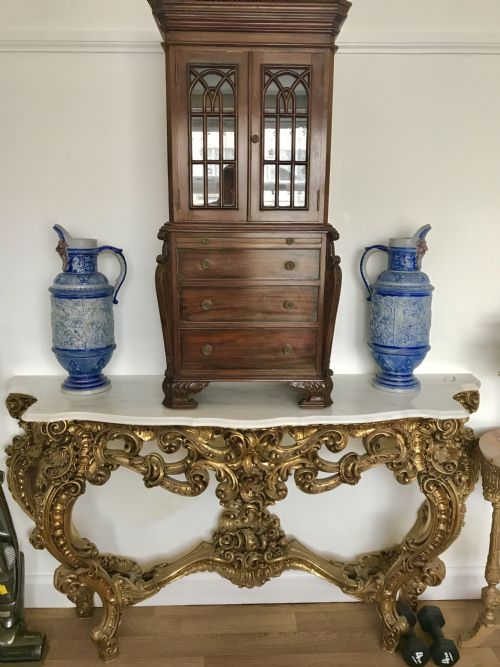
These pieces combine upper library shelving with a drop-front writing surface, offering a practical combination of display and workspace for a room.
Victorian Bureau Bookcase Desk
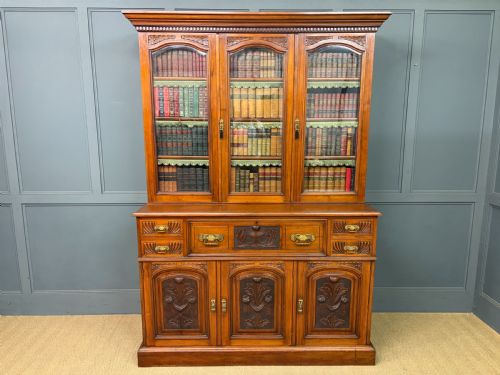
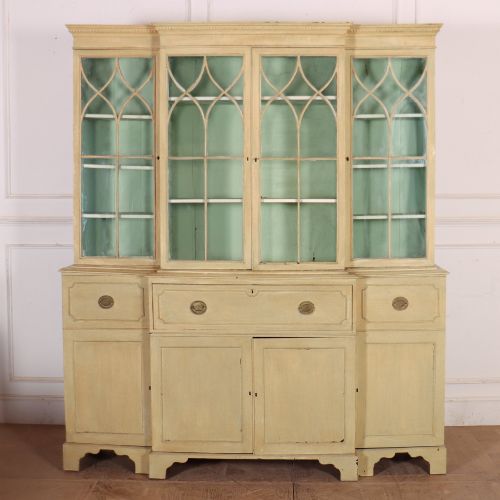
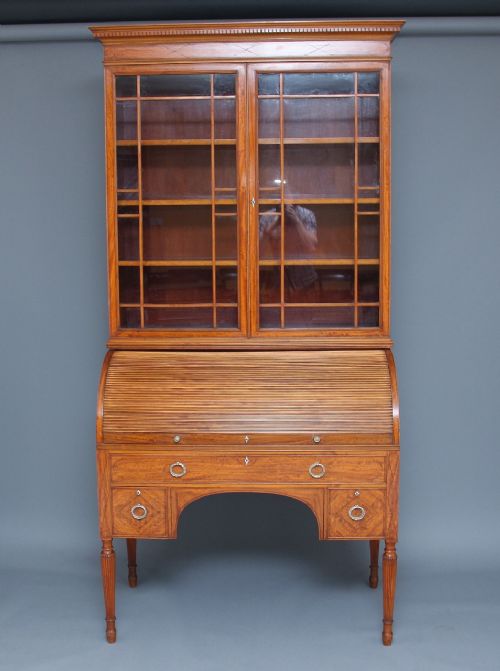
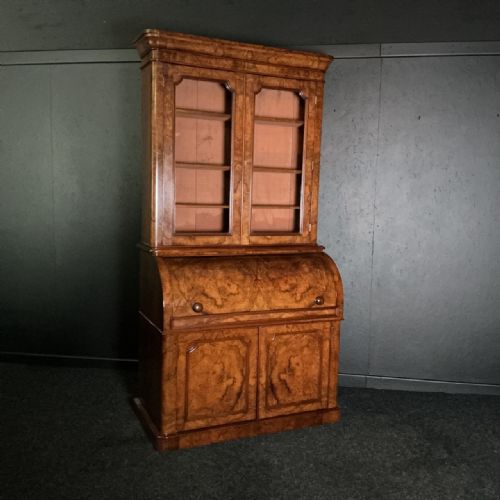
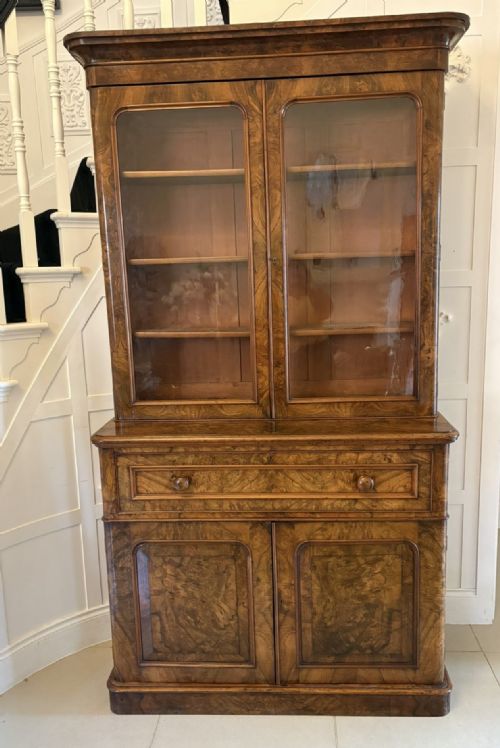
A victorian bureau bookcase desk brings together a glazed upper cabinet for books and a fitted lower section designed for correspondence and writing. The form appears across the nineteenth century in various configurations, including cylinder fronts, drop-down writing flaps, and secretaire drawers.
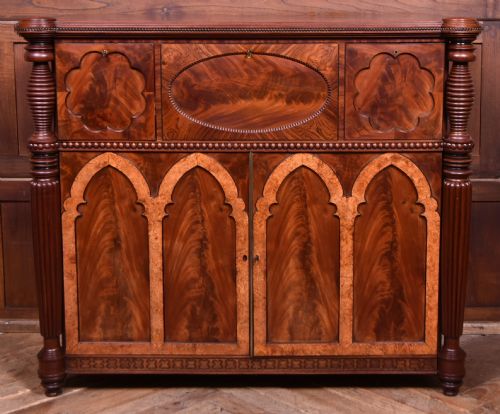
Mahogany and walnut dominate the examples seen here, often accompanied by oak and burr walnut veneers. Pieces range from large library furniture down to smaller domestic formats and occasional apprentice samples.
Stylistic influences span standard Victorian production through to Victorian Gothic Revival, Arts and Crafts, and occasional nods to earlier Regency and Georgian design.
Materials and construction
Cabinet makers utilised dense hardwoods like mahogany and oak for structural integrity, applying figured veneers such as burr walnut and satinwood to primary visual surfaces. Brass hardware, including hinges, locks, and occasional inset panels, provides functional detail across doors and interior compartments.
Glass panels are set into upper doors to protect library contents while maintaining visibility, and interior writing surfaces frequently incorporate leather inserts. French polishing techniques deliver a smooth, reflective finish to the timber.
One tiny apprentice sample managed to pack all the complexity of a full-sized library bookcase into a quarter of the space.
Gradations of quality
Quality reveals itself in the selection of timber figures, such as matched burr walnut or pollard oak veneers, and the precision of internal pigeonholes and small drawers. Superior examples show refined carving, tight joinery, and well-integrated cylinder or drop-front mechanisms that operate smoothly.
Lesser items rely on plain timber stocks with simpler internal arrangements and less attention to the continuity of grain across the front elevation.
Gillows·Edwards & Roberts·Morris & Co·George W Jack·Harris Lebus
The Victorian Bureau Bookcase Desk Glossary
- Secretaire
- A piece of furniture containing a drawer or drop-front compartment disguised as a standard drawer, which pulls down to reveal a writing surface and small compartments. This mechanism allows a chest or bookcase to function as a desk without permanent loss of storage.
- Cylinder
- A curved, quarter-circle wooden shutter that rolls back into the body of the desk to expose the writing interior. It operates on tracks and conceals pigeonholes when closed.
- French polish
- A shellac finish applied with a rubbing pad to build up a high-gloss surface that highlights the grain of woods like mahogany and walnut. It represents a traditional nineteenth-century finishing method.
- Apprentice piece
- A miniature scale model constructed by a trainee craftsman to demonstrate mastery of joinery and finishing techniques. These items reproduce full-sized furniture at a reduced scale.
- Pigeonhole
- A small, open compartment fitted inside a desk interior for sorting letters and papers. They are often arranged in tiers around a central small cupboard.
Victorian Bureau Bookcase Desk: Frequently Asked Questions
What is a secretaire bookcase?
A secretaire bookcase combines a bookshelf top with a lower cabinet featuring a fold-down desk flap or pull-out drawer front.
This layout provides enclosed storage for books above and a dedicated writing surface complete with small drawers below.
How do cylinder desks work?
A cylinder desk uses a curved wooden shutter that slides back into the body of the cabinet to uncover the writing surface.
Pulling the writing slide forward or lifting the flap often retracts the cylinder automatically, revealing the internal pigeonholes.
Where should I place one?
These tall pieces require a sturdy wall and adequate floor space, making studies, libraries, and large living rooms suitable locations.
Ensure clearance in front of the unit for the drop flap or pull-out writing drawer to open fully.
How do I identify Victorian pieces?
Victorian pieces typically employ dense hardwoods like mahogany and walnut, frequently utilising secondary timbers like oak for internal drawer linings.
Construction details, hardware styles, and specific design movements such as Gothic Revival or Arts and Crafts help confirm the era.