



Silver Top Wine Decanter
A silver top wine decanter combines cut glass and precious metal mounts to serve claret and dessert wine with distinct period elegance.
Silver Top Wine Decanter
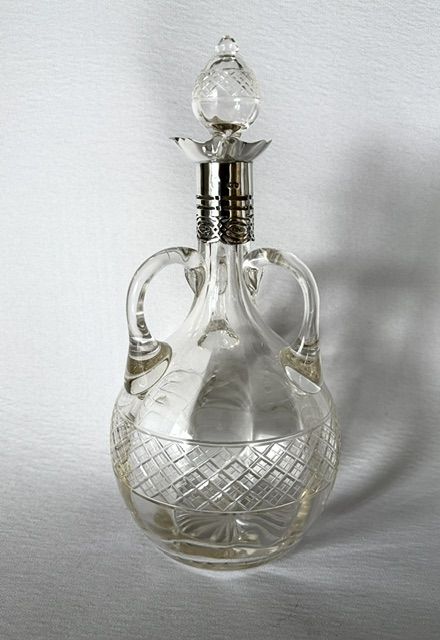
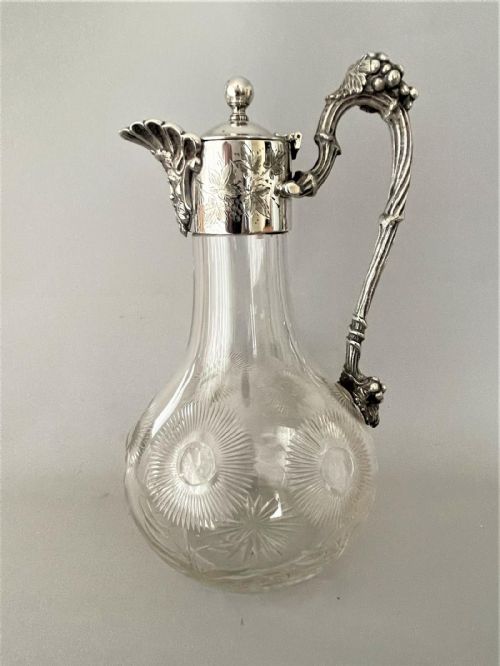
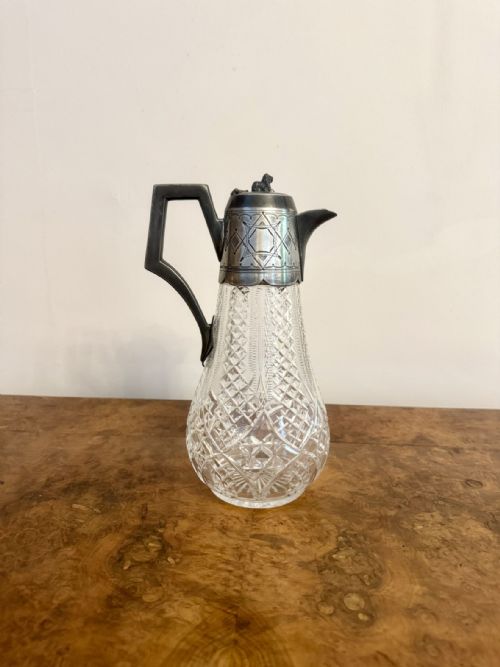
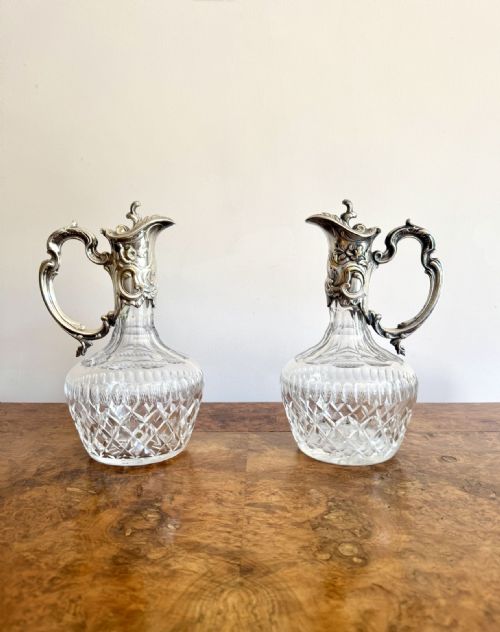
When searching for a silver top wine decanter, buyers encounter vessels designed primarily for serving claret, port, and other dessert wines at the dining table. These pieces combine glass bodies with metal components fitted to the neck, handle, and hinged cover.
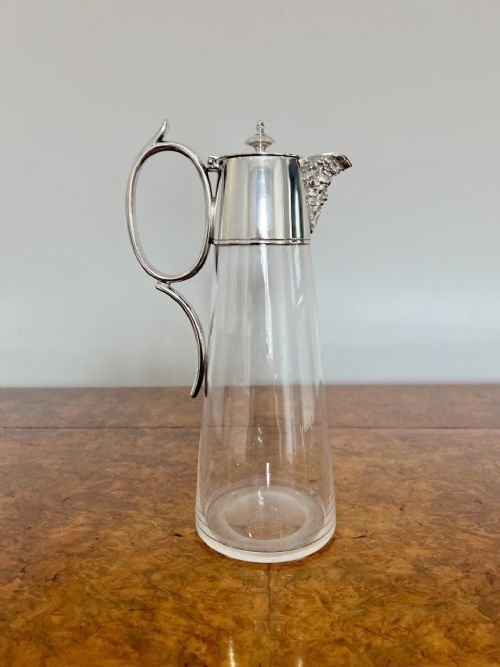
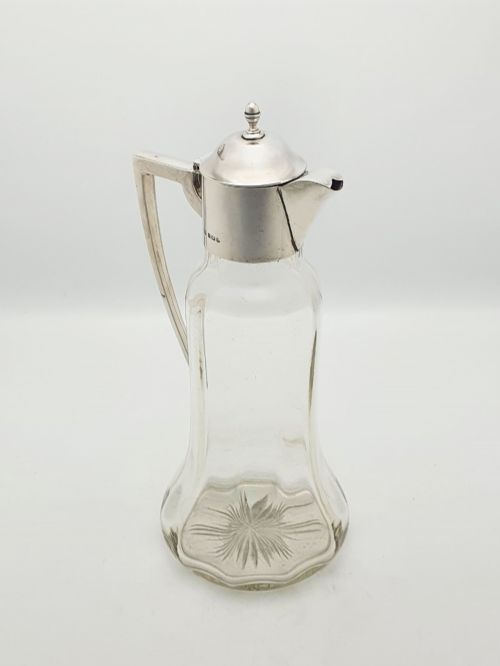
The selection centres heavily on Victorian and Edwardian examples, spanning the nineteenth and early twentieth centuries. Forms range from traditional bulbous bottles to tall claret jugs and ewers fitted with spouts and ergonomic handles.
Materials and construction
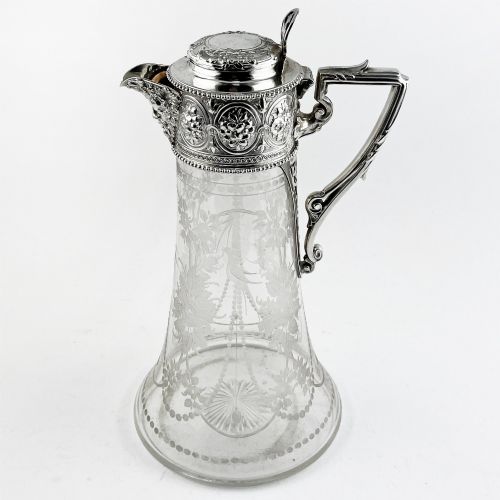
Makers produced the glass bodies using blowing, moulding, and wheel-cutting techniques to create faceted patterns, flutes, and floral engravings. Coloured glass variants in shades like blue, cranberry, and amethyst appear alongside clear crystal.
Silversmiths and metalworkers fabricated mounts, collars, and covers from sterling silver or silver plate, securing them firmly around the glass necks. Many mounts incorporate intricate chased decoration, Bacchus masks, or plain polished surfaces designed to complement the glass.
The selection spans the Victorian and Edwardian periods, including pieces dated to the 1860s, 1880s, and 1900s.
Evaluating craftsmanship and condition
Quality rests in the weight and clarity of the glass, where deep hand-cutting and crisp faceting distinguish finer vessels from simpler moulded forms. The crispness of the wheel engraving and the absence of cloudiness within the glass body signal superior material standards.
The execution of the silver mount and the precision of the hinged lid determine the standard of the metalwork. Substantial sterling silver or well-preserved silver plate with secure collars and functional, flush-fitting covers demonstrate higher workshop skill.
Asprey and Co. Ltd·Hukin & Heath
The Silver Top Wine Decanter Glossary
- Claret jug
- A specialised pouring vessel designed specifically for serving red Bordeaux wine at the table. These pieces typically feature a handle and a hinged silver cover.
- Silver plate
- A manufacturing technique where a thin layer of silver is fused to a base metal core, such as copper or Britannia metal. This process provided the visual appeal of solid silver at a lower cost.
- Sterling silver
- An alloy consisting of silver and other metals, standardised at a high purity level for durability and decorative objects. Hallmarks stamped into the metal often indicate the assay office and year of production.
- Cut glass
- Glassware shaped and patterned by holding the surface against rotating abrasive wheels. This technique creates deep geometric facets that refract light through the vessel.
Silver Top Wine Decanter: Frequently Asked Questions
What is a silver top wine decanter used for?
These vessels served to aerate and pour claret, dessert wine, and whisky during formal nineteenth and early twentieth century dining. The attached metal cover kept contents protected while allowing graceful pouring at the table.
Today, collectors utilise them for traditional dining service or display them as examples of period glass and silversmithing.
How do I identify a Victorian decanter?
Victorian examples generally exhibit heavy cut crystal or etched glass bodies paired with silver plated or sterling silver mounts. Stylistic clues such as Rococo revival motifs or floral engravings point toward the mid-to-late nineteenth century.
Examining the manufacturing style of the glass and any stamped hallmarks helps narrow the production era within the Victorian period.
Are silver mounts solid silver or plated?
Makers utilised both sterling silver and silver plate for the collars, handles, and hinged covers on these decanters. Hallmarks stamped directly onto the metal confirm solid sterling silver composition.
Unmarked mounts often indicate silver plating over a base metal foundation, which was common practice for dining wares of the Victorian and Edwardian eras.
How do I care for antique glass and silver?
Gentle hand washing in warm water with mild detergent preserves both the glass clarity and the delicate silver surfaces. Avoid abrasive cleaners that might damage silver plating or scratch the polished glass body.
Storing the decanter with the stopper slightly loose prevents moisture accumulation and protects the interior from odours.