




Victorian Claret Decanter
A Victorian claret decanter brings the rich red of nineteenth-century dining tables to life with cut glass and silver mounts.
Victorian Claret Decanter
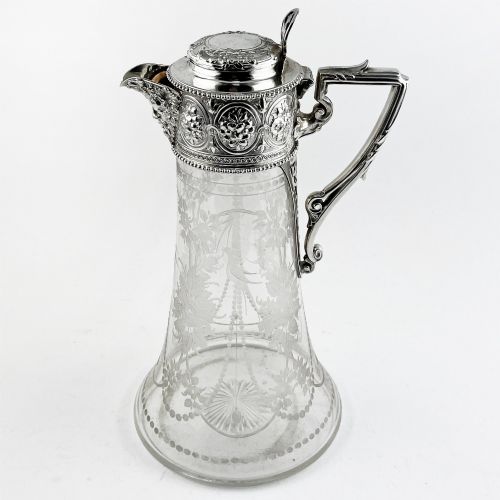
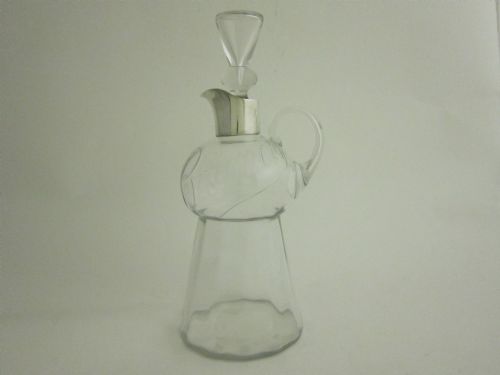
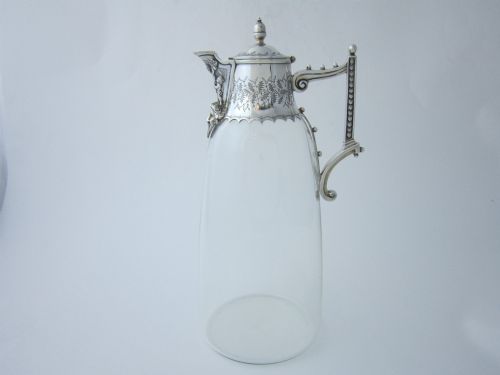
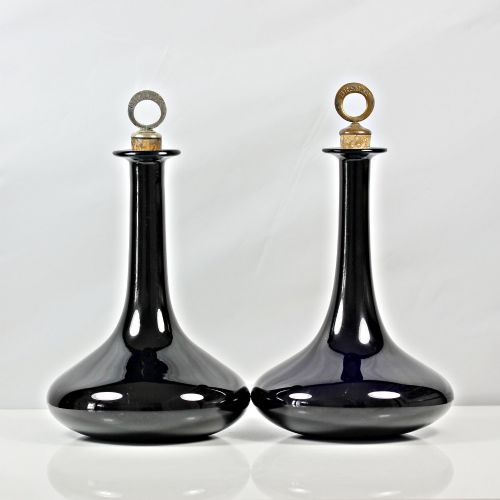
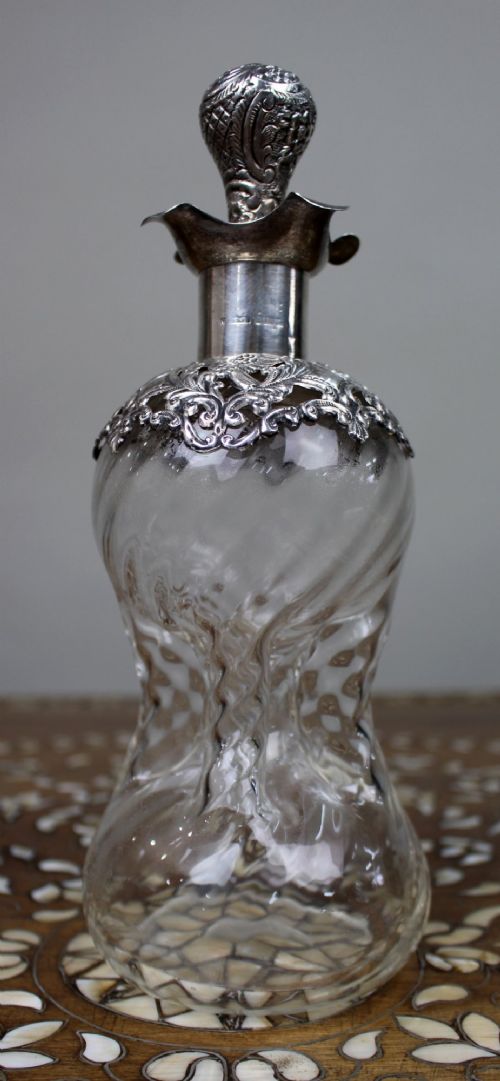
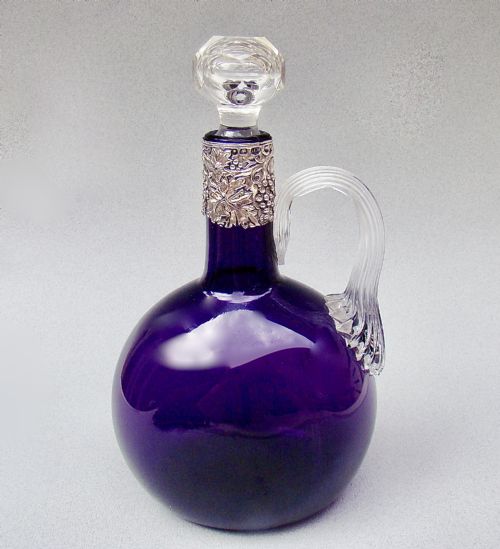
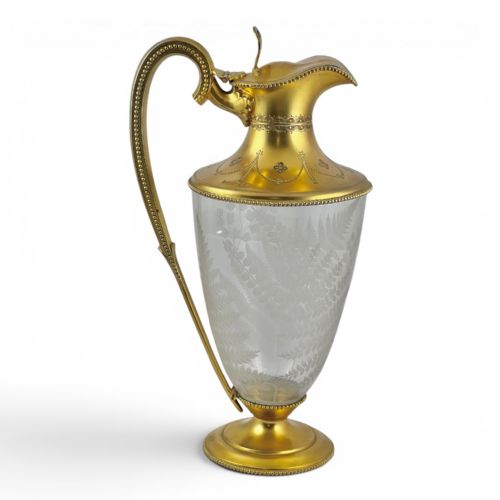
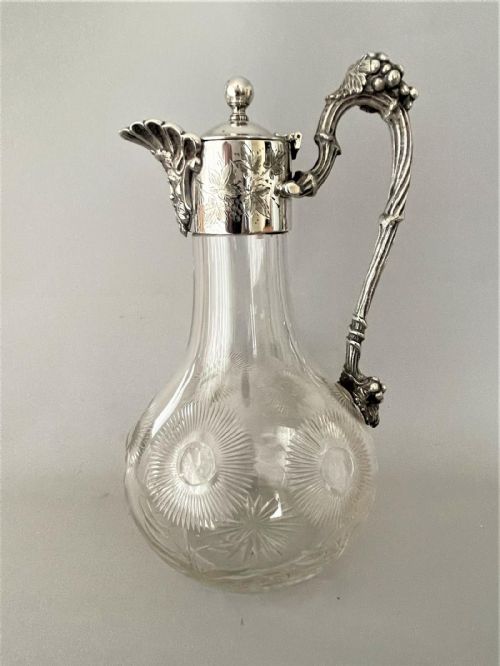
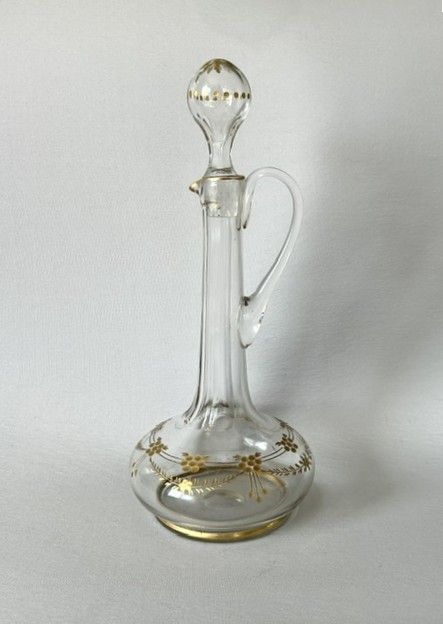
When you search for a victorian claret decanter, you encounter tall vessels designed for serving wine at the Victorian table, spanning periods from the 1860s through to Edwardian times. These pieces combine glass bodies with metal mounts, often taking the form of jugs, ewers, and carafes with hinged lids and handle grips.
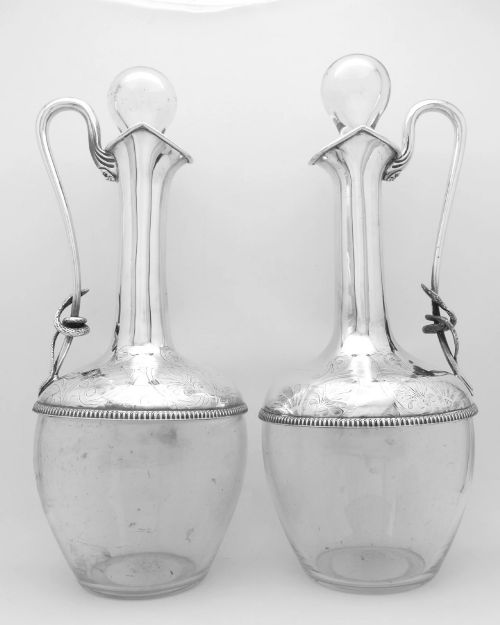
The most common examples on this page pair clear, cut, or coloured glass bodies with silver plate or sterling silver mounts, though rarer pieces utilise cranberry, green, Bristol blue, or overlaid glass. Alongside these jugs, you will find matching decanter labels inscribed specifically for claret.
Makers produced these vessels in various decorative styles, including Bohemian, Aesthetic Movement, and Rococo Revival, resulting in everything from simple engraved carafes to elaborate vessels with serpent handles and Bacchus masks.
How they were made
Makers formed the glass bodies through blowing and pressing, often incorporating coloured layers like cranberry or green into clear crystal before cutting geometric patterns or etching floral motifs into the surface.
Silversmiths constructed the mounts from sterling silver or silver plate, securing collars around the necks of the decanters and attaching hinged lids, handles shaped as serpents, and decorative cast elements such as vine leaves or masks.
Engravers finished the glass with wheel-cut designs showing fruiting vines or dolphins, while silversmiths added chased detailing or gilding to the metal components.
Listings feature Victorian glass vessels in cranberry, green, blue, and amber tones alongside clear crystal.
What varies in quality
The weight and clarity of the crystal set the foundation for the vessel, with deeper, crisper wheel-cut facets distinguishing better glass bodies from simpler moulded alternatives.
The execution of the silver or silver-plated mount dictates the character of the piece, where cast details like serpent handles, Bacchus masks, and vine leaf motifs show sharper definition on finer examples.
The harmony between the glass body and the metal mount indicates the standard of production, particularly in how well the collar fits the neck and how smoothly the hinged lid operates.
Asprey and Co. Ltd·Henry Matthews·Mappin and Webb·Richardsons·George Unite
The Victorian Claret Decanter Glossary
- Claret jug
- A specialised vessel for serving red wine at the dinner table, featuring a handle and a hinged pouring lid. These pieces typically combine a glass body with silver or silver-plated mounts.
- Silver plate
- A layer of silver fused over a base metal, frequently utilised for the mounts and handles of nineteenth-century wine jugs. This technique provided the appearance of solid silver at a lower cost.
- Cranberry glass
- A transparent pinkish-red glass coloured by the addition of gold chloride into the molten batch. It became especially popular for Victorian tableware and decorative decanters.
- Latticinio
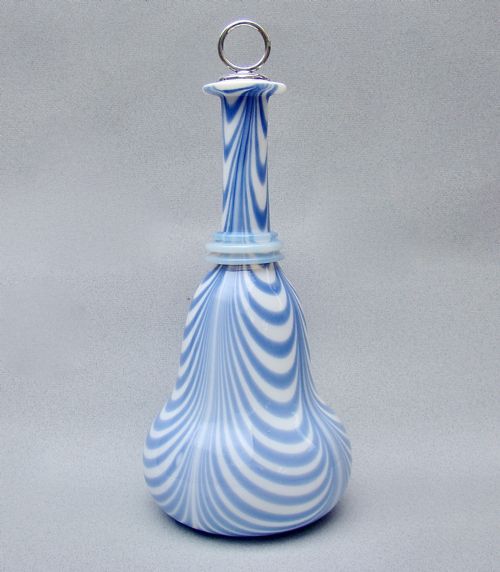
- A decorative glass technique involving opaque white or coloured glass threads twisted within clear glass. Makers used this method to create delicate network patterns inside the vessel walls.
- Decanter label
- A small silver tag hung from a chain around the neck of a decanter to identify the contents. Examples specific to claret were commonly cast or engraved with vine motifs.
Victorian Claret Decanter: Frequently Asked Questions
What is a claret decanter?
A claret decanter is a serving vessel designed specifically for holding and pouring red wine during nineteenth-century dining. They typically feature a glass body fitted with a handle and a hinged metal lid.
Unlike standard spirit decanters, these jugs allowed hosts to pour wine directly at the table while keeping sediment back. The addition of a spout and lid made pouring smooth and controlled.
How do I date a Victorian decanter?
Dating these pieces relies on examining the hallmarks stamped on the silver mounts, which indicate the assay office, year, and silversmith. Stylistic clues in the glass cutting and decorative motifs also help narrow down the period.
Silver plate mounts often lack date letters but carry maker marks and registry numbers that point to a specific decade of production. Glass styles, such as the use of cranberry or overlaid colours, further clarify the manufacturing era.
Can I use these decanters today?
These antique vessels remain fully functional for serving wine, provided the interior is clean and the mount is secure. Many collectors use them for dinner parties to aerate claret and other red wines.
Hand washing is essential to protect both the old glass and the delicate silver plate or sterling silver mounts. Avoiding sudden temperature changes prevents thermal shock to the nineteenth-century crystal.
What is Old Sheffield Plate?
Old Sheffield Plate is an early form of plating where a sheet of silver is fused to a copper core through heat and pressure. This technique creates a durable material visible on older nineteenth-century mounts.
Items made with this method often show subtle traces of copper where the silver layer has worn thin at high points. It represents a distinct manufacturing process that predates modern electroplating.