




Silver Mounted Wine Jug
A silver mounted wine jug brings table service to life, combining glass and precious metal for pouring claret with proper ceremony.
Silver Mounted Wine Jug
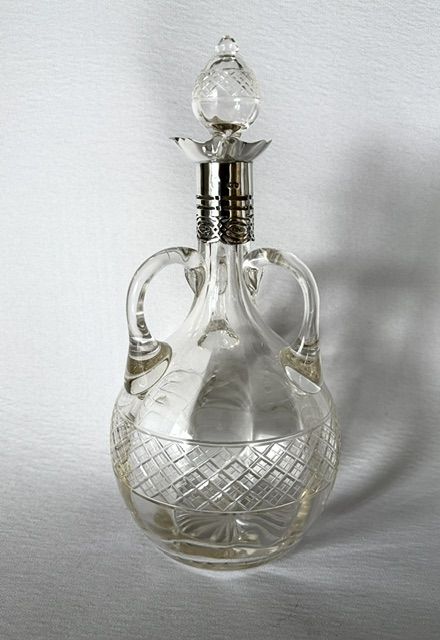
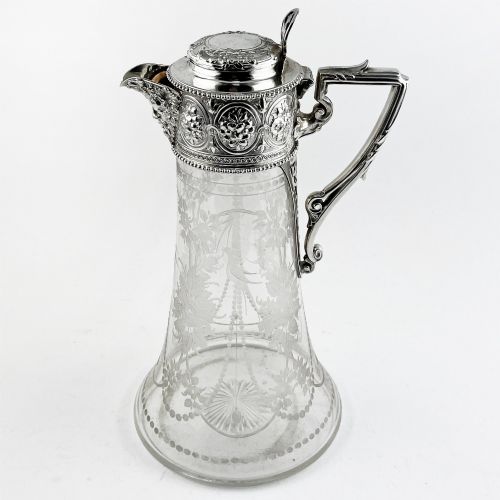
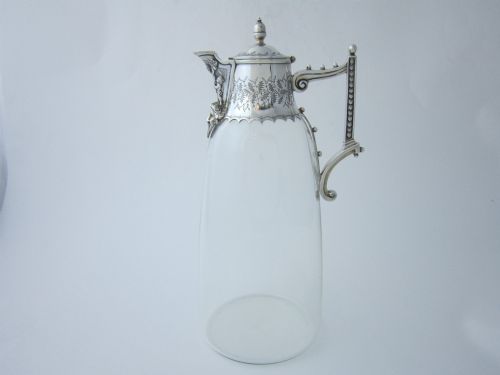
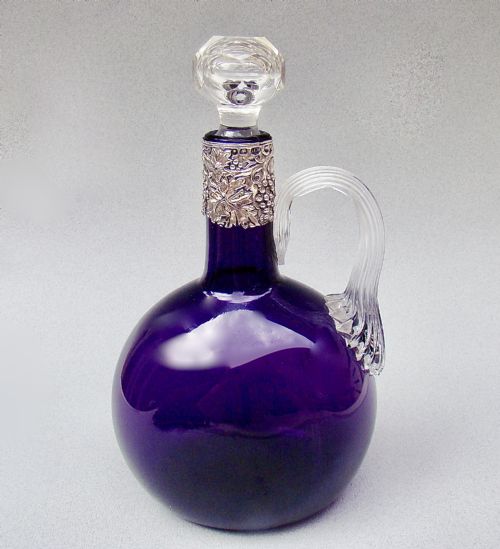
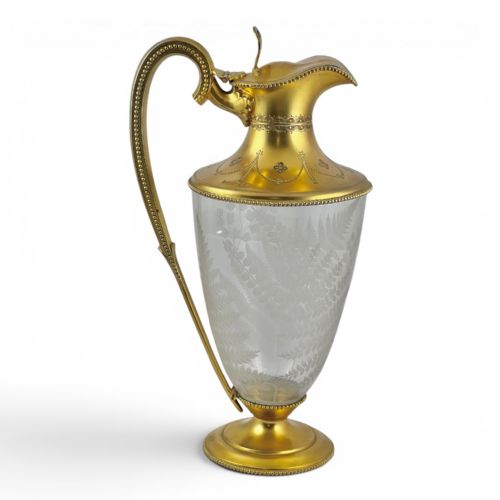
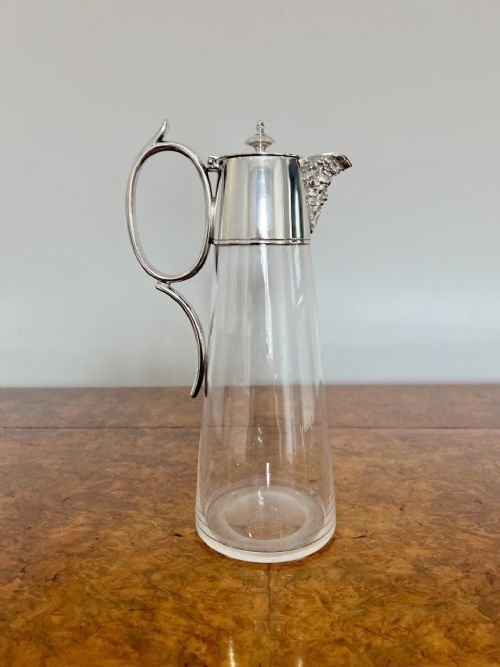
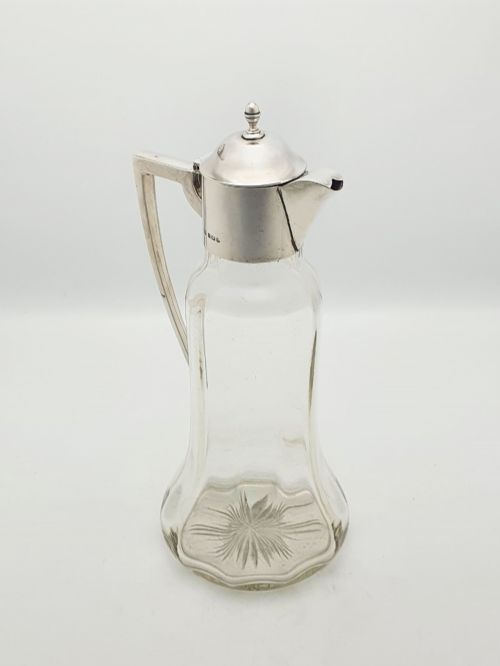
A silver mounted wine jug serves as a refined vessel for decanting and pouring wine, commonly encountered on this page in Victorian and Edwardian guises. These pieces take the form of claret jugs, carafes, and ewers intended for formal dining and drawing room hospitality.
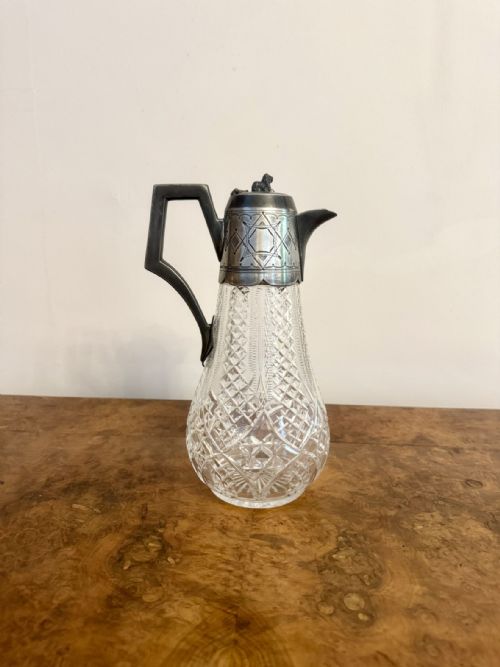
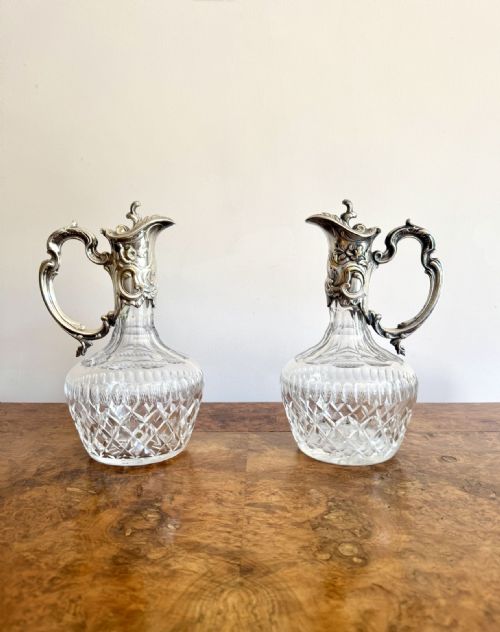
The combination of a glass body with metal mounts defines the genre, uniting transparent vessels with hinged lids, collars, and handles. Collectors meet examples ranging from modest silver-plated household items to heavy sterling silver and crystal showpieces.
Origins stretch from mid-nineteenth century workshops through the Edwardian era, taking influence from periods such as the Aesthetic Movement, Art Nouveau, and various revival styles. Each piece reflects the dining customs of its era, when table service demanded dedicated vessels for specific vintages.
Materials and Construction
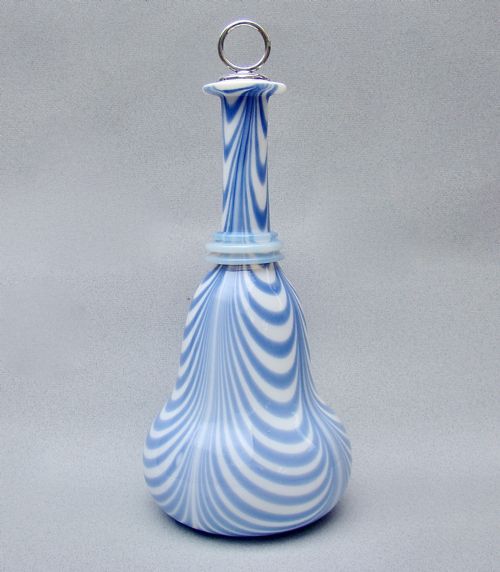
Makers utilised heavy cut, etched, or moulded glass for the bodies, often employing crystal, cranberry glass, or Nailsea glass to achieve texture and colour. This glass body was then fitted with mounts in sterling silver, silver gilt, or silver plate.
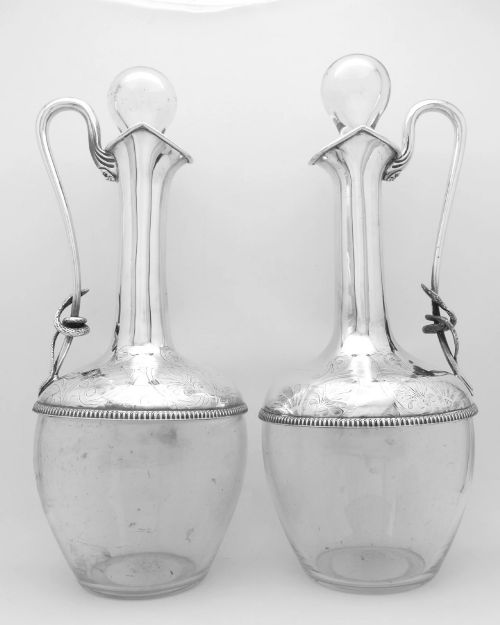
Silversmiths cast and chased the metal components, forming detailed handles, collars, and hinged covers that secured tightly to the glass rim. Many mounts incorporate naturalistic or classical motifs, including Bacchus masks, serpent handles, and floral engraving.
Silver Mounted Wine Jug Retail Price Guide 2026
Typical asking prices for silver mounted wine jug among the pieces listed under this phrase on Sellingantiques today, from the lower quarter to the upper quarter. They describe what is for sale here now, not the wider market.
Several jugs stare back at diners with the grinning face of Bacchus cast into the silver spout.
Assessing Quality and Execution
Quality rests in the harmony between the glasscutter's depth of wheel-cut pattern and the silversmith's precision in fitting the metal mounts. Superior pieces display crisp, deep facets on the crystal alongside heavy gauge silver with taut, secure hinge mechanisms.
Design distinction also separates standard production from exceptional work, particularly when distinguished designers or prominent makers supply the mounts. The weight of the metal, the clarity of the glass, and the integration of the handle dictate the standing of an individual jug.
Asprey and Co. Ltd·Henry Matthews·Elkington·Hukin & Heath·William Davenport
The Silver Mounted Wine Jug Glossary
- Claret jug
- A specialised vessel designed specifically for holding and pouring red Bordeaux wine at the dining table. These pieces typically feature a generous pouring spout and a secure hinged lid.
- Silver plate
- A layer of silver bonded to a base metal core, frequently utilised for mounts on Victorian and Edwardian dining wares. It provided the visual appeal of solid silver at a more accessible cost.
- Nailsea glass
- Glassware characterised by distinctive coloured loops, stripes, or flecks embedded within the clear matrix. Originating from the Nailsea glassworks, it appears in select nineteenth-century wine vessels.
- Crystal
- A high-clarity glass containing lead oxide, which increases the weight, brilliance, and resonance of the material. Cut crystal vessels catch ambient light effectively during evening dining.
- Bacchus mask
- A decorative motif depicting the face of the classical god of wine, wreathed in grapevines and ivy. Silversmiths frequently cast this face onto the spout or handle terminal of wine jugs.
Silver Mounted Wine Jug: Frequently Asked Questions
What is a claret jug?
A claret jug is a specialised pouring vessel designed for serving red wine, featuring a handle, spout, and hinged lid to keep the contents covered.
These pieces were staples of formal Victorian and Edwardian dining tables, holding wine brought up from the cellar before the meal.
How do I clean the glass?
Cleaning requires warm water and mild detergent, avoiding harsh abrasives that might scratch the crystal or damage the antique silver mounts.
Care must be taken to support the handle and spout when drying, as the joint between glass and metal remains vulnerable.
How do I date the mounts?
Dating relies heavily on hallmarks stamped into the silver components, which indicate the assay office, the year of production, and the maker's mark.
Stylistic cues in the glass cutting and handle design also provide clear indicators of whether a piece belongs to the Victorian or Edwardian period.
Were these used daily?
These vessels saw regular service during formal luncheons, dinners, and evening gatherings in prosperous nineteenth and early twentieth-century households.
Their presence marked the ritual of hospitality, where hosts presented wine with ceremony to their guests.