






Victorian Silver Mounted Decanter
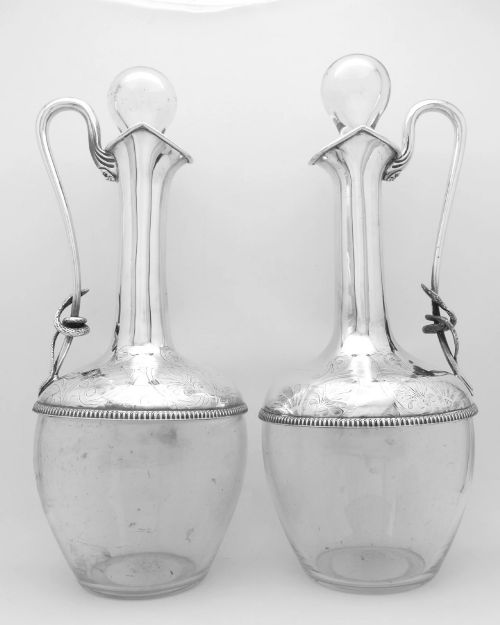
A victorian silver mounted decanter brings heavy glass and polished metal together for the dining table or sideboard.
Victorian Silver Mounted Decanter
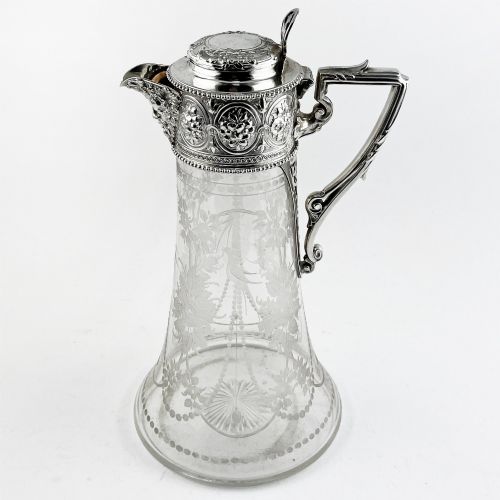
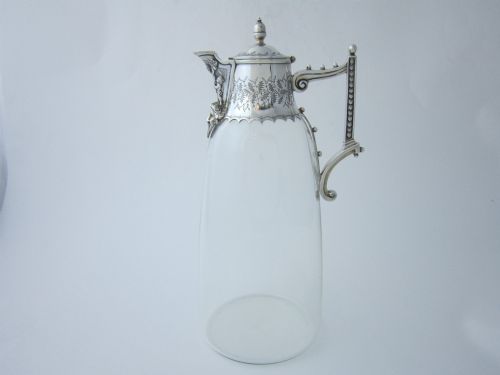
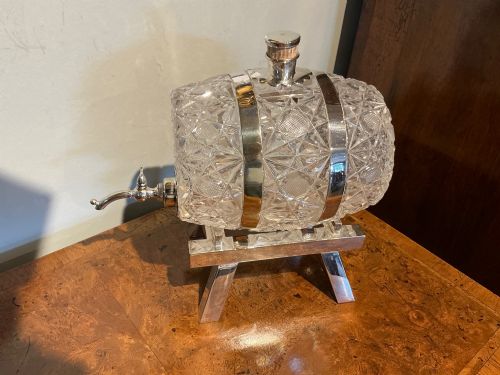
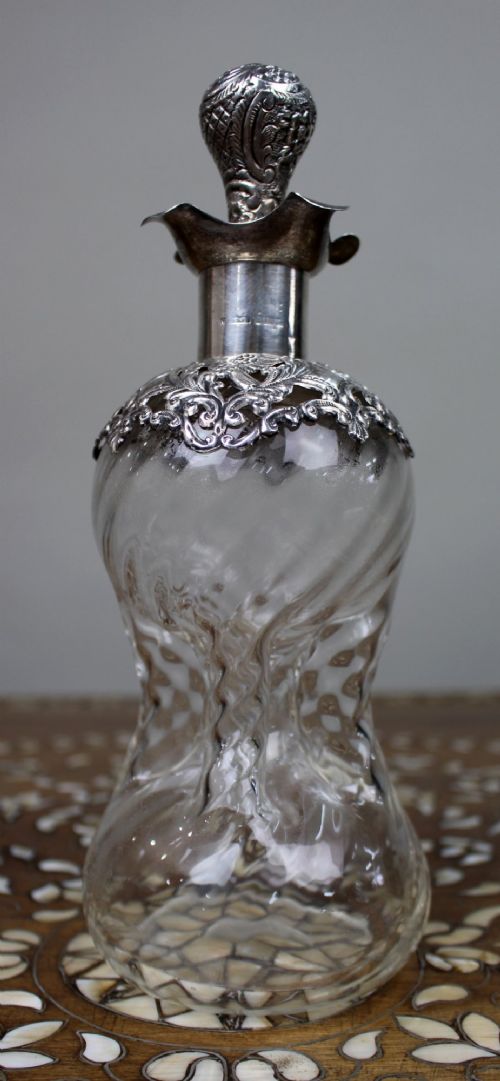
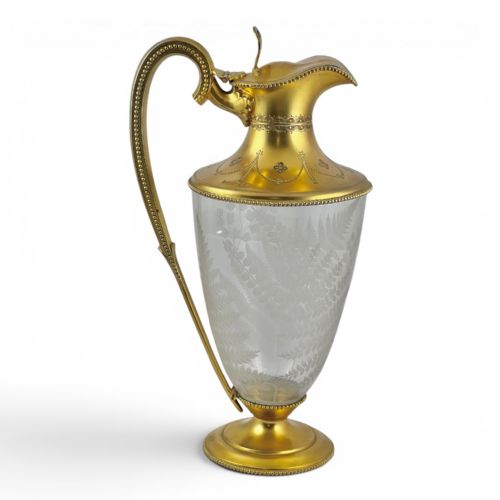
A victorian silver mounted decanter combines a glass body with worked metal collars, handles, and stoppers. The form appears in domestic settings from the mid-nineteenth century through the Edwardian years, taking shapes from tall claret jugs to rounded wine bottles and unusual glug glug vessels.
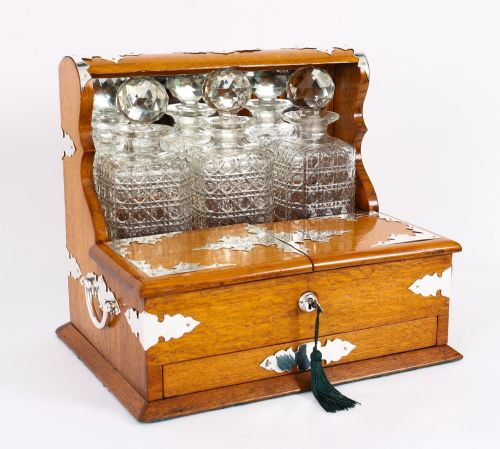
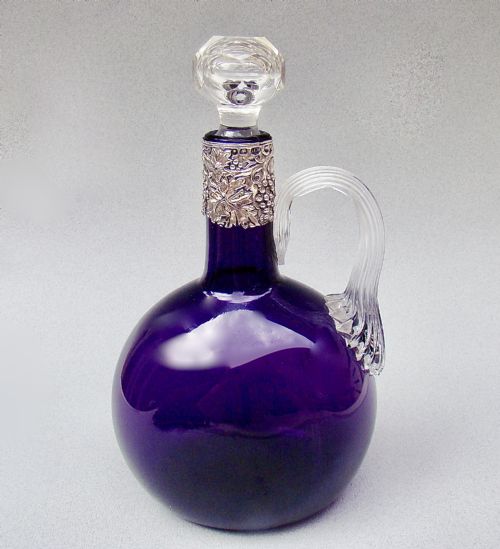
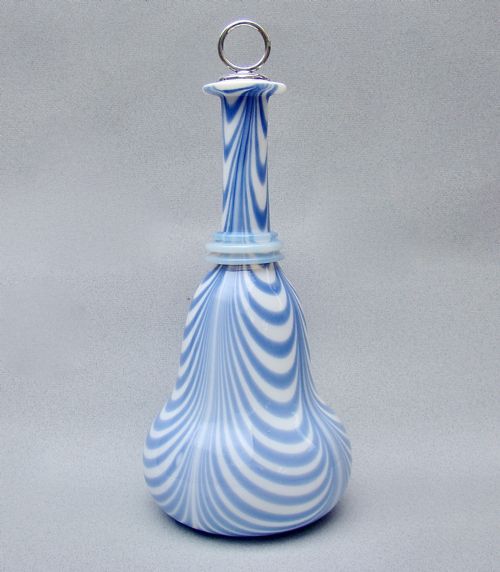
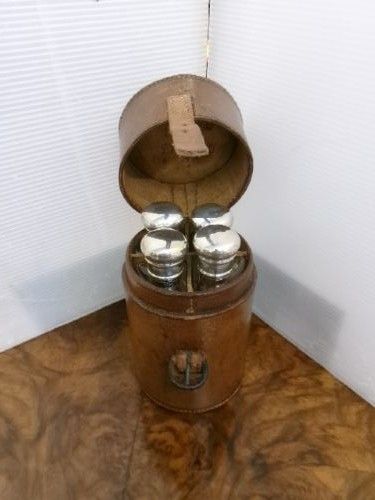
Makers utilised clear cut crystal alongside coloured glass in amethyst, green, blue, and ruby hues. Alongside single bottles, buyers encounter pairs, oil and vinegar sets, and fitted oak tantalus frames holding multiple vessels.
The mounting work provides functional strength around the neck and pouring lip while adding visual weight to the glassware below. Hallmarks stamped into the silver collars often record the assay office, city, and year of production.
Materials and Construction
Glass bodies were blown into moulds or shaped by hand before undergoing deep wheel-cutting, etching, or engraving to create geometric and floral patterns. Coloured glass variants achieved their shades through mineral additions during the melting process.
Silver mounts, collars, and hinged lids were cast or spun from sterling silver or silver plate, then secured around the bottlenecks with plaster or adhesives. Handles often incorporated figural elements such as serpents or masks, soldered directly to the primary collar.
Victorian Silver Mounted Decanter Retail Price Guide 2026
Typical asking prices for victorian silver mounted decanter among the pieces listed under this phrase on Sellingantiques today, from the lower quarter to the upper quarter. They describe what is for sale here now, not the wider market.
Materials recorded across the archive include sterling silver, silver plate, oak, and multiple shades of transparent and opaque glass.
Quality and Distinction
The weight and clarity of the glass establish the baseline quality, with deep, crisp facet-cutting indicating skilled handwork rather than simple mould pressing. Heavy lead crystal or rich, saturated coloured glass holds the light differently than thinner commercial alternatives.
The gauge of the silver mount and the definition of its chasing or engraving separate standard production pieces from maker-marked examples. A tight, secure fit between the silver collar, the glass neck, and the matching stopper marks careful assembly.
Asprey and Co. Ltd·Henry Matthews·Mappin and Webb·Thomas Stapleton·Walker and Hall·William Comyns·William Hutton and Sons·Elkington
The Victorian Silver Mounted Decanter Glossary
- Claret jug
- A tall pouring vessel specifically designed for serving red wine at the table. These pieces usually feature an elongated handle and a hinged silver lid.
- Glug glug decanter
- A specialised container with a multi-chambered neck that produces a distinctive gurgling sound when liquid is poured. Collectors prize these for their unusual profile and acoustic properties.
- Sterling silver
- A precious metal alloy containing a high proportion of pure silver, stamped with hallmarks to verify its standard. It forms the collars and mounts on higher-grade serving vessels.
- Silver plate
- A base metal foundation covered with a thin layer of silver through electroplating or older fusion methods. It offers the appearance of solid silver at a different cost level.
Victorian Silver Mounted Decanter: Frequently Asked Questions
What is a silver mounted decanter used for?
These vessels served wine, claret, liqueurs, and spirits in nineteenth-century dining rooms and drawing rooms. The metal mounts protected the glass rim during pouring and provided a secure seating for the stopper.
Today, they function as working barware or decorative sideboard pieces. Many retain their original brilliance and pour liquids cleanly when fitted with a correct stopper.
How do I date a silver mounted decanter?
Hallmarks stamped into the silver collars provide the most reliable dating evidence. These marks record the city of assay, the silver standard, and a date letter corresponding to the exact year of manufacture.
Stylistic indicators such as cut glass patterns, coloured glass shades, and handle designs also help narrow down the period. Pieces without silver mounts rely entirely on glass form and manufacturing technique for dating.
Are silver plate and sterling silver marked differently?
Sterling silver pieces carry official assay office marks, such as a lion passant for British manufacture, along with maker initials and date letters. These stamps confirm the solid silver content of the mount.
Silver-plated items display maker marks or trade names that indicate a plated base metal construction rather than solid precious metal. Both types received equal attention to detail in their glass-cutting and mounting.