



Silver Plate Wine Pitcher
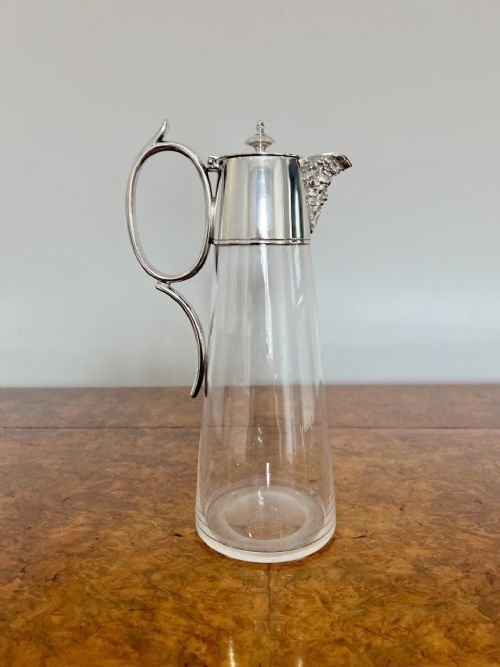
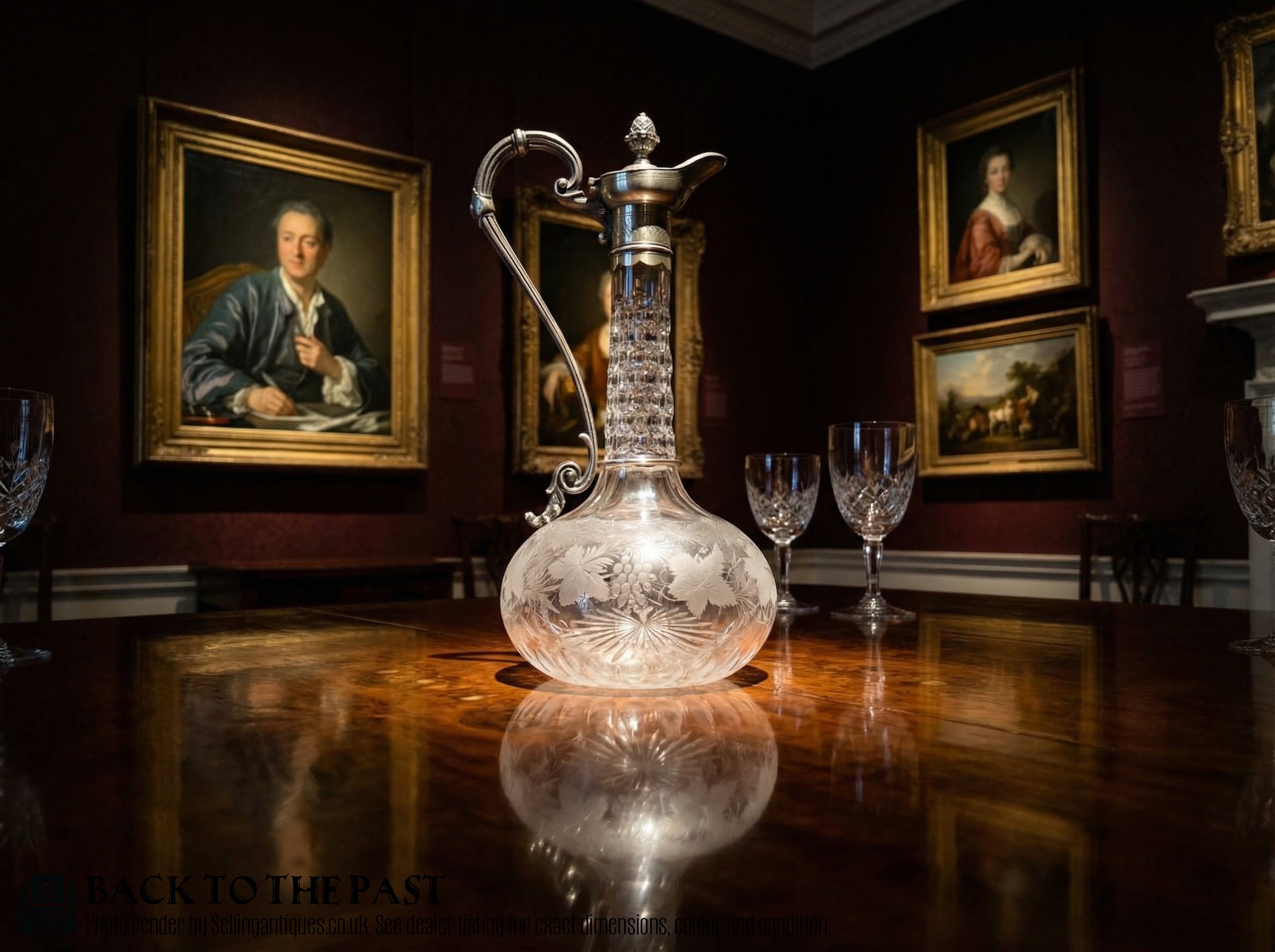
A silver plate wine pitcher brings period ceremony to the table, combining heavy metal mounts with clear glass bodies.
Silver Plate Wine Pitcher
A silver plate wine pitcher typically takes the form of a claret jug, decanter, or ewer intended for serving table wine. These vessels date primarily from the Victorian and Edwardian eras, spanning the nineteenth and early twentieth centuries, alongside occasional Regency and mid-century examples.
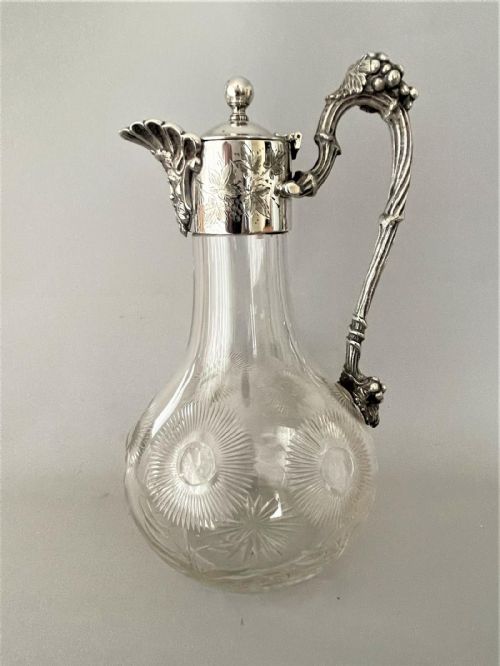
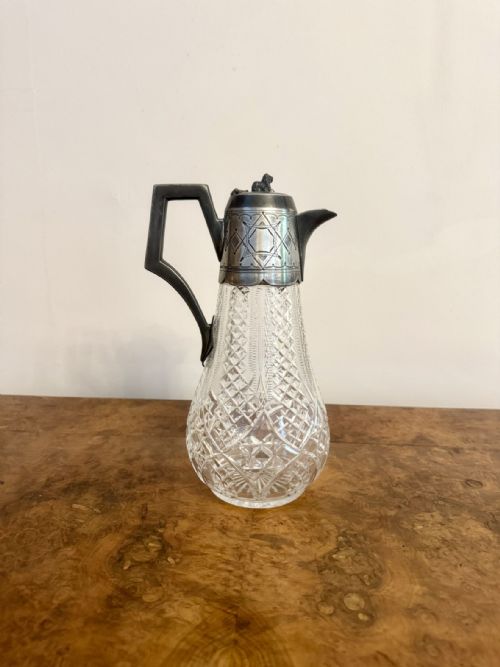
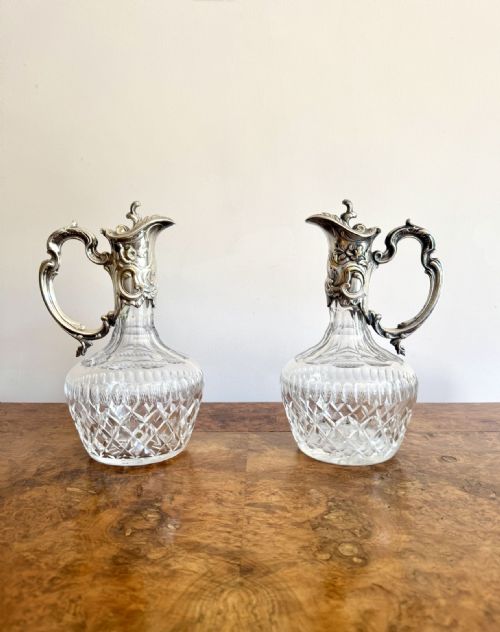
The objects combine a metal mount, handle, and hinged lid with a glass body. Most pieces seen here pair silver plate with cut glass, crystal, etched glass, or cranberry glass, while some utilise solid silver mounts or pewter.
Makers and designers working in styles ranging from Victorian Classical and Aesthetic Movement to Art Nouveau and Arts & Crafts produced these serving vessels. Collectors encounter diverse forms including flagons, ewers, and beakers alongside standard claret jugs.
Materials and construction
The manufacture relies on combining silver plating techniques with blown and moulded glass bodies. Silversmiths applied silver plate or Old Sheffield Plate onto base metals for the handles, collars, and hinged lids.
Glass bodies underwent heavy cutting, etching, or moulding to create facets and decorative patterns that caught the light on the dining table. Mounts were securely fitted to the glass necks, often incorporating functional spouts and thumbpieces on the lids.
Several Victorian pieces incorporate fierce boar heads and unusual face spouts into their pouring lips.
Judgements of quality
Quality rests in the heaviness and clarity of the glass vessel, whether cut, etched, or coloured in cranberry tones. Crispness in the metalwork decoration, from naturalistic Art Nouveau tendrils to classical mounts, distinguishes finer pieces.
The integration between the silver plated mount and the glass body indicates higher workshop standards. Better examples demonstrate balanced proportions, substantial weight in both glass and metal, and precise engineering of the hinged lid mechanism.
Henry Bourne·Elkington·Hukin & Heath·Dr Christopher Dresser·Valenti·WMF
The Silver Plate Wine Pitcher Glossary
- Claret jug
- A vessel specifically designed for serving claret or red wine at the dining table. These jugs feature a hinged lid and handle attached to a glass or crystal body.
- Old Sheffield Plate
- An early composite material made by fusing a thin sheet of silver to a thicker copper base. This technique predates modern electroplating methods found on later nineteenth-century wares.
- Electrotype
- A metal object produced by electrodepositing silver or other metals onto a mould. This process allowed makers to achieve high detail in nineteenth-century figural and decorative pieces.
- Ewer
- A large jug with a wide spout and looped handle, historically used for water or wine. In nineteenth-century silver plate, the term often describes decorative wine and claret serving vessels.
Silver Plate Wine Pitcher: Frequently Asked Questions
How do I date a silver plated claret jug?
Dating relies on stylistic clues such as the heavy geometric cutting typical of Victorian pieces or the flowing organic lines associated with Art Nouveau and Edwardian design. Maker marks and manufacturing techniques, including the transition from Old Sheffield Plate to electroplating, also help narrow down the period of production.
Changes in glass colours, such as the appearance of cranberry glass in later Edwardian examples, provide further chronological markers. Comparing the overall form against documented design registrations assists in establishing an accurate decade.
Were these pitchers only used for wine?
While primarily manufactured as claret jugs and wine ewers for the dining table, similar vessels served other domestic and ecclesiastical functions. Some larger examples operated as water pitchers or decorative flagons.
Ecclesiastical pieces, including communion jugs, shared identical manufacturing techniques and materials with secular wine pitchers. Their versatile forms meant households adapted them for various pouring and serving duties.
How do I care for silver plate and glass?
Cleaning requires warm water, mild soap, and a soft cloth for both the glass body and the silver plated mounts. Abrasive cleaners must be avoided to prevent scratching the plated surface and dulling the cut glass facets.
Silver dip should be used sparingly or avoided entirely to protect thin plating over base metals. Proper drying prevents moisture from lingering around the hinged lids and mount joints.
What is the difference between cut glass and crystal?
Crystal contains lead oxide, which increases the weight, refractive index, and clarity of the glass compared to standard soda-lime glass. This high lead content allows for sharper, deeper facets when cut by the artisan.
Cut glass encompasses a broader category of moulded or wheel-cut vessels found across Victorian and Edwardian serving jugs. Both materials provide a sparkling contrast to the polished silver plated mounts.