

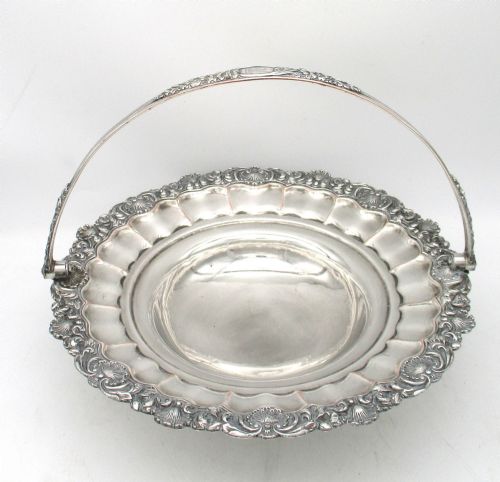


Silver Swing Handle Bowl
A silver swing handle bowl brings tactile elegance to a table, offering graceful mobility through its pivoting arch.
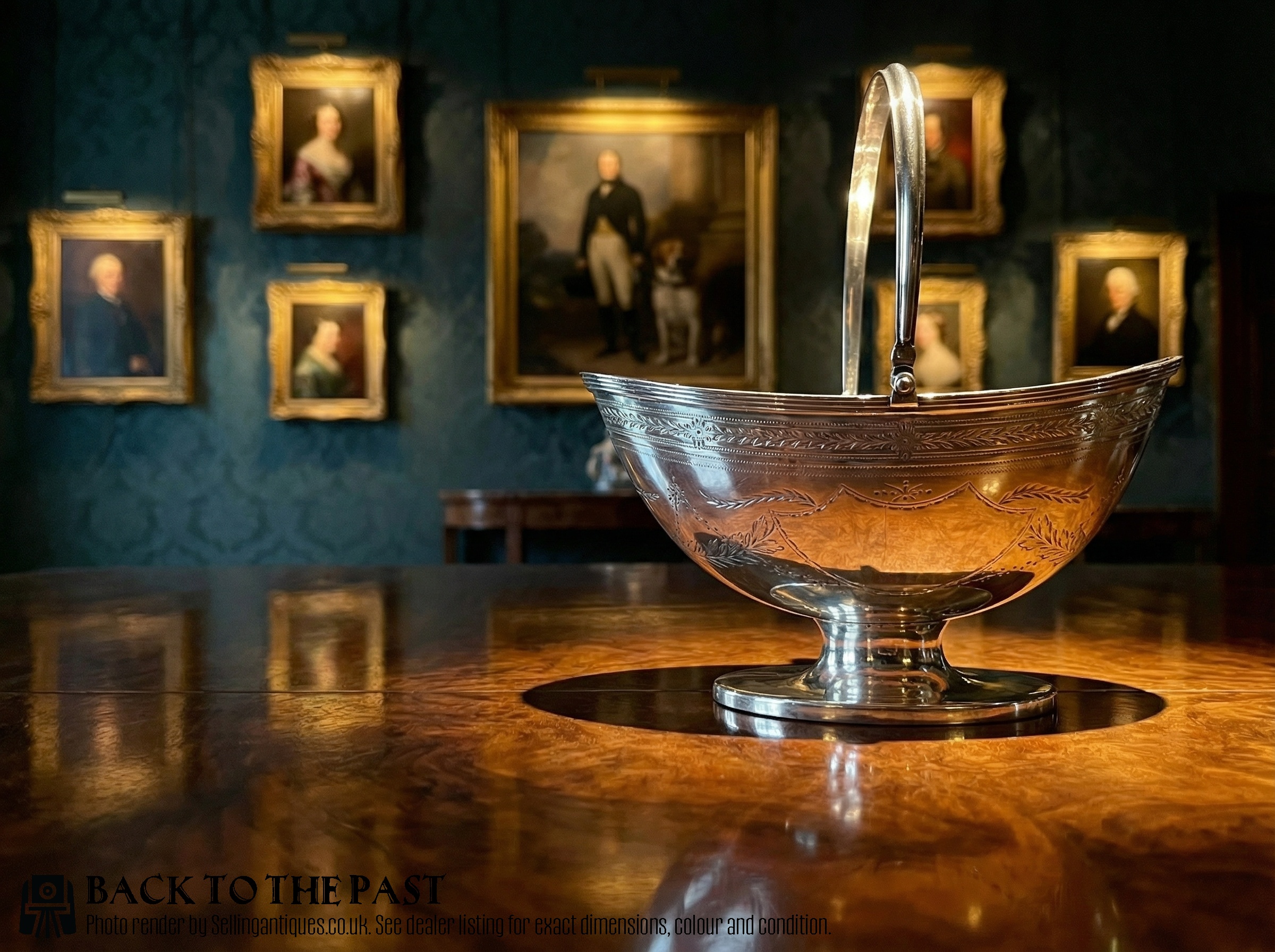
Silver Swing Handle Bowl
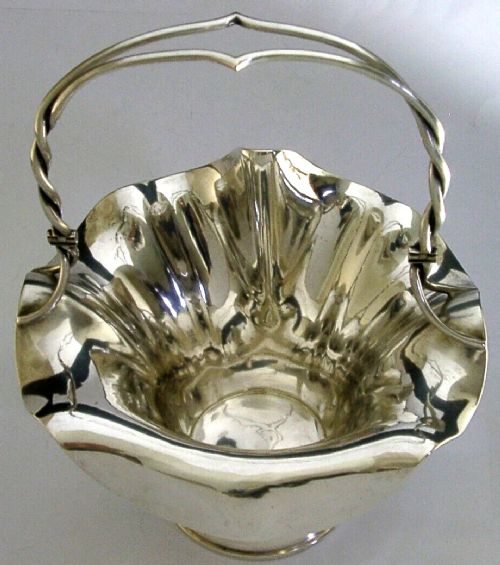
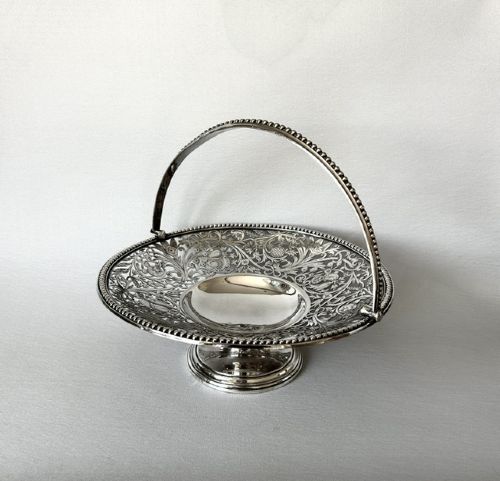
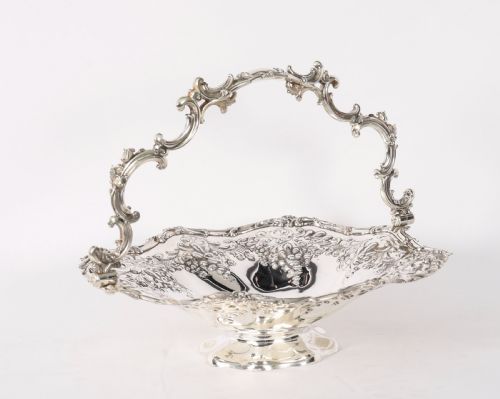
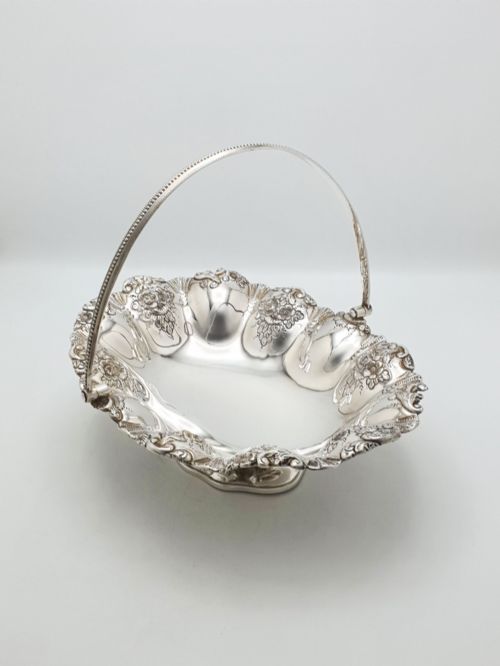
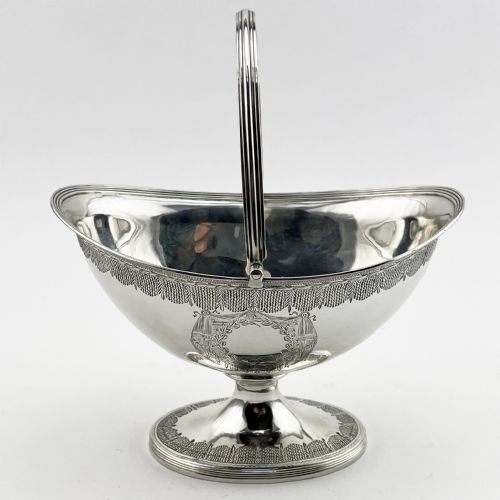
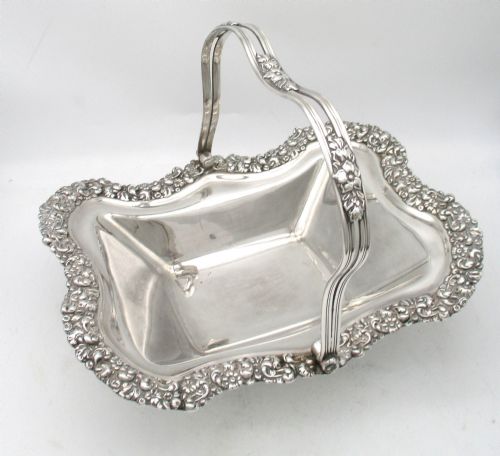
A silver swing handle bowl functions primarily as a decorative vessel for fruit, sugar, or sweetmeats, characterised by a hinged arched handle that drops to the side when not in use. These pieces bridge the gap between tableware and servingware, appearing frequently in sugar basket and fruit basket formats across this selection.
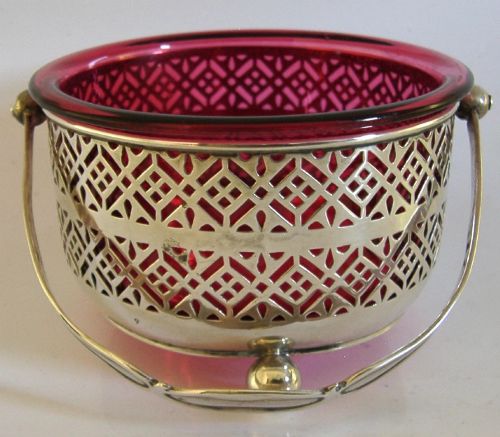
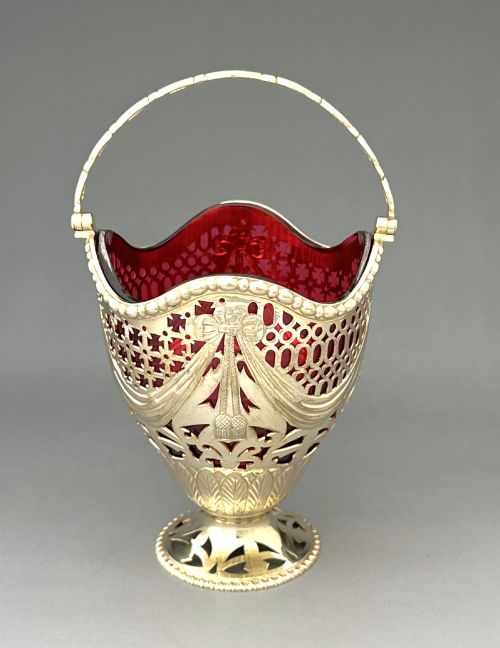
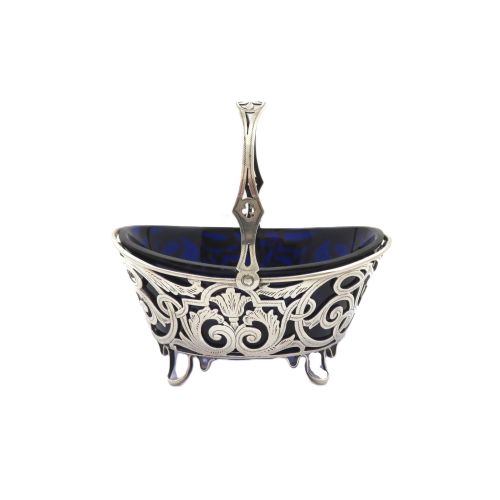
The objects span multiple centuries, with substantial representation from the Victorian and Edwardian eras alongside Georgian and early twentieth-century examples. Sterling silver and silver plate predominate, frequently paired with colourful glass liners in cranberry, ruby, or blue hues.
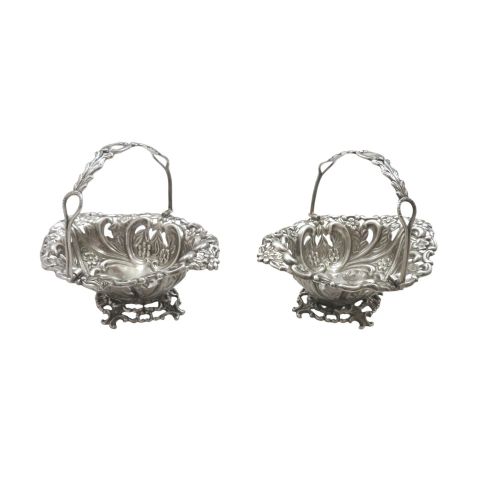
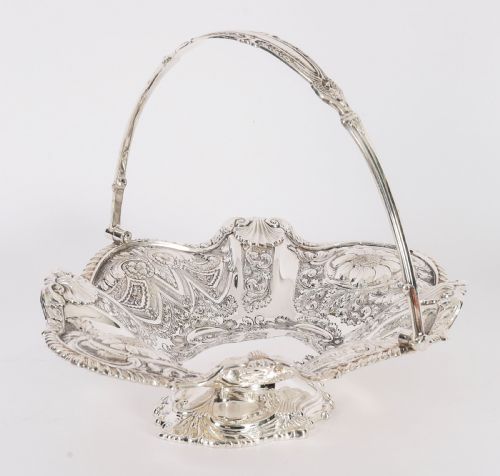
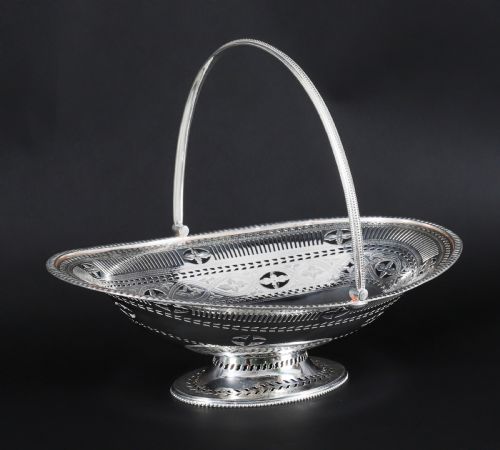
Forms range from small pedestal sugar containers to large bread and fruit baskets intended for formal dining. Pierced fretwork, lattice patterns, and repoussé rims define the decorative vocabulary across the diverse chronological spread.
How they were made
Silversmiths utilised traditional sterling silver or Old Sheffield Plate, building body structures through hammering, casting, or rolling techniques. Handles were frequently cast separately with intricate floral or geometric motifs before being pinned to the vessel rim.
Piercing and fretwork required meticulous hand-sawing through sheet silver to create openwork lattice designs, often enhanced by internal glass liners secured by the rigid shape of the metal frame.
Materials across these listings include sterling silver, silver plate, copper, pewter, cranberry glass, and crystal.
What varies in quality
Distinction in quality rests upon the crispness of the piercing work and the structural integrity of the swing mechanism. Substantial gauge metal provides rigidity to the bowl walls, preventing distortion under the weight of the pivoting handle.
Artisanal execution manifests in cast details such as floral repoussé rims and integrated handles, where clean casting lines and secure hinge pins indicate superior workshop production.
Aldridge And Green·Henry Chawner·Elkington·George W Scott And Sons Ltd·Hammond Creake And Co·William Hutton And Sons·William Bond·George Fox·John Walton·William Comyns·Doulton Lambeth
The Silver Swing Handle Bowl Glossary
- Swing handle
- A movable arch attached to opposite sides of a bowl or basket via pivots, allowing the handle to lie flat or stand upright. This feature facilitates serving and compact storage.
- Old Sheffield Plate
- An early composite material made by fusing a thin sheet of silver to a thicker copper base. Pieces produced this way exhibit characteristic copper bleed along exposed edges.
- Repoussé
- A metalworking technique where the artisan hammers the design from the reverse side to form raised relief patterns on the front. Floral motifs commonly decorate basket rims in this manner.
- Pierced work
- The practice of cutting decorative apertures through sheet metal to create light, openwork patterns such as lattices. This technique frequently appears on Georgian and Edwardian sugar baskets.
- Silver gilt
- Sterling silver that has been coated with a thin layer of gold, often referred to as vermeil. This treatment protects the interior from acidic contents like fruit or preserves.
Silver Swing Handle Bowl: Frequently Asked Questions
What were swing handle bowls used for?
These vessels served versatile dining roles depending on their scale, ranging from holding loose sugar lumps on tea tables to presenting fruit and sweetmeats during formal dessert courses. The pivoting handle allowed guests or servants to pass the container easily around the table.
Smaller formats functioned as sugar pails or nut bowls, while expansive versions accommodated heavy bread or fruit arrangements. Their dual nature as decorative objects and functional serveware made them dining room staples.
How do I care for silver and glass?
Routine maintenance involves gentle washing in warm soapy water followed by immediate drying with a soft cloth to prevent water spots. Silver components benefit from periodic polishing with a non-abrasive cream designed specifically for precious metals.
Removable glass liners simplify cleaning, especially when dealing with sticky preserves or fruit juices. Storing the pieces away from direct sunlight and damp environments preserves both the metal finish and the integrity of any applied gilding.
How do I date a silver bowl?
British sterling silver pieces generally feature hallmarks that include a date letter, a leopard head or anchor for the assay office, and a lion passant indicating standard purity. Consulting registered punch marks pinpoints the exact year of manufacture.
Stylistic cues also reveal the period, such as the neoclassical garlands of the Georgian era, heavy floral cast handles from the Victorian years, or flowing organic lines characteristic of early twentieth-century design.
Why do some bowls have glass liners?
Glass liners protected delicate pierced silver bodies from corrosive substances like fruit acids, vinegar, or moist sweetmeats. Coloured glass also provided a striking visual contrast against openwork silver fretwork.
Colours such as cranberry, ruby, and cobalt blue became fashionable during the Victorian and Edwardian periods. Finding a bowl with its original matching glass liner adds considerable historical completeness.