

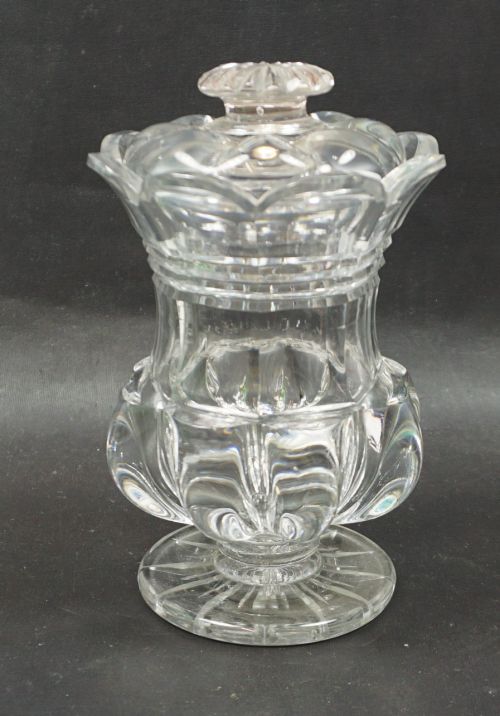
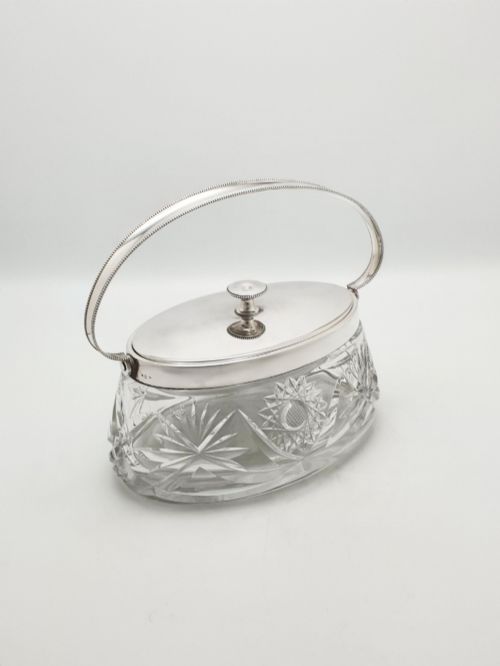


Cut Glass Sweetmeat Dish
These cut glass sweetmeat dish pieces are heavy crystal confections designed for sweet treats, prized for their brilliant sparkle and tactile weight on the table.
Cut Glass Sweetmeat Dish
When you search for a cut glass sweetmeat dish, you are looking at footed bowls, covered jars, and handled baskets created to hold preserved fruits, nuts, or confectionery. The forms span distinct eras from the eighteenth century through the Victorian and Edwardian periods.
On this page, you are most likely to meet nineteenth-century examples and turn-of-the-century covered jars or open bowls shaped from heavy lead crystal or cut glass. Many pieces arrive paired with silver or silver-plated mountings, swing handles, and fitted covers.
Origins stretch across English, Irish, and continental workshops, encompassing Georgian Irish turnover bowls alongside Jugendstil and Victorian domestic tableware. Each piece reflects the formal dining habits of its era, moving from grand centrepieces to intimate Victorian sweet dishes.
How they were made
Makers shaped these objects using heavy lead crystal and standard glass, applying deep wheel-cut facets that catch the light from every angle. The blank vessel was blown before artisans ground and polished the geometric patterns into the body by hand.
Metalwork plays a structural role in many pieces, incorporating sterling silver, silver plate, and Dutch silver mounts. Handles, rims, and swinging bails were cast or fabricated separately and secured to the glass bowls with collars or pins.
Cut Glass Sweetmeat Dish Retail Price Guide 2026
Typical asking prices for cut glass sweetmeat dish among the pieces listed under this phrase on Sellingantiques today, from the lower quarter to the upper quarter. They describe what is for sale here now, not the wider market.
Some nineteenth-century sweetmeat jars come with double heart-shaped dishes, offering a romantic touch for your confectionery.
What varies in quality
The clarity and thickness of the crystal dictate the foundational quality of the object, separating clear lead metal from simpler pressed glass. Crispness in the wheel-cut facets ensures sharp light refraction rather than soft, rounded edges.
The integration of the metal components relative to the glass marks the upper tier of production. Substantial silver mountings, secure handles, and well-fitted covers elevate an everyday tableware item into a finer decorative piece.
William Comyns·WMF
The Cut Glass Sweetmeat Dish Glossary
- Sweetmeat
- A confection, candied fruit, or nut served after a meal from a dedicated dish. These vessels were essential for formal dessert courses.
- Lead crystal
- A high-clarity glass containing lead oxide, which increases weight, brilliance, and softness for cutting. It defines the finest cut glass items.
- Rock crystal
- A term used historically to describe exceptionally clear quartz or high-grade colourless glass shaped with intricate carving. It denotes superior material purity.
- Jugendstil
- The continental European manifestation of Art Nouveau, characterised by flowing naturalistic lines. It appears on metal mounts from the turn of the twentieth century.
- Turnover bowl
- A glassware form with a rim folded or turned outward during shaping, frequently associated with eighteenth-century Irish production.
Cut Glass Sweetmeat Dish: Frequently Asked Questions
What were cut glass sweetmeat dishes used for?
These dishes held preserved fruits, sweetmeats, nuts, and small candies served during the dessert course of formal meals. They sat centrally on the dining table or sideboard.
Over time, their domestic role shifted as dining customs changed, leading many surviving covered jars and baskets to function purely as decorative display pieces.
How do I care for antique cut glass?
Wash these pieces by hand in warm soapy water using a soft cloth, avoiding harsh abrasive scourers that can scratch the crystal surface. Support the base rather than the applied handles during cleaning.
Take care with silver mounts by using appropriate polish sparingly, keeping liquids away from the junction where metal meets glass.
How can I tell Victorian pieces from earlier ones?
Eighteenth-century and Georgian pieces often feature heavier pontil marks on the base and softer, hand-polished facets. Irish glass from this early period frequently displays a slightly darker grey-blue tint in the metal.
Victorian and Edwardian examples tend to incorporate machine-assisted precision cutting alongside silver-plated or sterling mounts like swing handles.
Why do some pieces have silver handles?
Silver and silver-plated mounts were added to facilitate passing the dish around the table or to elevate the status of the vessel. Swing handles allowed easy access to contents while adding structural weight.
Makers utilised silver and Dutch silver components to match contemporary table settings and protect the glass rim from wear.