
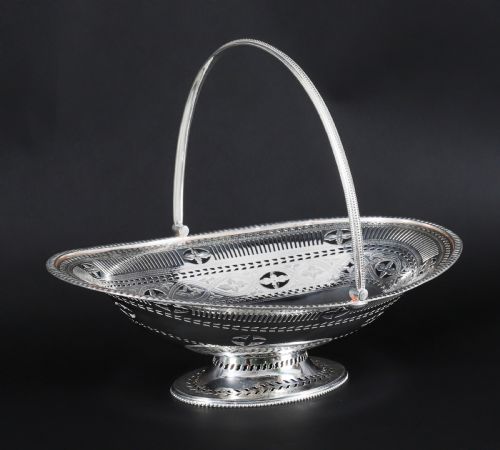
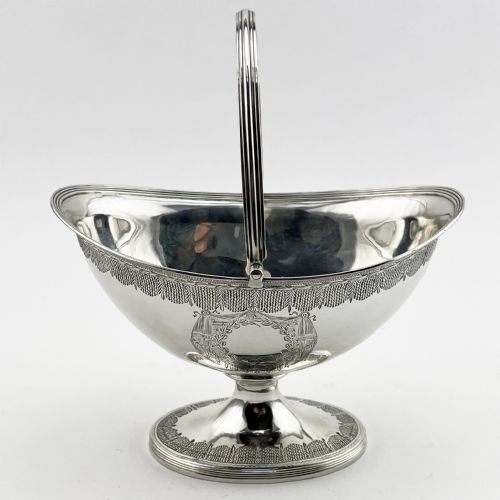


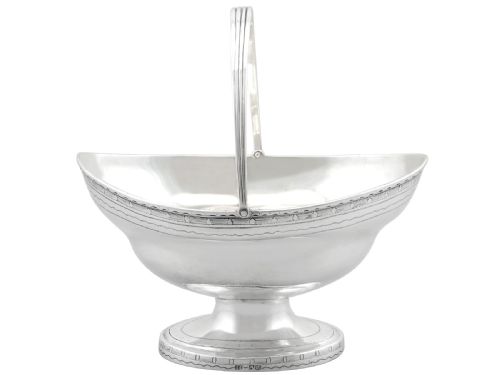


Silver Pedestal Sugar Bowl
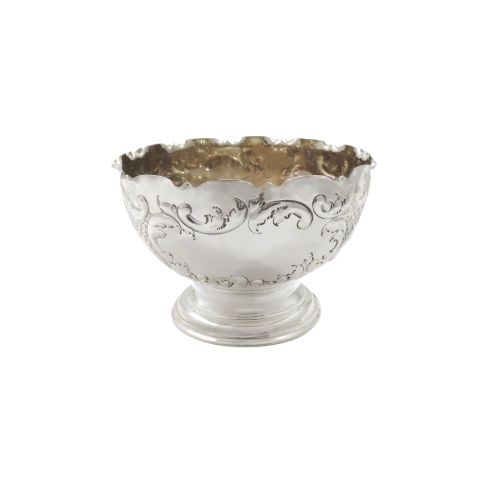
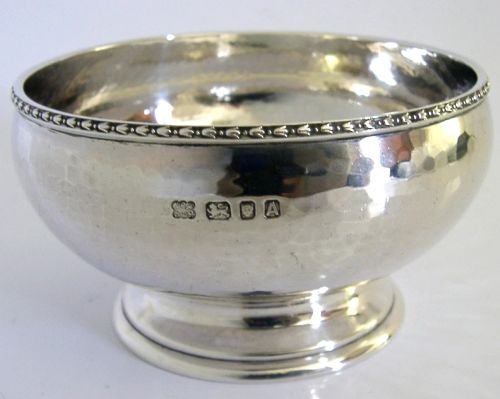
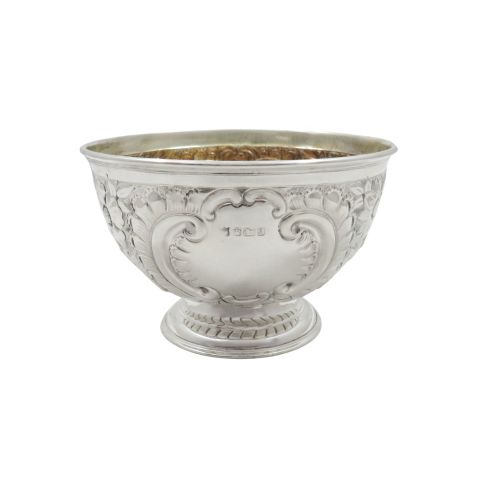
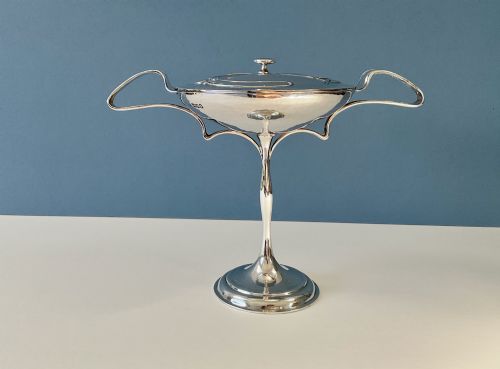
A silver pedestal sugar bowl sits raised above the table, bringing bright metal and fine pierced work to the tea service.
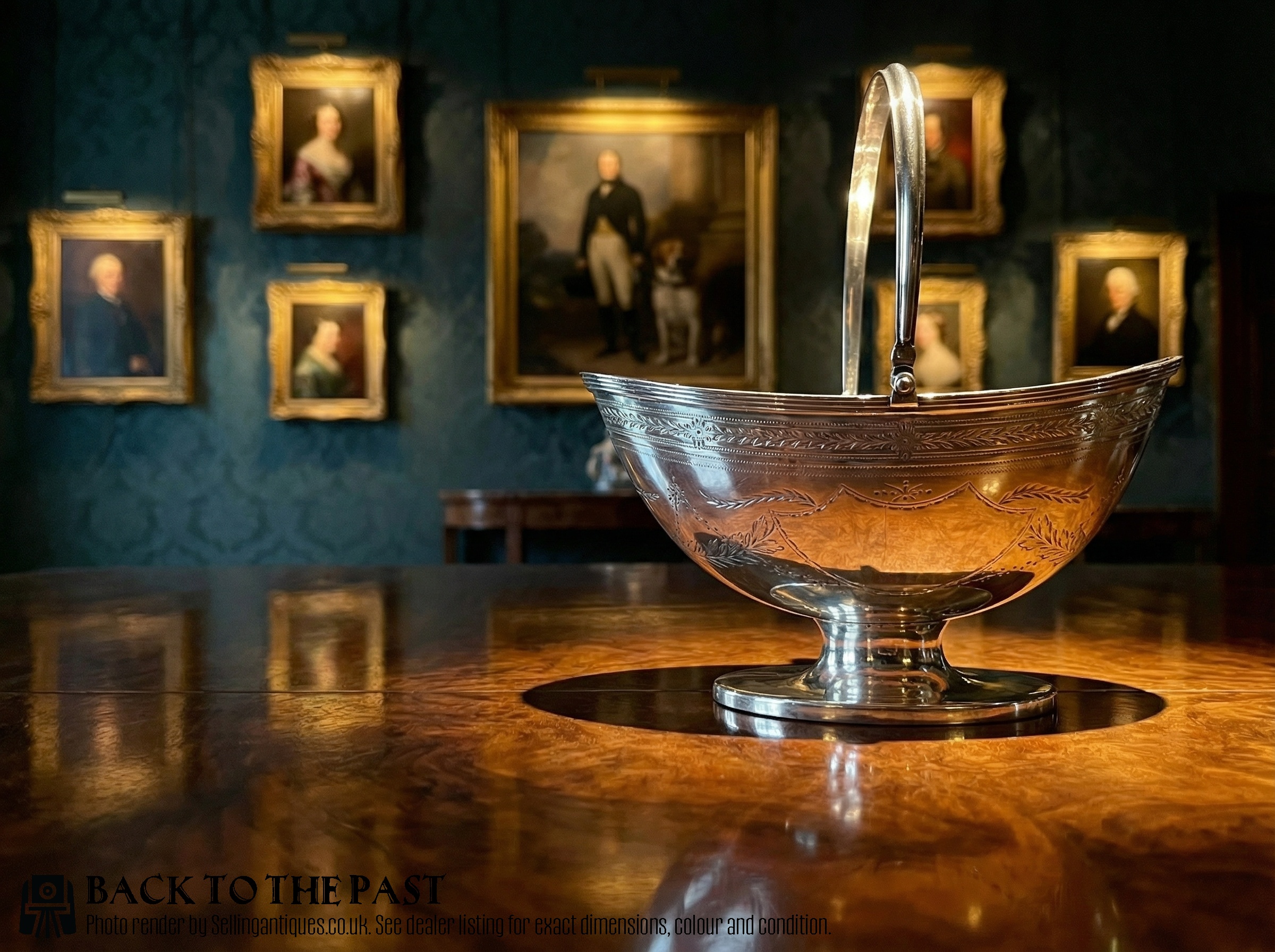
Silver Pedestal Sugar Bowl
A silver pedestal sugar bowl takes many forms across the centuries, appearing as open bowls on foot, handled baskets, and sweetmeat dishes raised from the surface. The examples gathered here span the Victorian, Edwardian, and Georgian eras, along with earlier 18th century work and pieces from the 1930s.
Makers shaped these items for the table using styles that shift from Neo-Classical restraint to the flowing lines of Art Nouveau and the textured surface of Arts and Crafts design. Most pieces meet the eye as sterling silver or silver plate, sometimes accompanied by contrasting glass liners or interior gold washes.
How they were made
Silversmiths formed these bowls and baskets using sterling silver or silver plate over base metal, often employing hammering techniques to build texture into the metal body. Piercing, fretwork, and chasing created openwork patterns across the sides of sweetmeat and sugar baskets.
Some vessels relied on cast pedestal feet soldered to the base, while others incorporated swing handles and applied borders. Interior gilding, known as gold wash, protected the silver from the corrosive nature of moist sugar.
Gold wash interiors were added so the sugar would not eat the silver, leaving a sunny yellow glint inside an otherwise stark metal basket.
What varies in quality
The distinction between ordinary and exceptional work rests on the crispness of the piercing and the balance of the pedestal foot. Heavier gauge metal provides a more solid feel in the hand, whereas lighter vessels bend easily under pressure.
Artistry in hand-hammered surfaces or delicate fretwork marks the difference between standard production items and pieces by notable makers. Preservation of original hallmarks and intact interior gilding add significant character to the physical object.
Henry Chawner·Hammond, Creake and Co·Elkington and Co·W M F·Walter Brind
The Silver Pedestal Sugar Bowl Glossary
- Sterling silver
- A silver alloy containing 92.5 percent pure silver by mass, with the remainder usually copper. This standard appears on the majority of British tablewares.
- Old Sheffield plate
- An early fused plating method where a thin sheet of silver is fused to a thicker copper core. Pieces made this way show a thin line of copper where the edge wears.
- Sweetmeat basket
- A small decorative vessel designed to hold confectioneries, nuts, or small sweet treats on the dining table. These often feature swing handles and pierced galleries.
- Pot pourri basket
- A lidded or open container intended to hold dried plant material scented with spices. The pierced walls allow fragrance to diffuse into the room.
- Gold wash
- A thin layer of gold applied to the interior of a silver bowl to prevent corrosion from acidic foods or moist sugar. It creates a warm yellow contrast against the exterior silver.
Silver Pedestal Sugar Bowl: Frequently Asked Questions
What is a pedestal sugar bowl?
A pedestal sugar bowl is a small tabletop container raised on a footed base, designed to hold lump or loose sugar for tea service.
These pieces range from plain bowls to intricate openwork baskets fitted with swing handles and glass liners.
How were sugar baskets used?
These baskets sat on the dining or tea table to serve sugar, sweetmeats, or small fruits during formal meals.
Guests would use sugar tongs to lift pieces from the bowl into their cups.
How do I clean silver bowls?
Cleaning requires a soft cloth and a gentle silver polish formulated to remove tarnish without abrading the surface. Avoid harsh dips that strip the natural oxidation from chased details and hallmarks.
Wash the piece in warm soapy water afterwards and dry thoroughly with a lint-free cloth.
How do I date a silver bowl?
Dating relies on the assay office marks, date letters, and maker's stamps struck into the metal. Stylistic clues such as Neo-Classical swags or Art Nouveau whiplash lines also point to specific decades.