
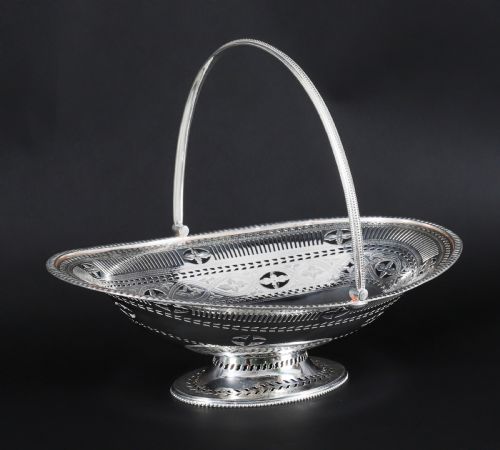
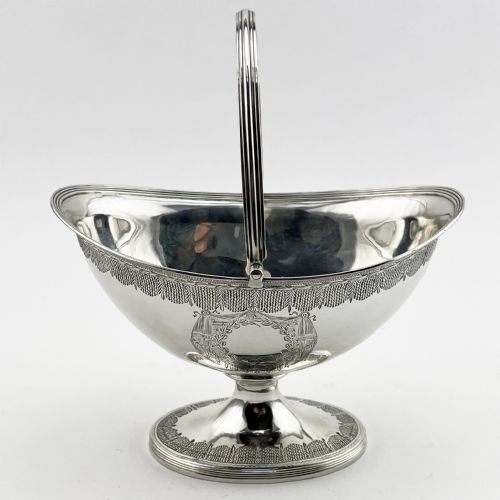


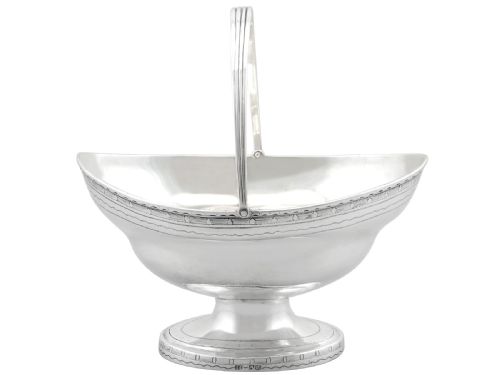


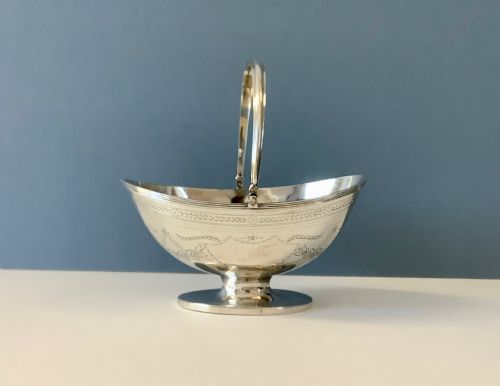


Engraved Silver Pedestal Basket
These engraved silver pedestal basket examples combine raised footed forms with bright hand-engraved surface decoration for formal table service.
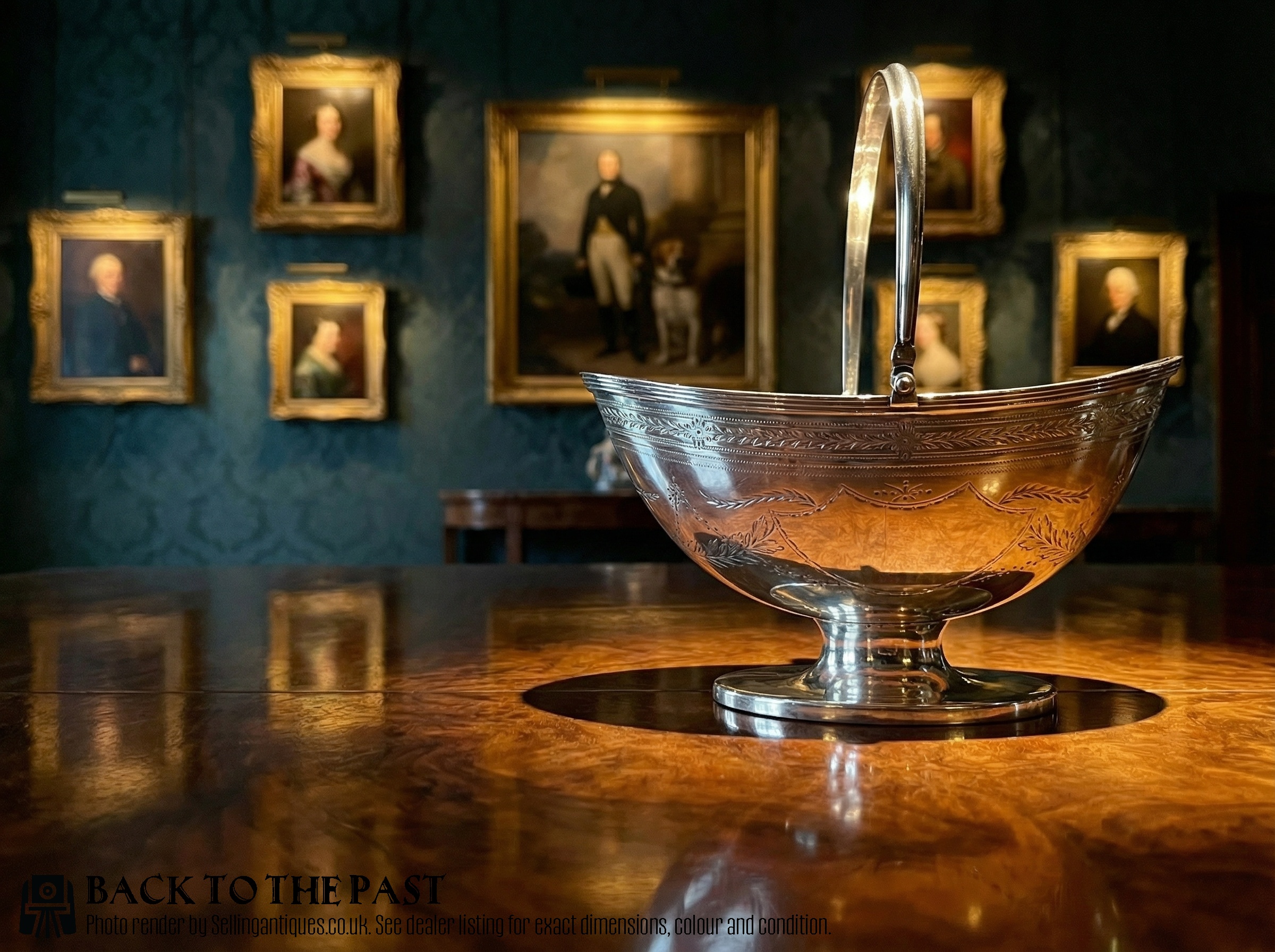
Engraved Silver Pedestal Basket
An engraved silver pedestal basket sits on a raised foot or column, elevating sweetmeats, sugar, bread, or fruit above the dining table surface. The form encompasses specialised serving pieces designed for specific dining rituals across the eighteenth and nineteenth centuries.
The selection on this page spans George III, Georgian, Victorian, and Edwardian periods, alongside eighteenth-century Old Sheffield Plate and nineteenth-century silver plate. Fruit baskets, cake baskets, and sugar baskets dominate the available forms.
Makers and silversmiths utilised sterling silver and silver plate to create footed vessels that served both practical holding functions and decorative display purposes during formal meals.
Materials and construction methods
Silversmiths constructed these vessels from sterling silver or fused copper and silver known as Old Sheffield Plate, shaping the metal into raised pedestal forms. Artisans then applied manual engraving techniques to render floral, geometric, and neoclassical motifs across the surface.
Many sterling examples received an interior gold wash, known as vermeil, to protect the silver from acidic contents like fruit and sugar. Piercing and chasing often accompanied the engraving to lighten the structure and accentuate the decorative scheme.
Listings span the eighteenth, nineteenth, and early twentieth centuries, featuring sterling silver, silver plate, copper, and gold wash materials.
Distinguishing quality across the range
Quality rests upon the crispness of the hand engraving and the structural integrity of the pedestal foot relative to the basket bowl. Deeper chasing and sharper tool work separate standard production from finer silversmithing workshops.
The weight of the metal and the subtlety of pierced or embossed details determine the distinction between utilitarian serving vessels and high-status table ornamentation.
Henry Chawner
The Engraved Silver Pedestal Basket Glossary
- Pedestal
- A raised foot or column base supporting the main bowl of the basket. This elevation creates a distinct vertical presence on the dining table.
- Sweetmeat basket
- A small container specifically designed for holding sweet confections, nuts, or small delicacies between courses.
- Old Sheffield Plate
- A composite material made by fusing a thin sheet of silver to a thicker copper base. This technique preceded modern electroplating.
- Gold wash
- A thin layer of gold applied to the interior surface of a silver vessel. It prevents tarnishing and corrosion from acidic foodstuffs.
- Neo Classical
- A design style drawing inspiration from classical antiquity, featuring symmetrical motifs, urns, and swags. This aesthetic heavily influences Georgian and Victorian metalwork.
Engraved Silver Pedestal Basket: Frequently Asked Questions
What were engraved silver pedestal baskets used for?
These vessels served bread, fruit, sugar, and sweetmeats during formal dining and tea services. Their elevated design kept contents prominent and accessible on the table.
Over time, their roles shifted as dining customs evolved, moving from functional serving containers to decorative centrepieces in domestic interiors.
How do I identify the period of a basket?
Stylistic clues such as Georgian neoclassical swags, Victorian floral engraving, or Edwardian proportions point toward specific eras of manufacture. Hallmarks and silver plate marks offer definitive dating evidence.
Examining the manufacturing technique, whether fused Old Sheffield Plate or later electroplate, also clarifies the period of origin.
How should I clean silver plated baskets?
Gentle washing in warm soapy water using a soft cloth preserves the delicate plating and engraved details. Avoid harsh abrasive dips that strip away thin silver layers.
Storing pieces in dry, tarnish-resistant environments keeps the metal bright without requiring constant polishing.
What is the difference between sterling and silver plate?
Sterling silver consists of solid precious metal meeting specific purity standards throughout the entire object. Silver plate applies a thin layer of silver over a base metal like copper.
Both materials support fine engraving, but they differ in weight, composition, and long-term wear characteristics.