
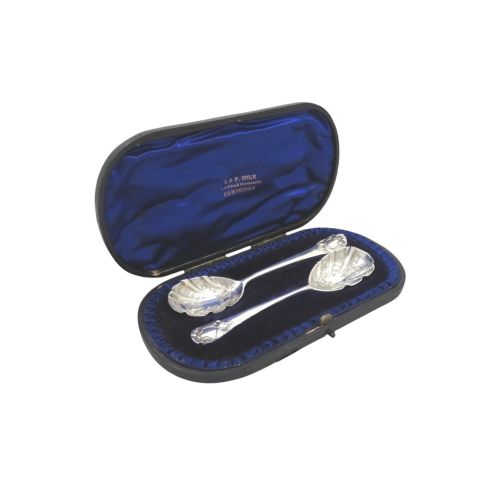
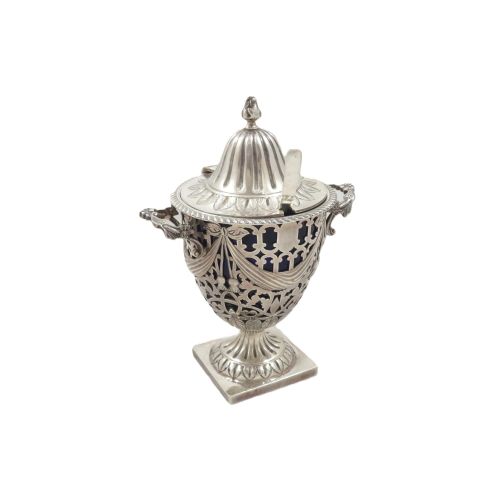


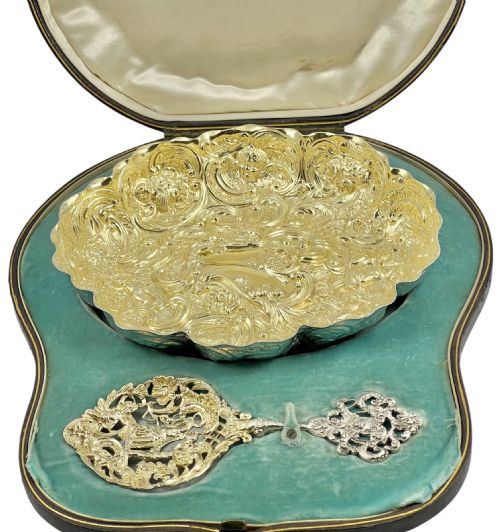


Silver Sugar Bowl Spoon
These silver sugar bowl spoon sets are matched pairings and cased services designed for tea table hospitality.
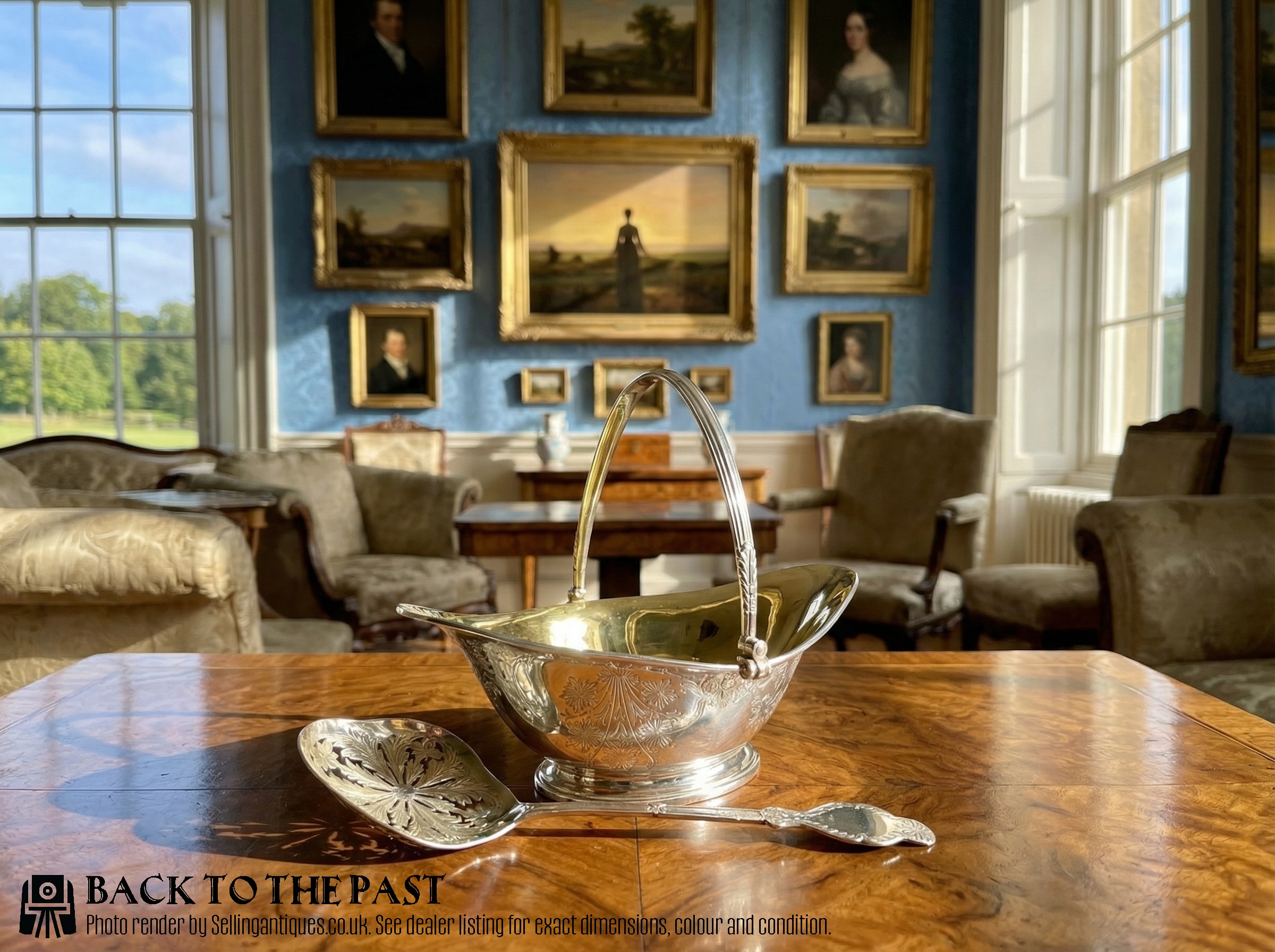
Silver Sugar Bowl Spoon
When you search for silver sugar bowl spoon, you encounter matched sets and cased services spanning the Georgian, Victorian, and Edwardian eras. These combinations frequently pair glass or silver bowls with specialised sifter spoons, berry spoons, or tongs.
The most common forms on this page include Victorian cased sets featuring cranberry glass bowls alongside pierced or gilt spoons. Alongside these, early Georgian sifter spoons and sugar baskets appear, reflecting changing dining habits across the eighteenth and nineteenth centuries.
Materials and construction
The pieces rely on sterling silver and silver plate, often enhanced with gold gilt or silver gilt interiors for durability against acidic preserves and sugar. Glass vessels in cranberry tones appear frequently, paired with pierced metal spoons.
Protective presentation cases utilise velvet, silk, leather, and leatherette linings fitted specifically to the contours of the bowl and spoon. Metalwork techniques encompass piercing, chasing, and Onslow pattern casting.
Giant clam shells double as silver spoon warmers in the archive, proving Victorians loved theatrical presentation.
Evaluating quality and craftsmanship
Quality rests in the crispness of pierced decoration on sifter spoons and the structural integrity of fitted presentation cases. Matching sets where both bowl and spoon share the same period and hallmarks hold greater cohesion than assembled groups.
The weight of the solid silver and the depth of the gilding determine the upper tier of pieces. Preserved silk and velvet linings inside original leatherette cases also separate standard items from superior examples.
The Silver Sugar Bowl Spoon Glossary
- Sifter spoon
- A ladle or spoon with a pierced bowl designed for dusting loose sugar over fruit or desserts. These feature ornate cutouts in geometric or floral patterns.
- Sterling silver
- A metal alloy consisting of ninety-two point five percent silver by mass, with the remainder being copper. This standard appears across British Victorian and Georgian items.
- Silver gilt
- Silver objects coated with a thin layer of gold on the surface. This technique prevents tarnishing from sulphur compounds in food and adds warmth.
- Cranberry glass
- A rich red-pink transparent glass coloured with gold chloride, popular during the Victorian period for tableware. It frequently forms the body of sugar bowls and preserve dishes.
- Onslow pattern
- A distinct eighteenth-century cutlery handle design featuring a scrolled scroll terminal that curves backward. It is seen on early Georgian sifter spoons.
Silver Sugar Bowl Spoon: Frequently Asked Questions
How do I date a Victorian silver set?
Dating relies primarily on the hallmarks stamped into the silver, which indicate the assay office, date letter, and maker.
Stylistic clues like Rococo Revival scrolls or fitted leatherette cases also help narrow down the decade of production.
Are these cased sets original?
Many Victorian and Edwardian sets survive in their fitted presentation cases lined with silk and velvet.
These cases were custom-made by retailers to house the specific combination of bowl and spoon securely for gifting or storage.
Can I use cranberry glass bowls daily?
Cranberry glass bowls tolerate gentle hand washing in warm soapy water without losing their rich pink colour.
Avoid thermal shock by keeping them away from boiling water or modern dishwashers to preserve the historic glass.