




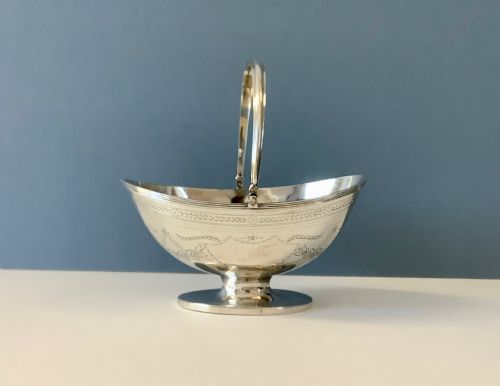

Engraved Silver Sugar Basket
An engraved silver sugar basket is a refined addition to the table, and these pieces offer classic forms shaped for holding sugar.
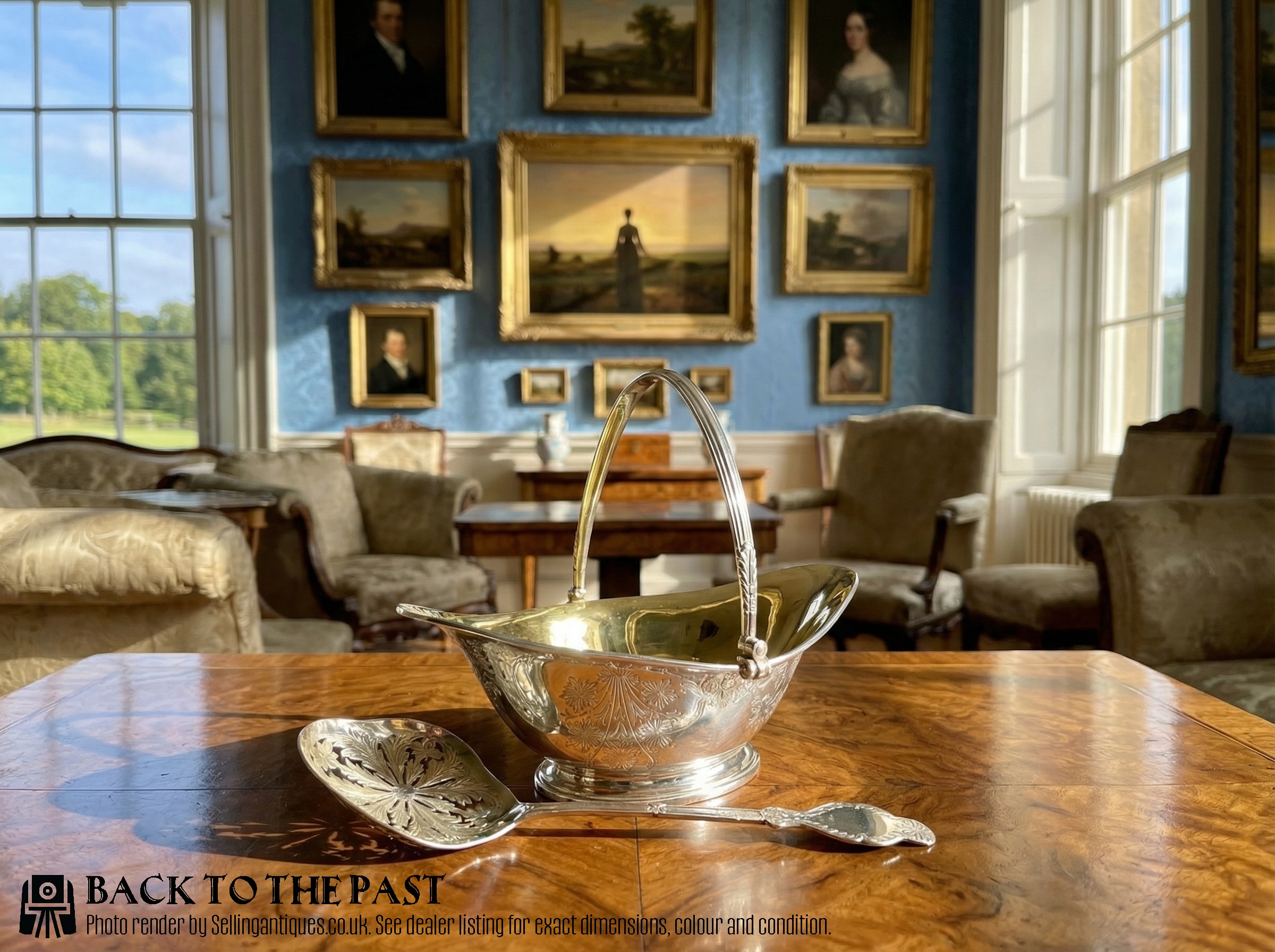
Engraved Silver Sugar Basket
When you search for an engraved silver sugar basket, you look at elegant tableware designed to hold sugar during tea service. These pieces emerge primarily from the Georgian and Victorian eras, carrying distinct historical charm.
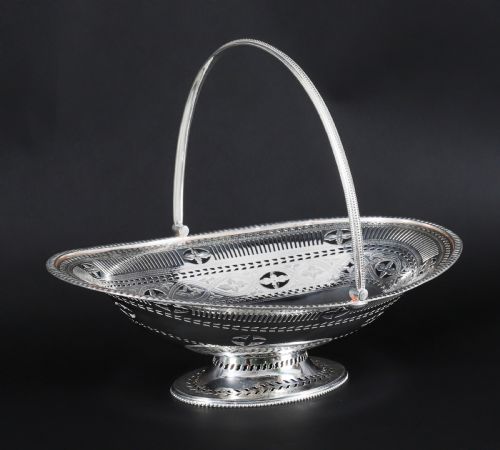
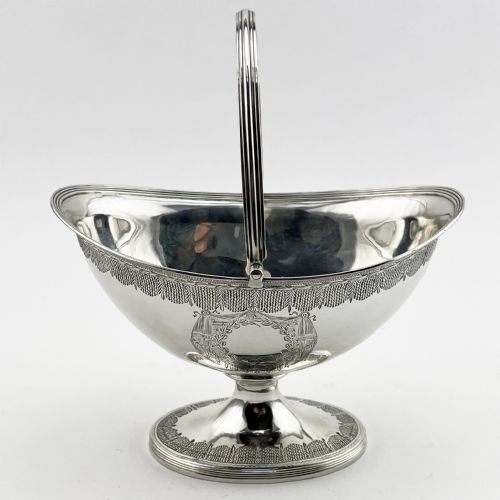
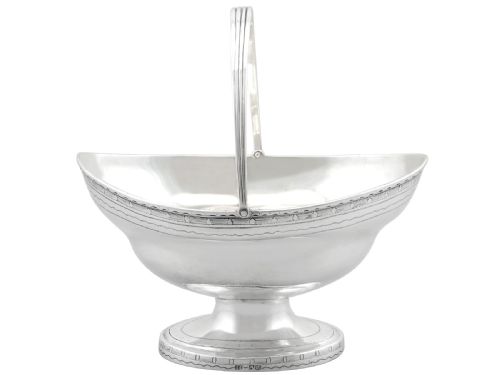
You are most likely to meet silver plated or sterling silver versions on this page, often taking the form of sweetmeat baskets, fruit baskets, or pedestaled sugar bowls. Their decorative engraving defines their visual appeal on the dining table.
The objects span from the mid-eighteenth century through the late nineteenth century, reflecting evolving British tastes in tableware. Makers from London, Scotland, and Ireland contributed diverse regional designs to this category.
How they were made
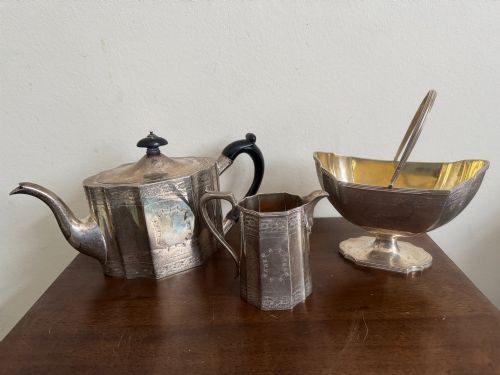
Silversmiths utilised sterling silver or old Sheffield plate, shaping metal through hammering and piercing techniques. Details were frequently enhanced with gold gilding or gold wash interiors.
Artisans applied intricate hand engraving to the exterior surfaces, occasionally incorporating contrasting materials such as ebony handles. Copper served as a base metal in plated examples.
Listings span from the mid-eighteenth century to the late nineteenth century, encompassing Georgian and Victorian periods.
What varies in quality
The depth and clarity of the hand engraving distinguish superior examples from simpler production. Crisp execution of neoclassical motifs elevates the piece.
Material weight and the presence of interior gold wash or gilding separate finer objects from standard tableware. Maker marks and clear hallmarks also contribute significantly to the standing of an individual basket.
Henry Chawner·Samuel Herbert·Glasgow Rait
The Engraved Silver Sugar Basket Glossary
- Sterling silver
- A silver alloy containing 92.5 percent pure silver by mass, standard for quality British tableware. This standard ensures durability and lasting lustre.
- Old Sheffield plate
- An early form of plated metal produced by fusing a sheet of silver to a thicker copper base. It is identified by subtle clues where the copper core shows beneath worn silver.
- Sweetmeat basket
- A small decorative container designed for holding confectionery, nuts, or dried fruits. These vessels often mirror the proportions and swing handles of sugar baskets.
- Gold wash
- A thin layer of gold applied to the interior of a silver vessel, also known as vermeil. This technique protected the silver from corrosion caused by acidic contents like sugar or fruit.
Engraved Silver Sugar Basket: Frequently Asked Questions
What is an engraved silver sugar basket?
An engraved silver sugar basket is a small, handled vessel designed to hold loose sugar during formal tea service. These pieces became prominent in Georgian and Victorian households.
Craftsmen decorated the exterior surfaces with detailed hand engraving, piercing, and neoclassical motifs to complement the tea table.
How were sugar baskets used?
These baskets sat upon the tea table filled with sugar lumps or loose sugar granules, ready for guests to add to their tea. They formed part of a matched or collected tea service alongside teapots and cream jugs.
In period dining, they doubled as containers for small sweetmeats or fruits, moving easily between courses.
How do I tell Georgian from Victorian pieces?
Georgian pieces, dating through the late eighteenth and early nineteenth centuries, often display restrained neoclassical symmetry and crisp hand piercing. Their forms lean towards refined ovals and boat shapes.
Victorian examples from the mid to late nineteenth century frequently introduce bolder ornamentation and heavier silver plating techniques. Maker marks and hallmarks provide definitive dating evidence.