




Silver Salts with Spoons
Silver salts with spoons are dining table accessories designed to hold condiments, combining precious metal vessels with fitted spoons.
Silver Salts with Spoons
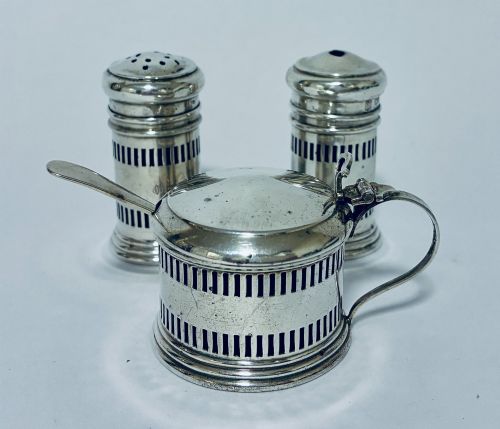
Silver salts with spoons appear across the nineteenth and early twentieth centuries, spanning Victorian, Edwardian, and Art Deco periods. These tableware items include salt cellars, mustard pots, cruet sets, and condiment sets.
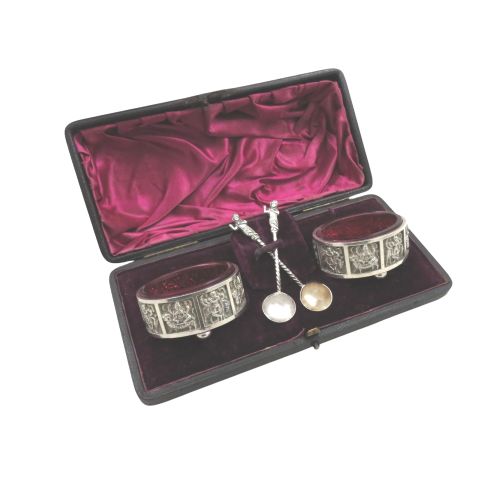
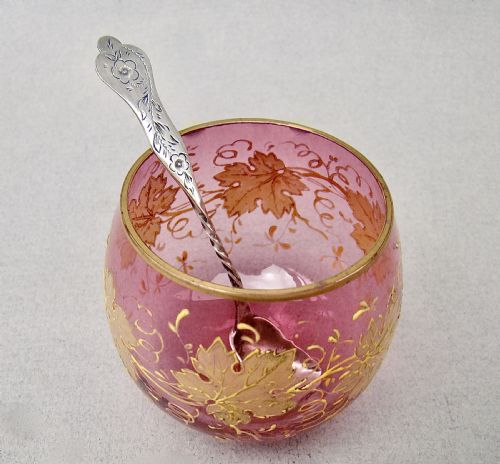
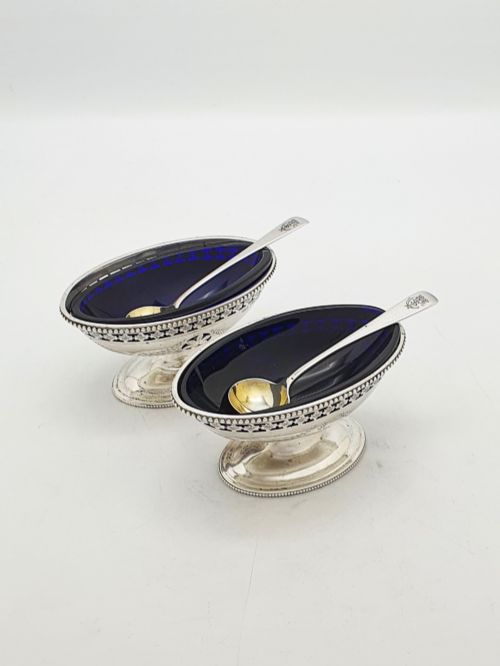
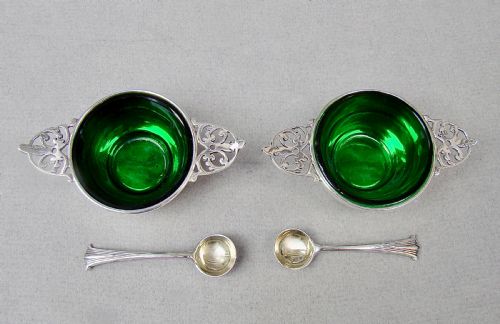
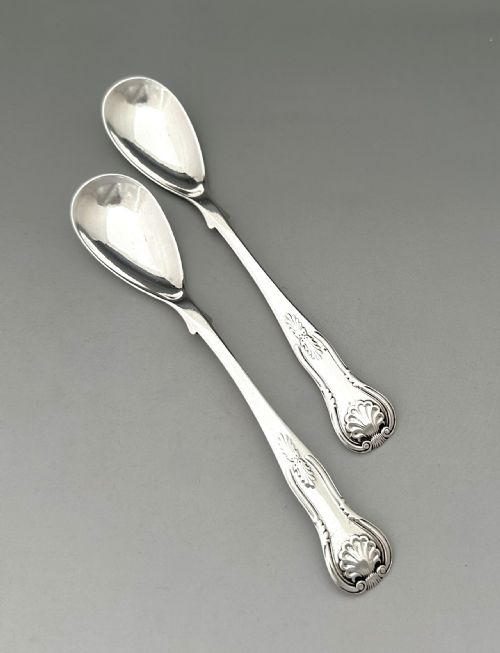
Most examples combine sterling silver or silver-plated frames with contrasting coloured glass liners in cobalt blue, cranberry, or amethyst. The accompanying spoons often match the period and style of the main vessel.
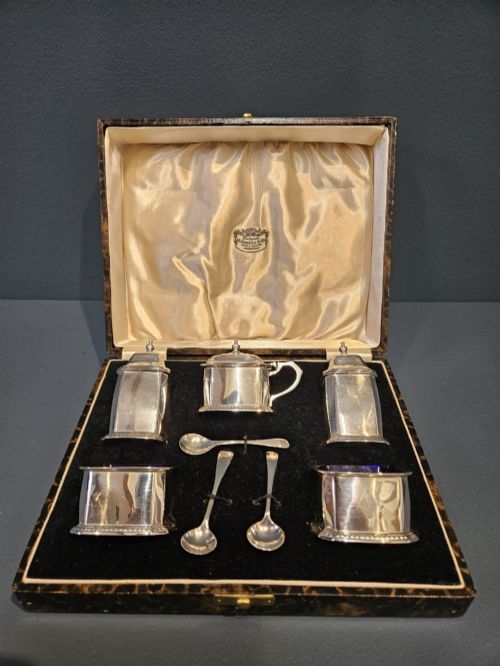
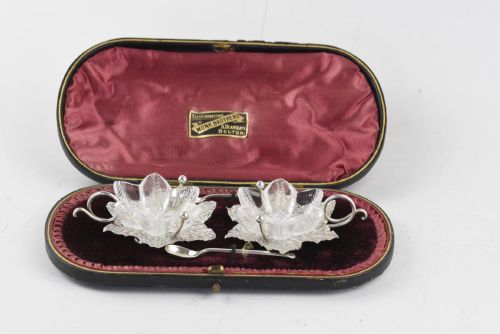
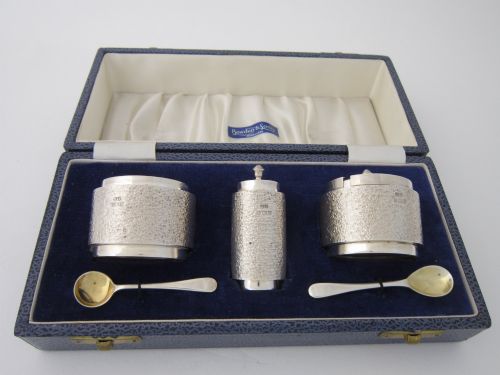
Forms range from boat-shaped and navette vessels to six-lobed cellars and boxed sets of four or six. Pieces originate from English provincial towns and Russian workshops alike.
Materials and construction
Makers construct the main vessels and spoons from solid sterling silver or silver plate, sometimes applying gold leaf or gilding to the interior surfaces. Hallmarks stamped into the metal indicate the assay office, maker, and year of production.
Glass liners, particularly in cobalt or cranberry varieties, are blown or moulded to fit the interior contours of the silver frames. Some items incorporate silk or velvet linings within fitted presentation boxes.
Salt spoons sometimes outlive their cellars, turning up alone in cutlery drawers like tiny, misplaced silver oars.
Quality and craftsmanship
The standard of design is evident in the weight of the silver, the crispness of chased or lobed decoration, and the presence of matching original spoons. Boxed sets and pieces retaining their original coloured glass liners hold greater completeness.
Maker marks from recognised silversmiths and documented provenance contribute to the standing of individual items within the range.
Bricks and Sons·Wilmot Manufacturing Co·Vale Brothers and Sermon·Thomas Hart Stone·Elkington and Co·Charles Boyton
The Silver Salts with Spoons Glossary
- Salt cellar
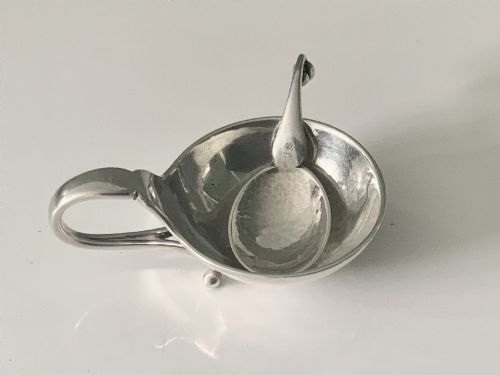
- An open vessel used to hold loose salt on the dining table before the invention of the mechanical shaker. These pieces often rest on three or four small feet or a pedestal base.
- Cobalt glass
- A deep blue glass used for liners within silver salts to protect the metal from corrosion by the salt. This material creates a sharp visual contrast against polished sterling silver.
- Navette
- A boat-shaped decorative form with pointed ends, popular in various silversmithing styles. This shape appears frequently in nineteenth-century cruet sets and table salts.
- Cruet set
- A matched group of condiment containers, which can include mustard pots, pepperettes, and salt cellars with their respective spoons. These sets often fit into a dedicated frame or presentation box.
- Hallmark
- A series of stamped marks on silver indicating the standard of purity, the assay office, the maker, and the year of manufacture. These stamps allow accurate dating of British items.
Silver Salts with Spoons: Frequently Asked Questions
How were silver salts used at the table?
Silver salts were placed on the dining table to hold loose salt for individual diners or shared use. Diners used the small spoons to transfer salt from the cellar to their plates.
These pieces formed part of larger tableware settings alongside mustard pots and cruet sets during formal meals.
Why do many salt cellars have glass inserts?
Glass liners were introduced to prevent the salt from corroding the silver metal underneath. Cobalt and cranberry glass inserts also added vibrant colour to the table setting.
Finding a salt cellar with its original matching glass liner adds to the completeness of the piece.
Are cased sets of salts common?
Cased sets containing multiple salts and matching spoons appear frequently from the Victorian and Edwardian eras. These boxes were often intended as presentation gifts for weddings or special occasions.
Original fitted boxes lined with silk or velvet survive in varying states of preservation.