
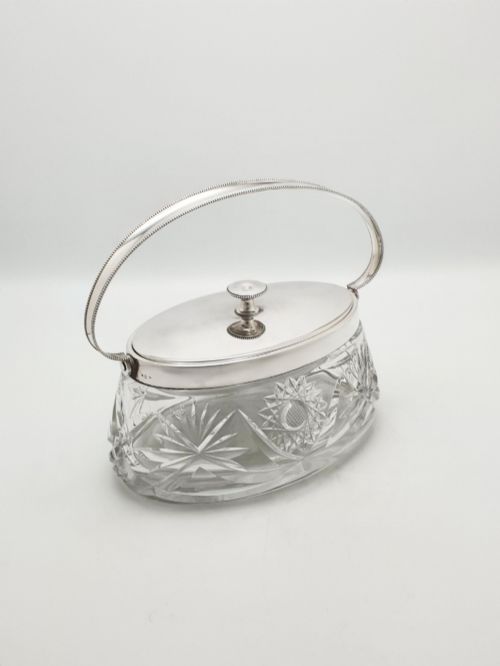
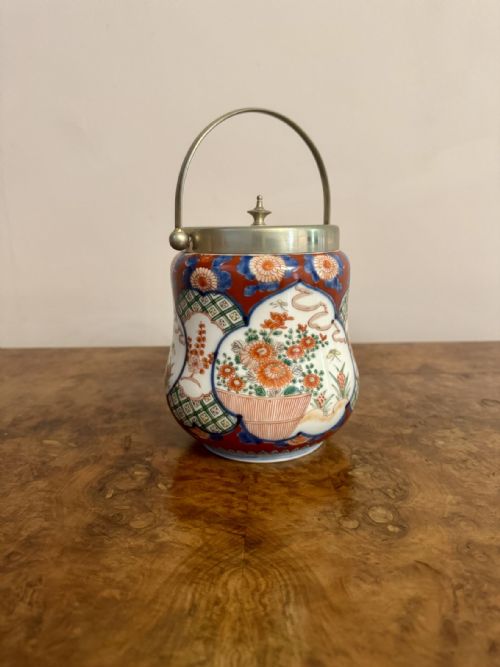


Silver Plated Biscuit Jar
A silver plated biscuit jar brings Victorian and Edwardian dining tradition to the table with hinged lids and polished mounts.
Silver Plated Biscuit Jar
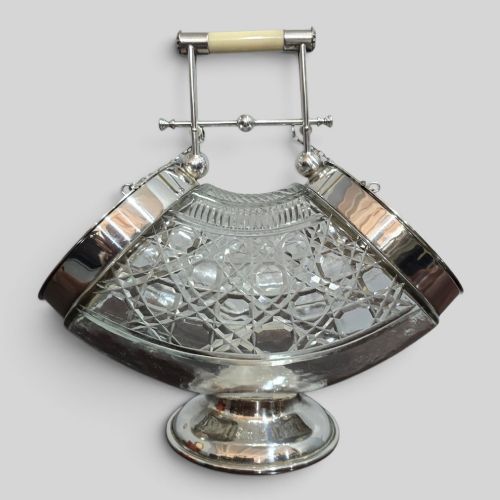
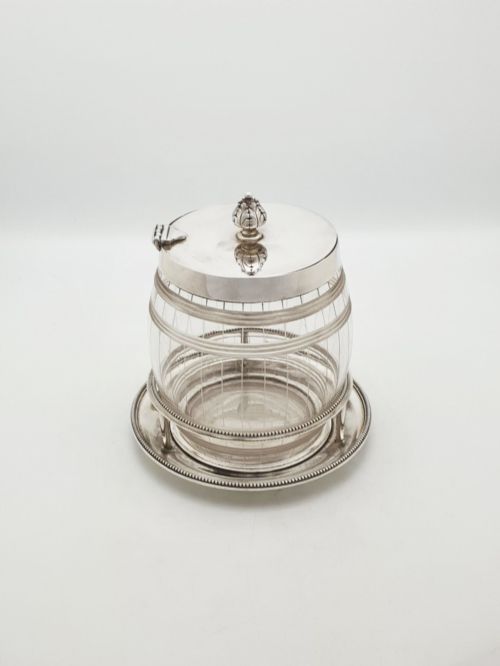
A silver plated biscuit jar is an entertaining container designed for dry parlour refreshments during the nineteenth and early twentieth centuries. When searching this phrase, a buyer encounters cylindrical drum forms, faceted bodies, and occasional novelty shapes modelled on weights or barrels. Most examples date from the Victorian and Edwardian periods, reflecting an era of domestic hospitality where dry baked goods held pride of place on the sideboard.
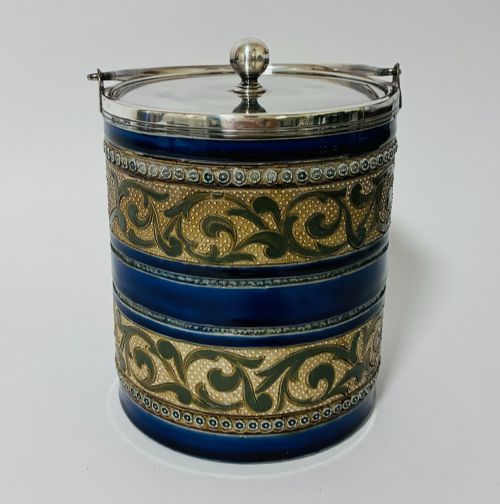
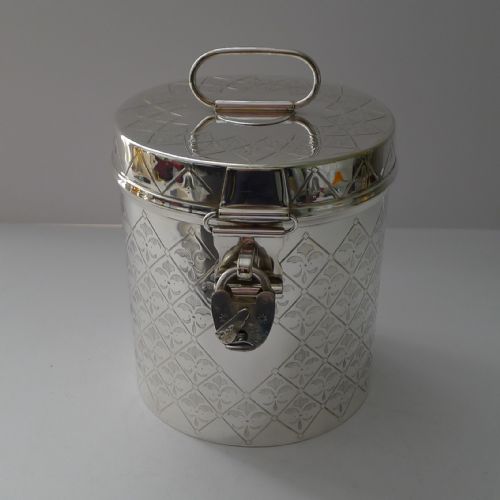
The versions most commonly met combine gleaming metal mounts with cut glass, cranberry glass, or ceramic bodies such as Wedgwood Jasperware, Doulton Lambeth, and stoneware. These pieces range from simple glass cylinders encased in pierced metal frames to heavy oak barrels fitted with locking mechanisms and drop handles. Originating chiefly from English workshops, they demonstrate a distinct evolution from mid-Victorian extravagance to cleaner Edwardian silhouettes.
Materials and Technique
The construction of a silver plated biscuit jar relies on the combination of durable base metals coated in a layer of silver, paired with blown glass, turned oak, or moulded earthenware. Silversmiths utilised electroplating techniques to apply thin coats of precious metal over white metal alloys, mounting these frames securely around blown or hobnail cut glass liners. Ceramic bodies such as Jasperware and earthenware were shaped and fired before receiving custom metal rims, hinged lids, and cast finials.
Makers integrated functional mechanics into the design, including spring-loaded hinges, swing handles, and locking mechanisms that required specialised keys. The metal mounts often featured chased or engraved ornamentation, whilst glass vessels were deeply faceted, twisted, or flashed in rich cranberry hues to catch the light of the dining room.
Periods represented range from mid-Victorian and Arts and Crafts styles to Edwardian and early twentieth-century designs.
Judging Quality
The distinction between average and exceptional pieces rests upon the weight of the metal, the crispness of the casting, and the integrity of the materials. Superior examples display thick silver plating over sturdy frames, substantial cut glass liners without chips, and intricate cast details such as heraldic finials or pierced galleries. Maker attributions to prominent firms like Elkington, Mappin and Webb, or Walker and Hall elevate the standing of a piece through documented craftsmanship.
Balance in design and the cleverness of execution define the upper tier of these containers. Novelty forms shaped as weights or handled oak barrels demonstrate higher artistic ambition than standard cylindrical jars, whilst multi-coloured ceramic bodies require greater technical mastery in the kiln.
Mappin and Webb·Elkington and Co·Thomas Bradbury·Robert and Belk·Walker and Hall·John Grinsell and Sons·Doulton Lambeth·Wedgwood·WMF·Crown Devon·Carlton Ware
The Silver Plated Biscuit Jar Glossary
- Silver Plate
- A base metal alloy coated with a thin layer of silver through chemical or electrical processes. This technique allowed Victorian manufacturers to produce luxurious dining wares at a fraction of the cost of solid silver.
- Jasperware
- A type of fine stoneware developed by Josiah Wedgwood, characterised by a matte unglazed surface and contrasting applied white reliefs. It appears frequently on nineteenth-century storage vessels.
- Cranberry Glass
- A rich red-pink glass coloured with gold chloride during the melting process. It was highly favoured for Victorian tableware and decorative containers.
- Finial
- A decorative knob or ornament attached to the top of a lid. On these containers, they often take the form of cast leaves, fruits, or heraldic motifs.
- Hobnail Cut
- A raised, faceted pattern cut into the surface of glassware resembling the head of a traditional boot nail. It creates intense refraction and texture.
Silver Plated Biscuit Jar: Frequently Asked Questions
What was a silver plated biscuit jar used for?
These containers were utilised in affluent Victorian and Edwardian households to keep baked goods dry and fresh on the drawing room or dining table. Guests were offered biscuits from these lidded vessels during afternoon tea or after-dinner gatherings.
The inclusion of tight-fitting lids and liners helped protect delicate biscuits from humidity and stale air, ensuring the contents remained crisp for visitors.
How do I clean the silver plate?
Maintenance requires gentle cleaning with a soft cloth and a specialised silver polish formulated to protect thin plated surfaces from abrasive wear. Harsh scrubbing removes the silver layer entirely, exposing the base metal underneath.
Glass liners and ceramic bodies should be washed separately in warm soapy water and dried thoroughly before being returned to their metal mounts.
How can I tell the period?
Dating relies on stylistic clues, manufacturer marks stamped into the metal, and the specific materials utilised in the body of the container. Mid-Victorian examples often feature heavy ornamentation and complex cast finials, whereas Edwardian pieces tend toward simpler glass cuts and cleaner frames.
Maker stamps and registry marks provide precise production years or clues to the active decades of the silversmithing firm.
Are the glass liners usually original?
Many surviving containers retain their original blown or cut glass inserts, which fit snugly inside the pierced or solid metal frames. Because glass liners were fragile and prone to breakage during daily use, replacement liners appear frequently in older pieces.
An original liner sits flush within the mount and matches the exact contour of the silver plated rim.