
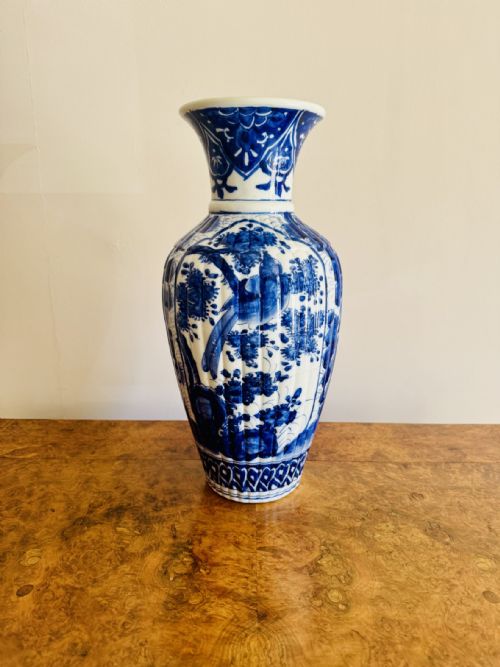
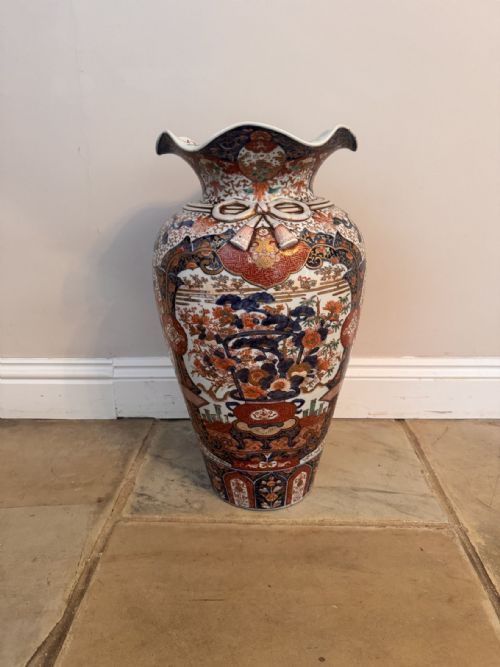
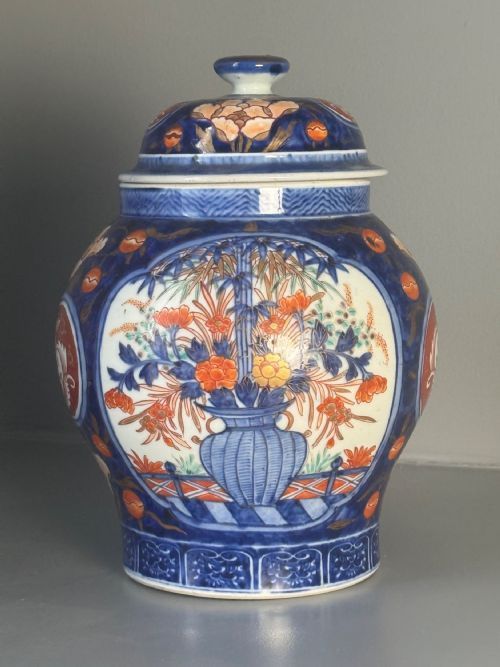
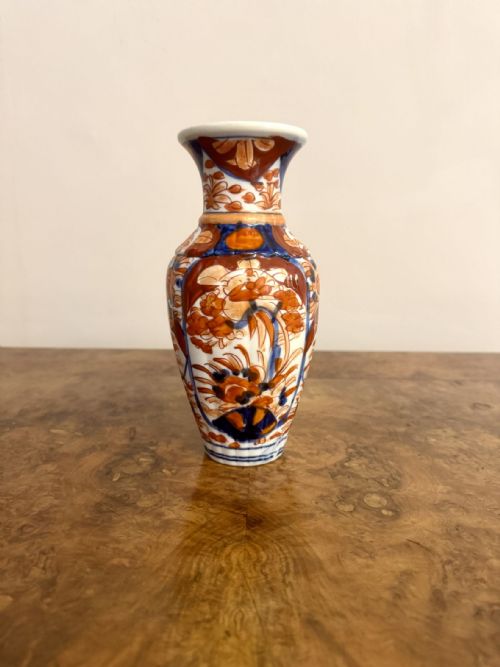
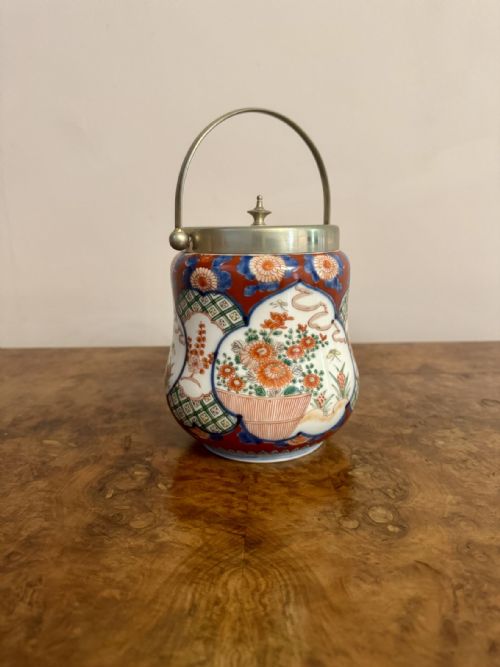
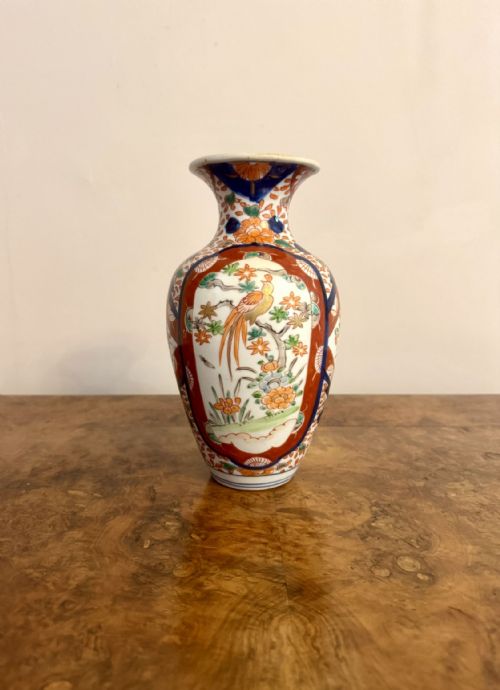


Floral Imari Ceramic Jar
These floral imari ceramic jar pieces are robustly decorated vessels shaped by centuries of tradition, prized for their vibrant palettes and commanding presence in a room.
Floral Imari Ceramic Jar
A floral imari ceramic jar brings together traditional Japanese and European stylistic influences, appearing most often as ginger jars, lidded vases, and biscuit barrels from the nineteenth century. Buyers searching for a floral imari ceramic jar encounter pieces spanning the Edo, Meiji, and Victorian eras, alongside related British ironstone interpretations. These vessels range from intimate cabinet pieces to large floor-standing vases and double gourde forms.
The domestic and decorative utility of these objects meant they were produced in significant quantities throughout the nineteenth century and into the Edwardian period. Surviving examples include matched pairs and individual lidded pieces featuring distinct fluted bodies or covered ginger configurations. The aesthetic merges rich ironstone and porcelain bodies with characteristic painted designs.
Materials and construction
Makers shaped these vessels using ceramic, ironstone, and porcelain bodies, which provided a durable foundation for intricate surface treatment. Artisans applied enamel and glaze to seal the clay and build up the characteristic visual depth of the surface.
Details were frequently heightened with gold leaf, applied over the fired glaze to catch the light and define key elements of the floral motifs. Kiln techniques of the period dictated the final density and finish of the porcelain and ironstone.
Listings feature ceramics spanning the eighteenth to the twentieth centuries, including works from the Meiji period and Victorian era.
Assessing quality and craftsmanship
The distinction between standard production and finer output lies in the crispness of the enamel work and the precision of the hand-painted floral composition. Superior examples display a deliberate balance of cobalt blue and iron red, with gold leaf accents that remain intact and sharply defined across the ceramic body.
Form and scale also dictate distinction, where larger lidded vases and double gourde pairs demonstrate greater ambition in the ceramicist's craft. The weight of the porcelain or ironstone and the symmetry of the fluted body reflect the control exercised during shaping and firing.
The Floral Imari Ceramic Jar Glossary
- Imari
- A style of Japanese porcelain originally exported from the port of Imari, traditionally decorated in underglaze blue, iron red, and gold.
- Ginger Jar
- A wide-shouldered ceramic container with a domed lid, originally used for storing spices and later adapted for decorative display.
- Ironstone
- A heavy, durable type of earthenware patented in the nineteenth century as a tougher alternative to porcelain.
- Double Gourde
- A vessel formed of two bulbous sections stacked vertically, resembling the shape of a traditional hollowed gourd fruit.
- Meiji Period
- An era in Japanese history spanning from 1868 to 1912, known for significant craft production destined for international markets.
Floral Imari Ceramic Jar: Frequently Asked Questions
What is an imari jar?
An imari jar is a ceramic vessel decorated in a distinct palette of deep blue, iron red, and metallic gold leaf. These pieces originate primarily from Japanese kilns or draw direct inspiration from them.
They were produced in various forms, including ginger jars and lidded vases, designed to serve both decorative and functional roles in historic interiors.
How old are these ceramic jars?
The pieces available typically date from the nineteenth century, encompassing the Meiji period in Japan and the Victorian era in Britain. Some examples extend back to the eighteenth century or forward into the Edwardian period.
Evaluating the age involves looking at the style of the glaze, the weight of the ceramic body, and the characteristics of the hand-painted motifs.
Were these jars used for ginger?
While the form originates from vessels used to transport spices and ginger along trade routes, many were made strictly for decorative display in European and domestic homes.
Lidded jars and ginger jars often served as mantel ornaments or focal points in grand reception rooms rather than working pantry containers.
How do I display a lidded vase?
These jars command attention due to their bold colours and intricate patterns, making them suitable as centrepieces on sideboards, tables, or within dedicated display cabinets.
Pairs look balanced when placed symmetrically, while large floor-standing vases function effectively as standalone architectural accents in an empty corner.