



Silver Pierced Cake Dish
A silver pierced cake dish brings openwork metalwork and structured serving forms to the table, offering a traditional way to present baked goods.
Silver Pierced Cake Dish
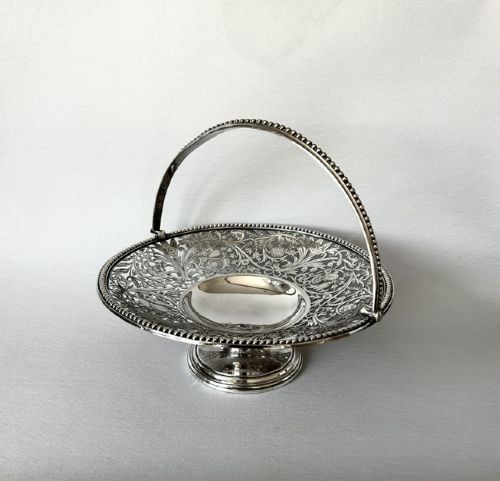
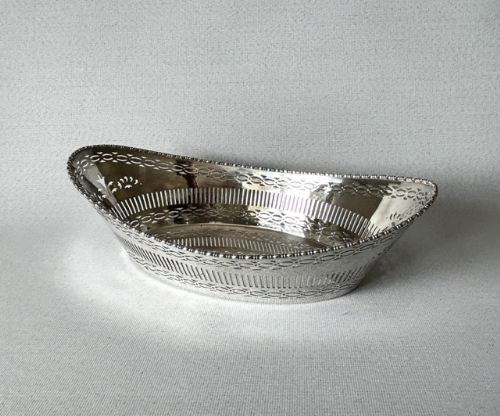
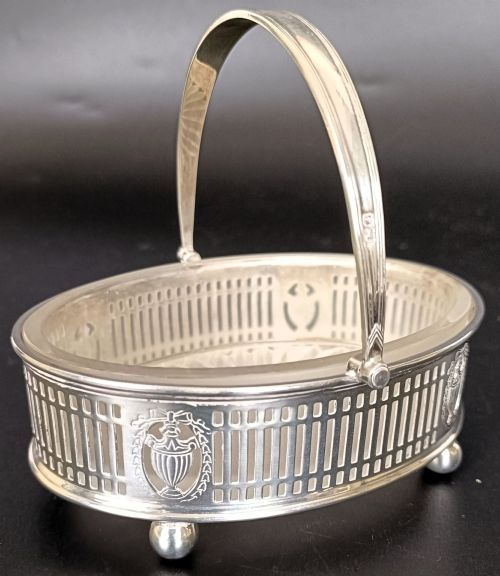
A silver pierced cake dish or basket sits on a foot or base, taking forms like oval baskets and round bowls designed for display and service. These pieces emerge from periods spanning the mid nineteenth century through the mid twentieth century, covering Victorian, Edwardian, George V, and Art Deco eras.
The most common examples on this page are Edwardian and Victorian silver plated fruit and bread baskets featuring openwork lattice designs and swing handles. Makers from London, Birmingham, Chester, and Sheffield worked in both solid sterling silver and plated metal.
Continental European examples also appear, including Austrian silver bowls from Vienna alongside domestic British hallmarked items. Forms range from dedicated cake baskets and bread servers to deep fruit bowls and decorative centrepieces.
Materials and construction methods
Silversmiths utilised sterling silver and electroplated nickel silver over a base metal, known as EPNS or silver plate. Solid silver items bear standard hallmarks indicating the town assay office and the year of production.
The characteristic openwork decoration relies on piercing and lattice work, where metal was cut away to create geometric or floral patterns. Swing handles were attached with pins or pivots to allow the basket sides to drop flat against the table or container rim.
Silver Pierced Cake Dish Retail Price Guide 2026
Typical asking prices for silver pierced cake dish among the pieces listed under this phrase on Sellingantiques today, from the lower quarter to the upper quarter. They describe what is for sale here now, not the wider market.
Origin locations span British assay offices in London, Birmingham, and Chester alongside continental workshops in Vienna.
Distinguishing quality across the range
Quality depends on the crispness of the pierced piercing and the weight of the metal used in the body and swing handle. Thicker gauge silver or heavy plating maintains structural integrity better under the weight of fruit or cakes.
Maker reputation influences the standing of a piece, with firms like Mappin & Webb, Elkington, and James Dixon & Sons providing consistent standards of manufacture. Engraved detailing and cast foot mounts rather than stamped components separate finer examples from standard production items.
Mappin & Webb·Elkington·John Hunt·James Dixon & Sons
The Silver Pierced Cake Dish Glossary
- Pierced work
- Metalwork that has had sections cut through to form a decorative pattern or lattice. This technique lightens the visual weight of large silver vessels.
- Swing handle
- A movable handle attached to opposite sides of a basket or dish by pivots. It allows the handle to drop down when the dish is placed on a table.
- EPNS
- Electroplated nickel silver, a common base material coated with a layer of pure silver. It provided a durable alternative to solid silver during the nineteenth and twentieth centuries.
- Hallmark
- A series of official marks stamped onto precious metal items to guarantee the purity, maker, and year of manufacture. British marks typically include a leopard head or anchor alongside a date letter.
- Centrepiece
- A large decorative item placed in the middle of a dining table. These vessels often feature deep pierced walls and substantial footed bases.
Silver Pierced Cake Dish: Frequently Asked Questions
What were silver pierced cake dishes used for?
These vessels served cakes, bread, and fruit at formal dining tables and afternoon tea gatherings. The openwork design allowed air to circulate around baked goods.
Over time their function shifted toward decorative display, acting as centrepieces or decorative bowls within domestic interiors.
How do I clean a silver plated basket?
Silver plated items require gentle cleaning with a specialist silver polish and a soft cloth to protect the thin metal coating. Avoid harsh abrasive cleaners that can wear away the plating.
Wash the item in warm soapy water and dry it thoroughly after polishing to maintain the surface finish.
How do I tell solid silver from silver plate?
Solid silver pieces carry official hallmarks indicating sterling standard, such as a lion passant for British manufacture. These marks confirm the metal purity throughout the entire object.
Silver plated items display marks denoting electroplate or manufacturer initials without standard precious metal assay stamps.
How do I date an Edwardian silver basket?
Edwardian items can be dated using the specific date letter stamped within the hallmarked duty mark block. Birmingham and Sheffield assay offices used distinct letter cycles for each year.
The style of the piece, often featuring neoclassical revival motifs or delicate lattice piercing, further points to the Edwardian period.