


Chased Silver Fruit Bowl
A chased silver fruit bowl brings heavy repoussé ornament and gleaming metal to the dining table, offering a centrepiece that anchors the room.
Chased Silver Fruit Bowl
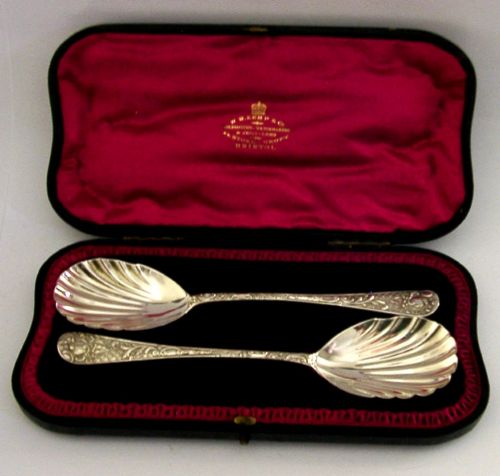
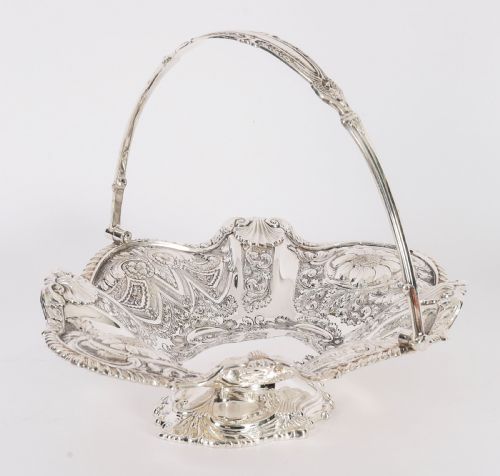
A chased silver fruit bowl represents the grand decorative vessels produced across various global workshops and domestic centres during the Victorian, Edwardian, and Georgian periods. These items take the form of footed bowls, pedestal vessels, presentation pieces, and handled baskets intended for serving or display.
The versions most commonly met on this page span the late nineteenth and early twentieth centuries, featuring sterling silver, solid silver, and silver plate constructions. Makers often shaped these objects with deep basins and ornate rims to hold fruit or serve as standalone decorative dishes.
How they were made
Silversmiths formed these vessels from sterling silver, solid silver, and electroplated nickel silver, sometimes mounting them upon wooden bases or lining them with velvet and satin. Artisans utilised hammering and sinking techniques to raise the metal from flat sheets into deep bowls and baskets.
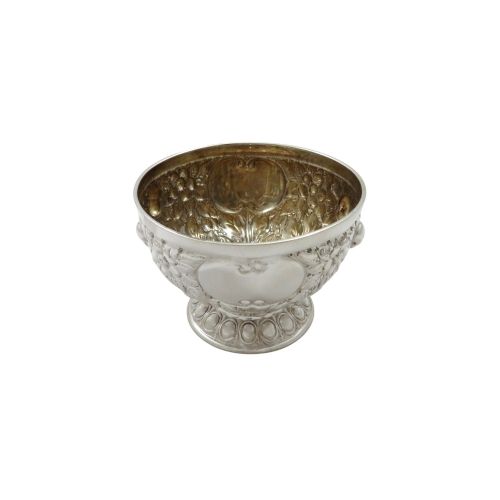
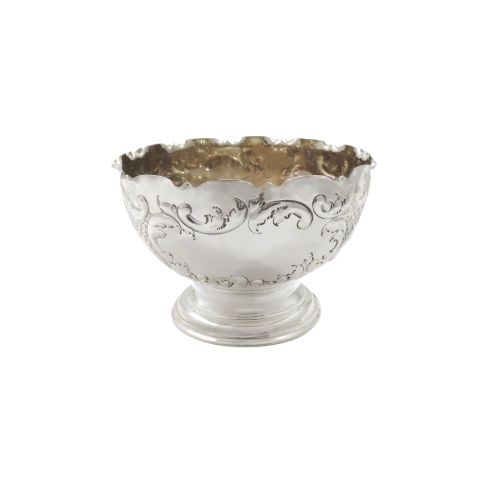
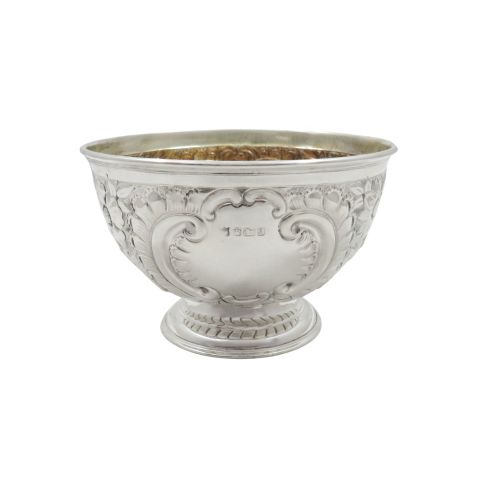
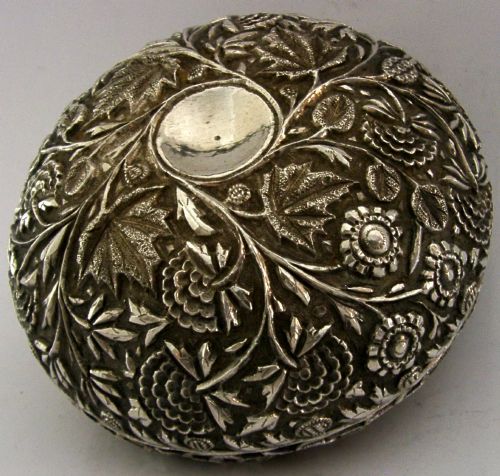
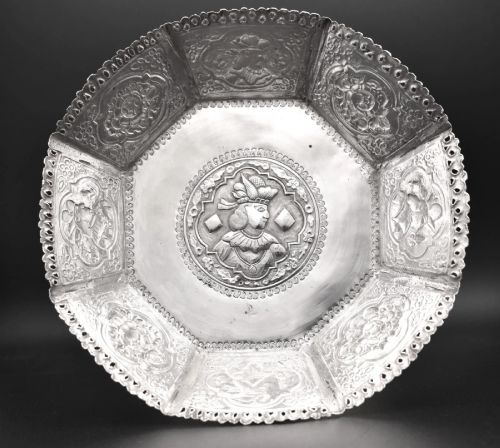
Decoration relied heavily on repoussé and chasing, where craftsmen worked the metal from both sides to push out floral, bird, and ornate patterns. This manual manipulation created high-relief surface textures that caught the light across the bowl walls and footed bases.
Listings feature items spanning the Victorian, Edwardian, and Georgian periods, alongside Anglo-Indian, Thai, and Chinese export styles.
What varies in quality
The depth and crispness of the chased and repoussé ornamentation dictate the visual impact of each vessel, separating masterwork relief carvings from shallow, machine-pressed alternatives. Heavier gauge metal provides structural integrity and a substantial hand feel that distinguishes superior domestic and export pieces.
Design complexity and regional style influence the distinction between standard production items and ambitious presentation bowls or architectural centrepieces. Superior examples maintain balanced proportions across pedestal feet and handles while retaining clear hallmarks or maker marks.
George W. Scott And Sons Ltd·Elkington And Co
The Chased Silver Fruit Bowl Glossary
- Chasing
- The technique of hammering metal from the front to sink the surface and sharpen repoussé details. This process defines the intricate backgrounds and outlines of floral and animal motifs.
- Repoussé
- A method of hammering metal from the reverse side to form raised relief designs. Artisans utilise this technique to push out prominent fruit, bird, and floral decorations on bowl walls.
- Comport
- A shallow bowl raised on a stem or foot, traditionally used for serving fruit or sweetmeats at the table. These vessels often feature decorative pierced or chased rims.
- Tazza
- An ornate pedestal plate or shallow bowl used for display or serving. The form elevates the dish above the table surface on a central foot.
- Electroplated Nickel Silver
- A base metal alloy of copper, nickel, and zinc coated with a thin layer of pure silver through electrolysis. Manufacturers used this method to produce durable serving vessels.
Chased Silver Fruit Bowl: Frequently Asked Questions
How do I clean a silver bowl?
Wash the silver bowl in warm soapy water using a soft cloth to remove surface dust and oils. Dry thoroughly with a lint-free towel to maintain the polished finish.
Avoid abrasive cleaners or harsh scrubbing brushes that can wear down delicate chased details and repoussé relief work. Specialised silver cream should be applied sparingly only when tarnish requires removal.
Were these bowls used for food?
These vessels served primarily as presentation pieces, table centrepieces, and decorative baskets for holding fresh fruit or bread during formal meals. Solid silver and plated versions functioned both as functional tableware and status symbols in dining rooms.
Many examples include velvet or satin linings intended to cushion delicate items or protect the metal interior from acidic fruit juices. Over time, many transitioned purely into decorative display objects.
How do I date a silver bowl?
Examine the hallmarks stamped on the rim, base, or foot for standard assay office symbols, date letters, and maker marks. These official stamps provide precise years of manufacture for British domestic pieces.
Stylistic indicators such as Victorian aesthetic movement motifs, Georgian proportions, or Edwardian forms help narrow down the period when hallmarks are absent or foreign.
What is Anglo-Indian silver?
Anglo-Indian silver refers to items made by local silversmiths in India during the nineteenth and early twentieth centuries, often adapting traditional local motifs for Western tastes. These pieces typically feature dense, continuous repoussé work depicting regional flora, fauna, and village scenes.
The high silver content and distinctive hand-hammered construction separate these bowls from standard British domestic production while reflecting colonial trade connections.