



Silver Mustard Cellar
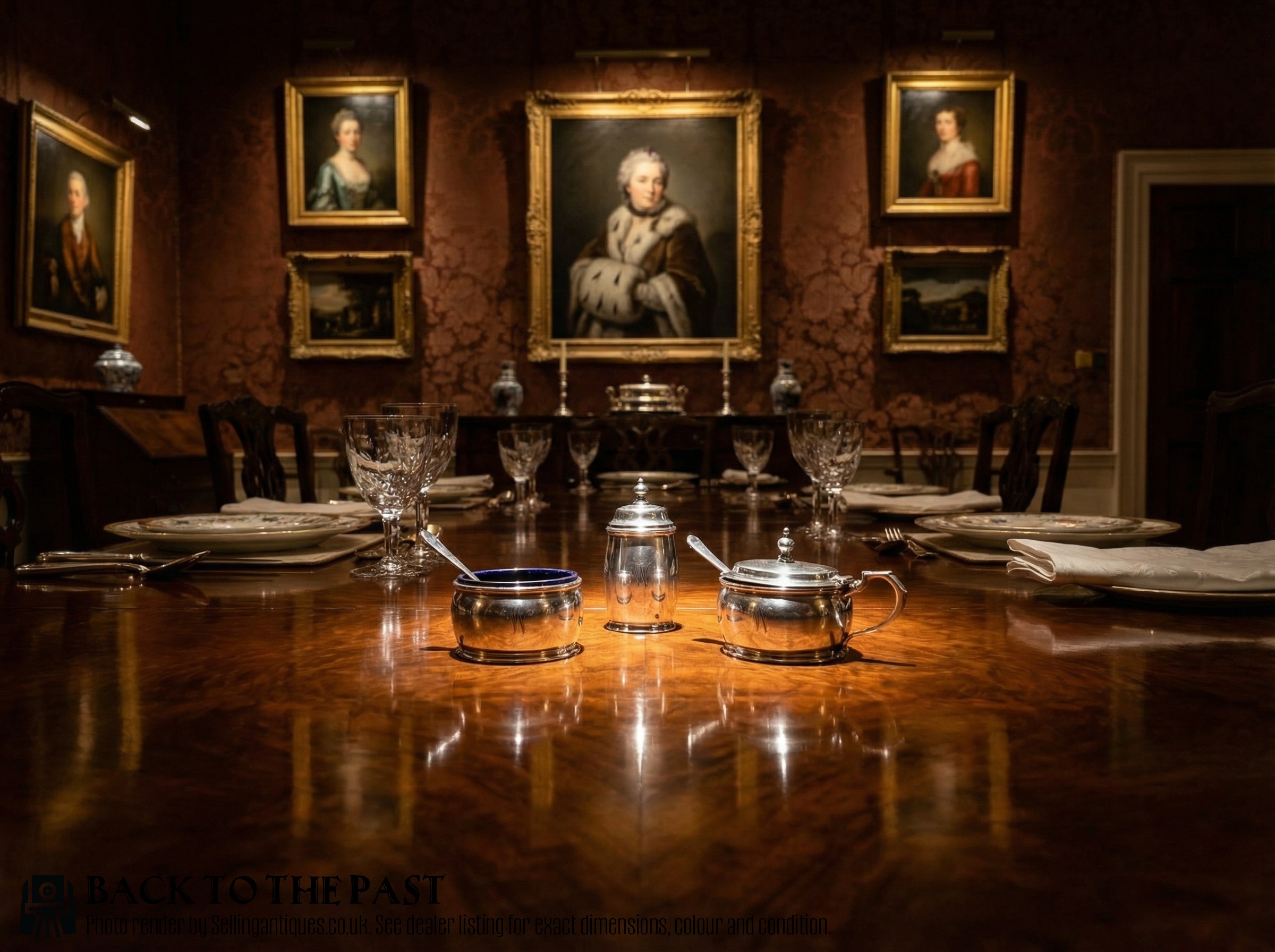
A silver mustard cellar sits on the dining table to hold condiments, combining metalwork and glass in domestic service.
Silver Mustard Cellar
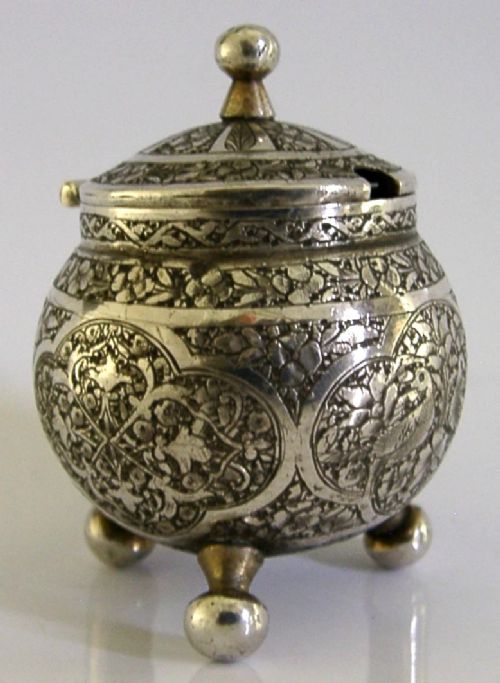
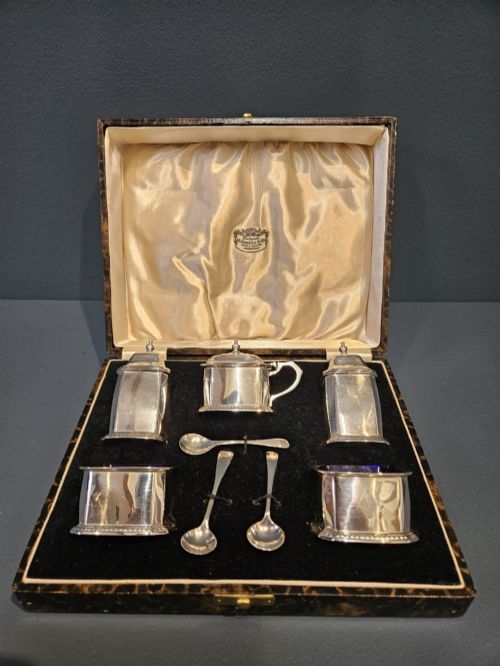
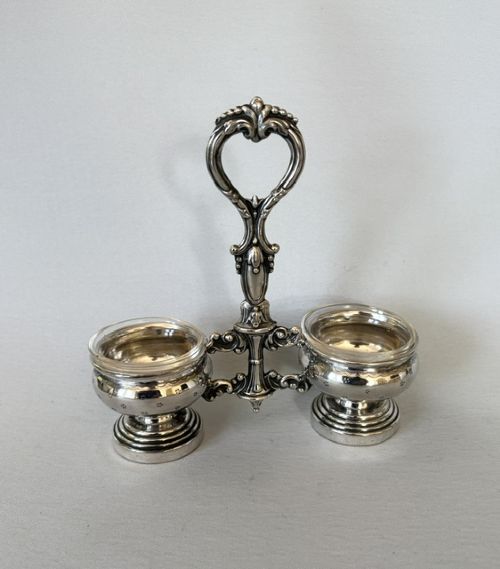
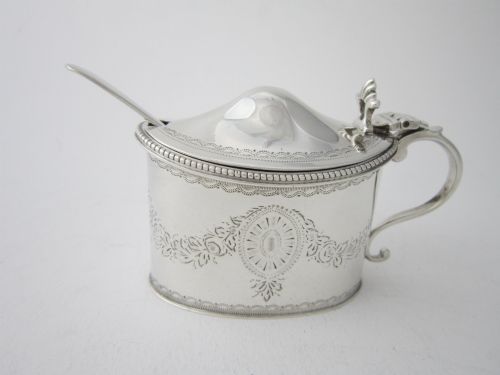
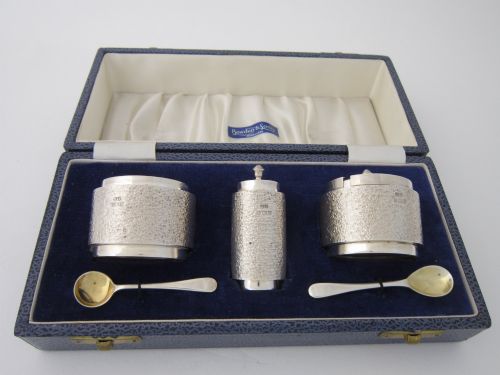
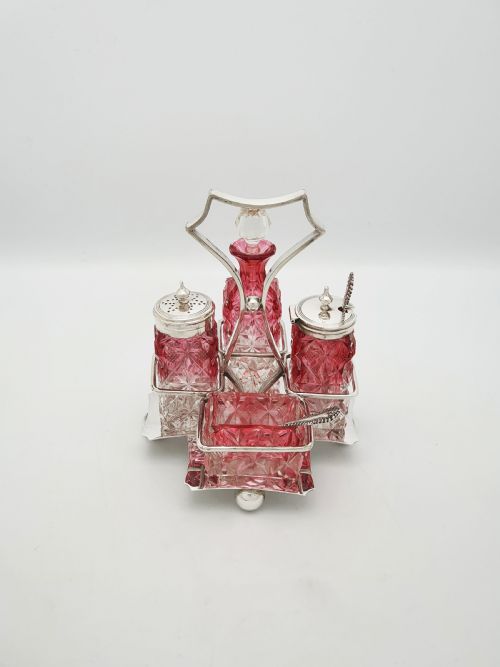
A silver mustard cellar appears across this page as single pots, part of larger condiment sets, or fitted inside multi-bottle cruet stands. These pieces emerge from Victorian, Edwardian, George V, and later twentieth-century workshops, reflecting shifting dining fashions.
Makers fashioned them as simple cylindrical vessels, geometric Art Deco containers, or elaborate novelty shapes including farm animals and musical instruments. Many examples retain their original coloured glass liners in ruby or cranberry shades to protect the metal from vinegar.
Origins stretch from English provincial assay offices to French ateliers and Ottoman workshops, providing diverse stylistic interpretations of a utilitarian table object.
Materials and construction
Silversmiths utilised sterling silver and silver plate for the frames, hinges, and lids, often pairing them with cut glass, crystal, or flash glass vessels. Interiors frequently relied on removable glass liners to prevent corrosion from mustard and spices.
Manufacturers employed stamping, casting, and hand-piercing techniques to create pierced galleries, hinged covers, and detailed handles. Interior fitted elements occasionally incorporated velvet, satin, or leatherette linings within presentation cases.
The documented periods range from the Georgian era through the Victorian, Edwardian, and Art Deco decades to the mid-twentieth century.
Defining characteristics of quality
The standard of a silver mustard cellar rests upon the thickness of the metal gauge, the crispness of the chased or pierced decoration, and the precision of the lid hinge. Heavier solid silver examples demonstrate substantial weight in the hand compared to lighter plated alternatives.
The integration of the glass liner defines a superior piece, where cut or coloured glass sits flush within the silver collar without movement. Maker marks and clear hallmarks contribute to provenance, distinguishing standard commercial production from specialised silversmith output.
William Neale·Wilmot Manufacturing Co·Heath and Middleton·Mappin and Webb·William Hutton and Sons·Viners
The Silver Mustard Cellar Glossary
- Cruet set
- A collection of small bottles or pots for holding condiments like mustard, oil, vinegar, salt, and pepper, often held in a dedicated stand. These sets formed an essential part of formal dining arrangements through the Victorian and Edwardian eras.
- Sterling silver
- An alloy consisting of pure silver and other metals, usually copper, proportioned to ensure durability while maintaining a bright lustre. British items of this standard bear the lion passant hallmark.
- Silver plate
- A base metal such as brass or nickel silver coated with a thin layer of pure silver through electroplating or older manufacturing methods. This technique allowed makers to produce affordable tableware with the appearance of solid silver.
- Assay office
- An official body responsible for testing the purity of precious metals and stamping items with appropriate hallmarks. Towns such as Birmingham, Sheffield, and London maintained active offices recorded in the listings.
- Liner
- A removable glass insert placed inside an open mustard pot or condiment container to protect the silver from corrosive contents. Liners frequently feature cut or moulded patterns in clear or coloured glass.
Silver Mustard Cellar: Frequently Asked Questions
What is a silver mustard cellar?
A silver mustard cellar is a small container designed to serve prepared mustard at the dining table. They typically feature a hinged lid and an internal glass liner.
These vessels appear independently or as matching components within larger condiment and cruet sets from various nineteenth and twentieth-century periods.
How were these sets used?
Dining traditions required condiments to be placed within reach of guests during formal meals. Servants or diners used small spoons to transfer mustard from the cellar to individual plates.
Fitted stands kept the cruet bottles, salt cellars, and mustard pots organised together on the dining table or sideboard.
How do I date a silver mustard pot?
Dating relies upon stamped hallmarks, which include maker marks, assay office symbols, and date letters indicating the specific year of testing. Stylistic clues such as Victorian pierced work or Art Deco geometry also help narrow the period.
Comparing the manufacturing technique and presence of presentation boxes provides further context for the production era.
How do I care for antique silver?
Silver objects require gentle cleaning with specialised cloths and non-abrasive polishes to maintain the metal surface without wearing away thin plating or hallmarks. Storing pieces away from damp environments prevents tarnishing.
Glass liners should be washed separately in warm soapy water and dried thoroughly before being returned to the silver mount.